Hygienic Stainless Steel Drive Shafts for the Dutch Food & Pharma Industry
In the Food Valley, contamination is not an option. We engineer EHEDG-compliant drive systems that survive the caustic washdown, shift after shift.
The Netherlands sets the global gold standard for food safety. The NVWA (Netherlands Food and Consumer Product Safety Authority) does not mess around. A drive shaft in a “High Care” zone cannot just be functional; it must be microbiologically safe. It needs to have surfaces so smooth that bacteria simply cannot grip, and seals that prevent grease from leaking out while stopping cleaning agents from getting in.
At EVER-POWER, we don’t just “make it out of stainless.” We engineer Hygienic Drive Shafts โดยเฉพาะสำหรับ Food & Pharmaceutical ภาคส่วนต่างๆ เราใช้ประโยชน์จากสิ่งเหล่านี้ AISI 316L (1.4404) for all wetted parts, polished to a roughness of Ra < 0.8µm. We use Blue Hygienic Seals that are metal-detectable and FDA-approved. Whether you are slicing Edam cheese or conveying tulips in Westland, our shafts keep your line moving and your audit reports clean.
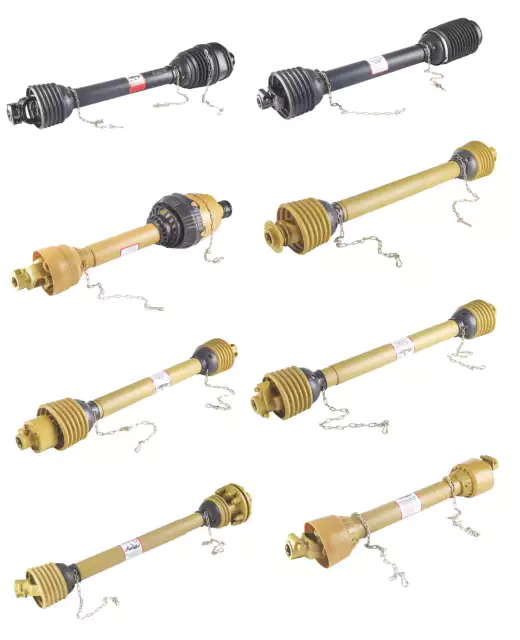
Surviving the “Caustic Cocktail” of Dutch Hygiene
The cleaning protocols in Dutch factories are brutal. We are talking about alternating cycles of hot caustic soda (Sodium Hydroxide) and nitric acid, followed by high-pressure rinsing. This “Caustic Cocktail” eats standard 304 stainless steel if the passivation layer is damaged.
Our Food & Pharma Specific Features:
- Surface Topography: All surfaces are electropolished to Ra < 0.8µm (optional < 0.4µm for pharma). No crevices, no knurling, no stamped IDs where Listeria can hide.
- Telescopic Protection: We use a proprietary “Tube-in-Tube” sealing system that completely covers the sliding splines, preventing food debris from entering the wear zone.
- Lubrication Security: Pre-filled with NSF H1 registered food-grade synthetic grease (Halal/Kosher certified), designed to resist washout even at 90°C.
Client Pain Point: The “Rusty Drip”
“We run a bakery line in North Brabant producing stroopwafels. We noticed tiny rust spots dripping from the overhead drive shafts onto the dough conveyor. The external paint was chipping, and the condensation was causing corrosion. The safety inspector threatened to shut us down.”
— Technical Director, Industrial Bakery
EVER-POWER Solution: The “Clean-Line” Shaft
“We installed our Series-H Hygienic Shafts. They feature a smooth, cylindrical shroud that covers the entire joint assembly. There are no exposed bolts or ridges to trap flour dust. Condensation simply rolls off the polished 316L surface. The contamination risk was eliminated instantly.”
Technical Specifications: Series HYG-316 (Hygienic Class)
These specs meet the rigorous demands of the EHEDG (European Hygienic Engineering & Design Group) guidelines.
| หมวดหมู่พารามิเตอร์ | ข้อมูลจำเพาะ | Hygienic Relevance |
|---|---|---|
| แรงบิดระบุ (Tkn) | 15 Nm – 4,500 Nm | Sized for mixers/conveyors |
| Peak Overload | 2.0x Tkn | Handles jam loads |
| Material (Wetted Parts) | AISI 316L (1.4404) | Max corrosion resistance |
| Material (Internal Cross) | AISI 420 (Hardened) or 316L | Strength vs. Hygiene balance |
| ความหยาบของพื้นผิว | Ra < 0.8 µm (Standard) | Prevents biofilm adhesion |
| ระดับการปิดผนึก | IP69K | High-pressure washdown ready |
| มุมการทำงาน | Max 35° | Flexible layout |
| ความเร็วรอบ | Up to 1,500 RPM | Conveyor/Mixer speeds |
| วัสดุปิดผนึก | Blue FDA Silicone / Viton / EPDM | Metal detectable & Food safe |
| การหล่อลื่น | NSF H1 Food Grade Grease | Safe for incidental contact |
| การชดเชยความยาว | +50mm to +300mm | Telescopic slip |
| Slip Protection | Fully Enclosed Stainless Tube | No exposed splines |
| ประเภทข้อต่อ | Precision Block & Pin / U-Joint | Smooth rotation |
| อุณหภูมิในการทำงาน | -30°C to +140°C | Steam cleaning compatible |
| ความต้านทานต่อสารเคมี | NaOH, HNO3, Chlorine | CIP/SIP cleaning agents |
| วิธีการเชื่อม | TIG / Orbital (Polished) | Smooth weld seams |
| การเชื่อมต่อศูนย์กลาง | Keyway / Hex / Clamp Collar | Avoids set screws (bacteria trap) |
| มาตรฐานการออกแบบ | EHEDG Doc. 8 / USDA / FDA | Hygiene compliance |
| เส้นผ่านศูนย์กลางการแกว่ง | 30mm – 180mm | Compact design |
| Bore Tolerance | H7 | Precision fit |
| น้ำหนัก | 1.2 kg – 45 kg | Lightweight options available |
| การซ่อมบำรุง | Sealed for Life Option | Reduces contamination risk |
| ความเหนื่อยล้าในชีวิต | Infinite (at rated load) | Reliability |
| การตรวจสอบย้อนกลับ | Laser Etched Batch ID | No adhesive labels |
| การรับประกัน | 18 เดือน | ผู้นำในอุตสาหกรรม |
| การปรับแต่ง | Electropolishing | For Pharma applications |
Custom Engineering: Retrofitting the Legacy Fleet
Many food factories in the Netherlands are running legacy equipment—robust machines from the 90s made by Stork, Tetra Pak, or local OEMs. When a drive shaft on these machines fails, you can’t just order a part number from a catalog that hasn’t existed for 20 years.
เรามีความเชี่ยวชาญในด้าน Hygienic Retrofitting. We can take your old, rusted carbon steel shaft, measure the interface dimensions, and engineer a drop-in replacement in 316L Stainless Steel. We often upgrade the design, adding better seals and smoother profiles to bring your old machine up to modern HACCP standards without modifying the machine itself.
The Clean Chain: Stainless Steel Washdown Gearboxes
A hygienic drive shaft connected to a rusty, painted iron gearbox defeats the purpose. The rust from the gearbox will migrate. For a truly sterile line, you need the complete package. EVER-POWER manufactures a dedicated line of Stainless Steel Gearboxes designed for the Dutch food industry.
1. Stainless Worm Gearboxes (IP69K)
These are the workhorses of food conveyors. Unlike standard aluminum boxes that pit and corrode when exposed to caustic cleaners, our stainless boxes are impervious.
- Smooth Body Design: No cooling fins, no bolt pockets, no logo indentations. Water runs right off, leaving no place for bacteria to grow.
- วัสดุ: Housing made from 304 or 316 Stainless Steel.
- การปิดผนึก: Double-lipped Viton seals on the output shaft to prevent water ingress during high-pressure washdowns.
2. Stainless Helical-Bevel Drives
For higher torque applications like mixers and dough kneaders, we offer stainless helical-bevel units. These provide higher efficiency than worm gears (saving energy) while maintaining the same strict hygienic standards. They pair perfectly with our high-torque stainless shafts to create a bulletproof, washdown-ready drivetrain.
By sourcing both the Hygienic Shaft และ Stainless Gearbox from EVER-POWER, you ensure material compatibility (no galvanic corrosion between dissimilar metals) and a unified warranty for your drive system.
คำถามที่พบบ่อย (FAQ)
Answers from the Clean Room.
What is the difference between 304 and 316L stainless steel for drive shafts?
AISI 304 is standard “food grade,” but AISI 316L contains Molybdenum, which drastically increases resistance to chlorides (salt) and acids. For the Dutch dairy and cheese industry, where salty brine and aggressive acid cleaners are used, we strongly recommend 316L to prevent pitting corrosion.
Can your shafts withstand IP69K high-pressure cleaning?
Yes. Our “Washdown Ready” series is designed specifically for IP69K. This means they can handle 80°C water at 100 bar pressure from close range. We use specialized shielded seals and a “Tube-in-Tube” design to ensure water never reaches the critical bearing surfaces.
Do you use food-grade grease in your shafts?
Absolutely. All our food-industry shafts come pre-filled with NSF H1 registered synthetic grease. This lubricant is non-toxic, odorless, and tasteless. If an accidental seal breach occurs, it is safe for incidental food contact, keeping you compliant with HACCP and BRC audits.
Can you manufacture a shaft for a custom pharmaceutical machine?
Yes. For pharma applications, we can offer even higher standards, such as Electropolished surfaces to Ra < 0.4µm and full material certification packages (3.1 Certs) to validate the chemical composition of every component for your validation files.
How fast can you ship a replacement shaft to the Netherlands?
We know that a stopped food line costs thousands of Euros per hour. We have a “Rapid Response” program for breakdown situations. For standard geometries, we can assemble and air-freight a stainless shaft to Amsterdam or Rotterdam in as little as 3-5 days.