Zero Vibration at 12,000 RPM: The Art of Test Bench Drivetrains
In the R&D lab, the drive shaft shouldn’t be part of the experiment. It should be invisible. We engineer ultra-precision, low-inertia Cardan shafts for the high-speed dynos and e-motor test rigs powering the Dutch automotive innovation sector.
I’ve spent nearly twenty years setting up dynamometers, from the heavy-duty diesel test cells in Rotterdam to the whisper-quiet anechoic chambers in the Brainport Eindhoven region. There is a distinct sound a test bench makes when the drive shaft hits its critical speed resonance—a low hum that quickly turns into a terrifying scream. If you are running an R&D facility, that sound is the stuff of nightmares.
Here is the reality most catalog suppliers won’t tell you: standard industrial Cardan shafts are useless for modern testing. Why? Because the Dutch automotive industry has shifted. We aren’t just testing 2,000 RPM diesel engines anymore. We are testing 15,000 RPM electric motors for the next generation of EVs. At those speeds, a standard steel shaft acts like a whip. The mass moment of inertia is too high, and the torsional stiffness is too low.
We approach test bench drivelines differently. We treat the shaft as a precision instrument, not a commodity. We focus on Parasitic Mass Reduction และ การจัดการความเร็ววิกฤต. Whether you need a lightweight carbon fiber tube to push the first bending mode above 12,000 RPM, or a constant velocity (CV) joint that offers zero backlash for precise torque measurement, EVER-POWER engineers solutions that let your data shine, not your vibration.
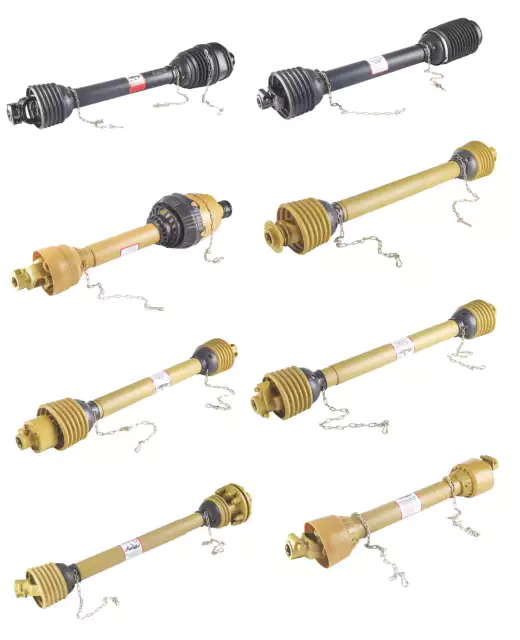
🛠️ Engineer’s Field Note: The “Phantom” Torque Spike
“Back in 2021, I was consulting for a powertrain lab at the Automotive Campus in Helmond. They were testing a new hybrid transmission. At exactly 4,200 RPM, their torque transducers would go haywire, showing a massive spike that wasn’t coming from the engine. They thought the sensor was faulty.
I checked the drive shaft. It was a standard industrial unit, way too heavy for the application. The heavy universal joints were creating a secondary couple load that, at that specific speed, resonated with the test bed’s natural frequency. We swapped it for our Carbon-Fiber Composite Shaft which weighed 60% less. The ‘phantom’ spike vanished instantly. In testing, mass is the enemy. If you can remove weight from the drivetrain, your data cleans up immediately.”
Technical Specifications: Series LAB-X High Speed
These parameters are not generic. They are generated based on the rigorous requirements of modern E-Mobility and Powertrain testing facilities found across the Netherlands.
| หมวดหมู่พารามิเตอร์ | ข้อมูลจำเพาะ | ตรรกะทางวิศวกรรม |
|---|---|---|
| แรงบิดที่กำหนด (Tn) | 200 – 5,000 Nm | Sized for high-speed E-motors |
| Max Speed (Steel Tube) | 6,000 รอบต่อนาที | Standard testing |
| Max Speed (Carbon Tube) | 15,000 RPM+ | For EV drivetrain testing |
| ระดับความสมดุล | G 1.0 (ISO 1940) | เครื่องมือวัดความแม่นยำสูง |
| Residual Unbalance | < 2 g·mm/kg | Zero vibration |
| ความแข็งแกร่งในการบิด | 120 – 850 kNm/rad | High stiffness for fast response |
| Mass Moment of Inertia | 0.005 – 0.12 kg·m² | Low inertia for dynamic tests |
| การชดเชยความยาว | ± 25mm to ± 80mm | Ball-spline for zero friction |
| มุมการทำงาน | 0° – 15° | Constant Velocity (CV) available |
| วัสดุท่อ | คาร์บอนไฟเบอร์ / 42CrMo4 | Filament wound for stiffness |
| ประเภทข้อต่อ | Block & Pin / CV Disc | Zero backlash options |
| Axial Stiffness | ต่ำ | Protects DUT bearings |
| Lateral Stiffness | สูง | Prevents whip |
| Flange Concentricity | 0.02 mm TIR | Pilot fit precision |
| Bolt Circle Tolerance | ± 0.05 mm | Precision fit |
| ประเภทสไปลน์ | Recirculating Ball | Zero backlash slip |
| Friction Coefficient | < 0.01 (Spline) | No axial thrust transfer |
| ประเภทจาระบี | Klubersynth High-Speed | Low viscosity, low heat |
| ช่วงอุณหภูมิ | -30°C to +120°C | Climate chamber compatible |
| น้ำหนัก | 3 kg – 45 kg | Ultra-lightweight |
| Critical Speed (1m) | 18,000 RPM (Carbon) | Safety margin 1.3x |
| ความเหนื่อยล้าในชีวิต | Infinite (>10^7 cycles) | At rated torque |
| การตกแต่งพื้นผิว | Gloss / Matte Black | Professional lab aesthetic |
| อุปกรณ์ป้องกันความปลอดภัย | ไม่จำเป็น | Composite protection tube |
| ตัวจำกัดแรงบิด | Integrated Clutch | Protects prototype parts |
| สลักเกลียวเชื่อมต่อ | Grade 12.9 | High clamping force |
| เอกสารประกอบ | Full Balancing Report | Essential for QA |
| Country of Origin | Manufactured by EVER-POWER | Global engineering |
R&D Challenges: Solved
🚫 Pain Point: The “Backlash” Gap
“We perform transient testing where we switch from driving to absorbing torque rapidly. The ‘clunk’ in the splines of standard shafts ruins our control loop and creates noise in the data.”
✅ โซลูชันเอเวอร์พาวเวอร์
We eliminate standard involute splines and replace them with Recirculating Ball Splines. This technology has zero clearance and near-zero rolling friction. It allows the shaft to telescope under full torque load without any ‘stick-slip’ or backlash, ensuring your control loop stays tight.
🚫 Pain Point: Thermal Growth Destruction
“When our engine under test gets hot, it grows axially by 3mm. The rigid coupling we used pushed back against the dyno bearings, causing premature failure.”
✅ โซลูชันเอเวอร์พาวเวอร์
Our test bench shafts are designed with Low Axial Stiffness. The plunging CV joints or ball splines require less than 10N of force to telescope. This means the engine can expand and contract thermally without transmitting dangerous thrust loads back into your expensive dynamometer.
Supporting the Dutch Innovation Ecosystem
The Netherlands is unique. We have one of the highest densities of high-tech testing facilities in Europe. From the aerospace labs at TU Delft to the heavy truck testing at DAF in Eindhoven, the demand is for precision. We understand the local ecosystem. We know that if you are running a test at TNO Powertrains, you cannot afford a shaft failure that delays a certification by weeks.
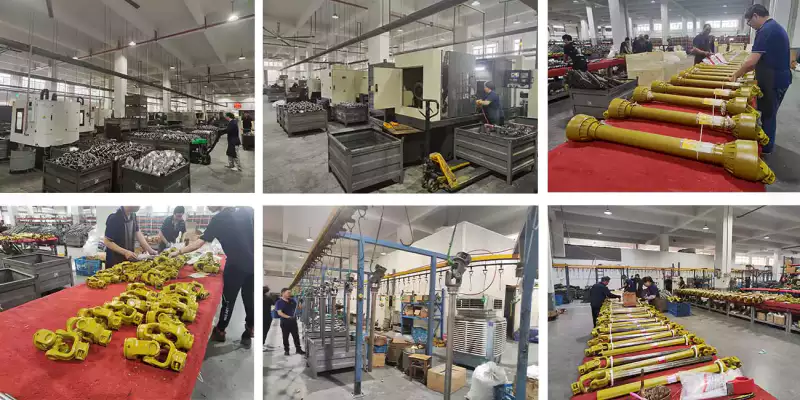
We offer “Rapid Prototype Support.” If you are building a new test rig for a specific e-axle geometry, we can machine the custom adapter flanges and balance the shaft assembly in our facility, delivering it to Brabant or Zuid-Holland with full QA documentation. We don’t just sell parts; we support your testing validity.
Custom Flanges for Custom Rigs
Every dyno is different. You might have a Horiba machine on one side and a prototype Volvo engine on the other. The bolt patterns never match.
เรามีความเชี่ยวชาญในด้าน Custom Adapter Manufacturing. Send us the drawings of your flywheel and your dyno input flange. We will design and manufacture the intermediate shaft with the exact pilot fitments required to ensure concentricity within 0.02mm.
Success Story: The Eindhoven E-Motor Test
A startup in the Eindhoven region developing high-efficiency solar car motors needed a test rig solution. Their motor spun at 18,000 RPM, but had very low torque. The standard steel shaft they used initially was so heavy that its rotational inertia masked the efficiency gains of the motor during spin-down tests.
- ปัญหา: High parasitic inertia from the steel shaft skewed efficiency data; resonance occurred at 14,000 RPM.
- วิธีแก้ไข: เราได้ออกแบบและผลิตสินค้าตามสั่ง แกนคาร์บอนไฟเบอร์แบบพันเส้นใย with bonded titanium end-fittings. This reduced the rotating mass by 75% and pushed the first critical speed mode to 22,000 RPM.
- ผลลัพธ์: The client was able to measure the motor’s true efficiency curve with 0.1% accuracy. The low inertia allowed for precise dynamic control during rapid speed changes.
From the Lab to the Field: The Engineering of Agricultural Gearboxes
It might seem like a contradiction to discuss precision test bench shafts and heavy-duty agricultural gearboxes in the same breath. One deals in microns and milligrams; the other deals in mud and shock loads. But at EVER-POWER, we believe the engineering DNA is shared. The same metallurgical discipline that goes into a high-speed dyno shaft is applied to the gears of our เกียร์สำหรับงานเกษตรกรรม.
Why Precision Matters in a Corn Field
Consider a rotary mower gearbox. It spins at 540 or 1000 RPM, hitting rocks and stumps. A cheaply made gearbox with poor gear tooth geometry will generate heat and noise—just like an unbalanced shaft on a dyno. That heat leads to seal failure, oil leaks, and eventually, a seized bearing.
We manufacture our agricultural gearboxes with Class 8 to Class 10 Gear Quality. We use the same 20CrMnTi alloy steel, carburized and ground, to ensure that the contact patch on the gear teeth is perfect. This reduces noise (which is vibration) and heat generation. In the Dutch agricultural sector, where contractors run machines for 16 hours a day during harvest, this efficiency translates directly to reliability.
A Full Range of Solutions
We don’t just do “one size fits all.” Just as we customize flanges for test benches, we offer a vast array of gearbox configurations for OEM and replacement applications:
- Right Angle Gearboxes: For rotary cutters, slashers, and toppers. Available in ratings from 15 HP to 150 HP.
- T-Box Configurations: For splitting power on wide-area mowers or irrigation pumps.
- Speed Increasers/Reducers: Ideal for matching tractor PTO speeds to hydraulic pumps or fans.
The “Matched Pair” Philosophy
The connection between the PTO shaft and the gearbox is the most critical interface. In a test bench, a bad connection ruins data. In a tractor, a loose spline connection ruins the input shaft. By sourcing both your PTO Shafts และ เกียร์บ็อกซ์ from EVER-POWER, you benefit from our “Matched Pair” tolerance control. We ensure the gearbox input shaft (usually 1-3/8″ Z6) fits the PTO yoke with precision, minimizing fretting wear.
Whether you are building a million-Euro test cell in Delft or repairing a flail mower in Friesland, the principle is the same: Quality transmission components are the cheapest insurance you can buy.
คำถามที่พบบ่อย (FAQ)
What is the difference between G6.3 and G1.0 balancing?
G6.3 is the standard for general industrial machinery. It allows for some residual imbalance. G1.0 is a precision grade used for sensitive instruments like gyroscopes and high-speed test benches. It requires significantly more time and precise equipment to achieve, but ensures near-zero vibration at speed.
How do I know the critical speed of the shaft I need?
Critical speed depends on length, diameter, and material. We use FEA (Finite Element Analysis) to calculate the natural frequency. As a rule of thumb, for speeds over 6,000 RPM, standard steel shafts are often too long/heavy, and we move to carbon fiber to raise the critical speed ceiling.
Can you integrate a torque sensor into the drive shaft?
While we don’t manufacture sensors, we design our shafts to accommodate inline torque flanges (like HBM or Kistler). We can machine the shaft ends to bolt directly to the sensor rotor, creating a compact measurement assembly with high stiffness.
Do you provide shafts for climatic chamber testing?
Yes. For environmental testing (-40°C to +150°C), we use special grease and boot materials (like silicone or Viton) that remain flexible and lubricated at temperature extremes, ensuring the shaft doesn’t become a failure point during thermal cycling tests.