Surviving the Melt: High-Heat Drive Shafts for Dutch Glassworks
When the gob feeder is running at 1,100°C and the silica dust is grinding every moving part, standard steel surrenders. We engineer transmission solutions that stay cool when your production line is hell on earth.
If you have spent any time on the floor of a glass container factory—whether it’s the historic lines in Leerdam or the high-volume plants in Moerdijk—you know the unique smell of hot machine oil and molten sand. It’s an environment that unforgivingly exposes weak engineering.
We see it constantly with new clients. They call us because their batch charger drives are failing every four months, or the main drive on the annealing lehr has developed a “wobble” that is cracking bottles. The culprit? Usually, it’s a misunderstanding of Thermal Soak. Standard automotive-grade drive shafts (cardan shafts) are rated for ambient temperatures. But in a glass plant, radiant heat from the furnace can raise the shaft body temperature to over 150°C. At that heat, standard grease liquefies and runs out, seals brittle and crack, and the steel itself undergoes thermal expansion that locks the telescoping spline.
Once that spline locks, the next vibration doesn’t get absorbed—it gets transmitted directly into your gearbox output shaft or the IS machine’s timing drum. Snap. Downtime. And in the continuous process of glass manufacturing, downtime is the most expensive word in the Dutch language.
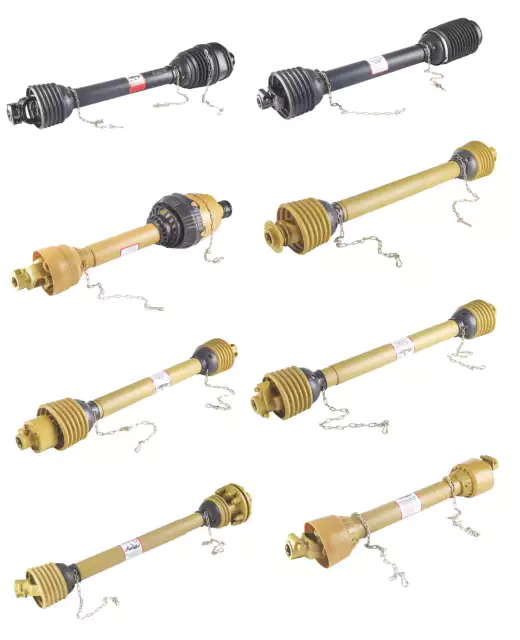
Engineering for the “Red Zone”
To build a shaft that survives a glass plant, we have to rethink the metallurgy. For our “Pyro-Guard” Series, tailored for the Dutch glass sector, we don’t just use standard carbon steel. We employ a heat-resistant alloy structure (typically 42CrMoS4 tempered at higher temperatures) that maintains its HRC 50-55 hardness even when the ambient temperature spikes.
But the real secret sauce is in the Tribology (the science of wear and friction). Glass dust (cullet dust) is essentially diamond powder. If it gets into your slip spline, it laps the steel until there’s slop, or it jams it tight.
We apply a specialized Ceramic-Polymer Coating to the spline teeth. This does two things:
1. It provides a dry-lubricant layer that doesn’t attract dust like wet grease does.
2. It creates a thermal barrier that prevents micro-welding (galling) between the male and female splines under high torque loads (up to 300 kNm).
🛠️ Engineer’s Field Note: The “Ghost” Vibration in Tiel
“I’ll never forget a troubleshooting trip I made to a jar manufacturing plant near Tiel back in ’19. They had a phantom vibration on their Line 4 Lehr drive. It would run smoothly for 12 hours, then shake violently for 20 minutes, then smooth out. The maintenance chief was pulling his hair out.
We set up thermal cameras and realized the vibration coincided exactly with the automatic reversal of the annealing tunnel’s airflow. The sudden temp spike caused the existing drive shaft’s slip yoke to expand faster than the tube, momentarily locking the length. The motor was fighting the shaft. We swapped it out for our ‘Loose-Tolerance’ High-Temp model, which has a specifically calculated gap to accommodate that thermal growth. The vibration vanished instantly. Sometimes, tight precision isn’t the answer—thermal physics is.”
Technical Specifications: Series G-Melt Performance
These parameters are generated based on the rigorous demands of IS (Individual Section) machines and gob feeder mechanisms found in modern European glassworks.
| หมวดหมู่พารามิเตอร์ | ข้อมูลจำเพาะ | บริบทการใช้งาน |
|---|---|---|
| ความสามารถในการรับแรงบิด (ระบุ) | 20 – 300 kNm | Scalable for Feeder vs Lehr |
| แรงบิดกระแทกสูงสุด | 450 kNm | During emergency stops |
| ปัจจัยการให้บริการ (K) | 2.0 – 3.0 | High heat + 24/7 continuous |
| ความเร็วรอบ | 400 – 1,000 RPM | Variable speed control |
| Dynamic Angle | 5° – 15° | Compensates for thermal shift |
| ฐานวัสดุ | 42CrMoS4 Alloy | Heat-treated & tempered |
| การเคลือบผิว | Ceramic / Nickel-Phosphorus | Anti-corrosion & Anti-gall |
| ความแข็งผิว | HRC 50 – 55 | Resists silica abrasion |
| Fatigue Life (L10h) | > 35,000 Hours | At 120°C ambient |
| วัสดุปิดผนึก | Viton® / PTFE | Temp limit 220°C |
| Lubricant | PFPE High-Temp Grease | Non-carbonizing |
| ระดับความสมดุล | จี 6.3 / จี 2.5 | ISO 1940-1 |
| ประเภทสไปลน์ | Involute with Glide-Coat | ดีเอ็นไอ 5480 |
| ระยะยืดหดได้ | + / – 80mm | Enhanced for expansion |
| เส้นผ่านศูนย์กลางหน้าแปลน | 90mm – 250mm | DIN / SAE patterns |
| เส้นผ่านศูนย์กลางท่อ | 70mm – 160mm | Seamless cold-drawn |
| ความหนาของผนัง | 5mm – 10mm | ความแข็งแกร่งต่อแรงบิดสูง |
| ความเร็ววิกฤต | 2,500 RPM | Safety factor 2.5x |
| วัสดุแอก | Forged Steel | Single-piece grain flow |
| Boot Material | Silicone / Nomex® | Fire resistant |
| สี | High Temp Aluminum | Reflects radiant heat |
| ช่วงเวลาการบำรุงรักษา | 2,000 Hours | With an auto-lube system |
| Cross Kit | Maintenance Free Option | Triple lip sealed |
| น้ำหนัก | 15 kg – 120 kg | Depending on size |
| ช่วงอุณหภูมิการทำงาน | -10°C to +250°C | Intermittent up to 300°C |
| ใบรับรอง | ISO 9001, CE | EU Machine Directive |
Glassworks Realities: Your Pain, Our Solution
🚫 Pain Point: The “Frozen” Telescopic Spline
“Every time we do a job change on the IS machine, the drive shaft is stuck. We have to beat it with a sledgehammer to compress it. It’s dangerous and damages the bearings.”
✅ โซลูชันเอเวอร์พาวเวอร์
เราใช้ Molybdenum-Disulfide (MoS2) impregnated nylon coating on the spline. This ensures a low coefficient of friction even when the grease has dried out. Plus, our dust boot is hermetically sealed to keep silica out. Result: One-hand compression even after 6 months of service.
🚫 Pain Point: Bearing Burnout
“Our lehr entry shafts are right above the annealing tunnel opening. The radiated heat cooks the seals, the grease leaks, and the cross bearings fail every 12 weeks.”
✅ โซลูชันเอเวอร์พาวเวอร์
We switched the seal material to Viton® Extreme (fluoroelastomer), which handles up to 220°C. We also pre-pack the bearings with a synthetic PFPE grease (similar to Krytox) that does not carbonize. Service life extended to 14 months.
Supporting the Dutch Glass Heritage
The Netherlands has a proud history of glass production, from the crystal of Leerdam to the massive industrial outputs in the south. But today, the pressure is on sustainability. With the strict Dutch regulations on energy efficiency (EED audits) and emissions (RVO policies), every component in the drivetrain matters.
An inefficient, vibrating drive shaft wastes energy. It creates noise pollution—a critical factor for plants near residential zones like those in Schiedam or Tiel. Our shafts are balanced to G6.3 or G2.5 standards, ensuring whisper-quiet operation that keeps your decibel levels compliant and your energy bills lower. We are familiar with the logistics of the Port of Rotterdam and can ensure that your maintenance spares are delivered just-in-time, minimizing your inventory costs.
Custom Tailored for Your Machinery
We know that a standard catalog part rarely fits a 20-year-old modified machine. Whether you are running Bottero, Emhart, or Horn machinery, we can reverse-engineer your shaft.
We offer:
- Short-Coupled Designs: For tight spaces in the gob distributor.
- Quick-Release Flanges: For faster job changes.
- ความยาวตามสั่ง: Precise to the millimeter.
Client Success Story: The Leerdam Retrofit
A mid-sized specialized glass factory in the Leerdam region was facing a critical issue with their cullet (recycled glass) crusher drives. The abrasive glass dust was destroying the U-joint seals every 8 weeks, leading to seizing and eventual shaft failure. This was causing unscheduled downtime in the batch house, starving the furnace.
The Intervention:
We deployed our “Armored” series shaft. We replaced the standard rubber boots with a labyrinth seal guard made of turned steel, effectively shielding the rubber seal from the direct impact of glass shards. We also upgraded the cross kits to a regreaseable design with purge valves, allowing the maintenance team to flush out contaminated old grease with fresh high-temp lithium complex.
ผลลัพธ์:
The mean time between failures (MTBF) increased from 2 months to 18 months. The client reported a savings of €25,000 in the first year alone, factoring in maintenance labor and lost production time.
Beyond the Glasshouse: Our Expertise in Agricultural Gearboxes
While our engineering prowess is tested in the fires of the glass industry, EVER-POWER is also a dominant force in the agricultural sector. You might ask, “What is the connection?” The answer lies in the heavy-duty transmission of power under adverse conditions. Just as a glass batch charger moves tons of raw silica and soda ash, agricultural machinery moves tons of soil, grain, and fertilizer. The torque demands, the shock loads, and the need for absolute reliability are identical.
We manufacture a comprehensive range of เกียร์สำหรับงานเกษตรกรรม that are specifically designed to pair with our PTO shafts. In the Dutch agricultural landscape—from the intensive dairy farming in Friesland to the flower bulb cultivation in the Bollenstreek—machinery needs to be robust. Our gearboxes are the hidden muscles behind this productivity.
Built for the Mud and the Load
Our agricultural gearbox line includes right-angle bevel gearboxes, speed increasers, and reducers suitable for rotary cutters, flail mowers, fertilizer spreaders, and feed mixers. The core technology mirrors our industrial shafts:
- Gearing Quality: We use forged 20CrMnTi alloy steel for our gears, carburized and quenched to HRC 58-62. This provides a hard, wear-resistant surface for tooth contact while maintaining a tough, ductile core to absorb shock loads (like hitting a rock with a mower).
- Housing Strength: Unlike cheaper competitors who use brittle grey iron, our gearbox housings are cast from Ductile Iron (QT450-10), offering superior impact resistance.
- การปิดผนึก: We understand that a gearbox in a field is submerged in dust, water, and plant sap. We utilize dual-lip seals with additional “grass-winding” protection shields on output shafts to prevent vegetation from damaging the seal integrity.
For our industrial clients in the Netherlands, these gearboxes often find “off-label” uses in material handling systems within factories. A rugged agricultural gearbox is often the most cost-effective solution for a low-speed, high-torque conveyor drive in a recycling plant or a raw material intake facility. By controlling the production of both the Drive Shaft (PTO) and the Gearbox, we ensure perfect spline compatibility (typically 1-3/8″ Z6 or Z21), eliminating the common issue of fretting corrosion caused by loose tolerances between the shaft yoke and the gearbox input.
Whether you are building a new piece of machinery or retrofitting an old, reliable workhorse, considering the complete drivetrain—Gearbox plus Shaft—from a single source like EVER-POWER guarantees a harmonized system that lasts longer and runs smoother.
คำถามที่พบบ่อย (FAQ)
How do I identify the correct replacement shaft for my Emhart IS machine?
The easiest way is to measure the compressed length (center-to-center of joints), the flange diameter, and the number of bolt holes. Also, check the data plate for torque ratings. If the plate is unreadable due to heat, send us a photo of the installation.
What is the lead time for a custom high-temp shaft to the Netherlands?
For urgent breakdown situations, we can machine standard blanks and air-freight them to Amsterdam within 5-7 days. For larger batch orders or highly customized lengths, sea freight to Rotterdam typically takes 3-4 weeks.
Why should I choose a ceramic-coated spline over a standard steel one?
In the glass industry, lubrication often fails due to heat. A standard steel spline will gall and seize without grease. A ceramic coating provides a permanent dry lubrication layer that prevents metal-to-metal contact, significantly extending the shaft’s life even if maintenance is missed.
Are your shafts compatible with standard DIN 100 or DIN 120 flanges?
Yes, 95% of our industrial shafts for the European market are manufactured to DIN ISO standards. We stock flanges with Face Key connections, Serrated (Hirth) faces, and standard flat faces to match whatever gearbox you are connecting to.