Surviving the Red River: High-Torque Drives for Clinker Coolers
When 1,400°C clinker drops onto the grate, your drivetrain enters the danger zone. We engineer heat-resistant, high-torque Cardan shafts that keep the cooler moving, even when the dust is thick and the heat is rising.
I’ve spent the better part of two decades analyzing failures in cement plants, from the historic kilns in Limburg to the modern grinding stations near Amsterdam. The Clinker Cooler is arguably the most hostile environment for a drive component. It’s not just the heat—though radiant temperatures often exceed 500°C near the housing—it’s the “Red River” effect. The clinker bed depth varies, creating massive, unpredictable torque surges that travel straight back to the hydraulic or mechanical drive.
Most maintenance managers tell me their biggest headache isn’t the scheduled downtime; it’s the creep. As the cooler housing heats up, it expands. We are talking about centimeters of movement. If your drive shaft’s slip spline doesn’t telescope freely because the grease cooked into a solid brick, that thermal expansion becomes a 50-ton axial load pushing against your gearbox bearings. Snap.
That’s why we engineered the Pyro-Shield Series. We don’t just use standard steel; we use heat-treated alloys coated in a specialized powder finish that reflects radiant heat. We calculate our bearing life (L10h) based on a Service Factor of 4.0, assuming the worst-case “Snowman” formation in the kiln. This isn’t just a shaft; it’s a thermal survival tool.
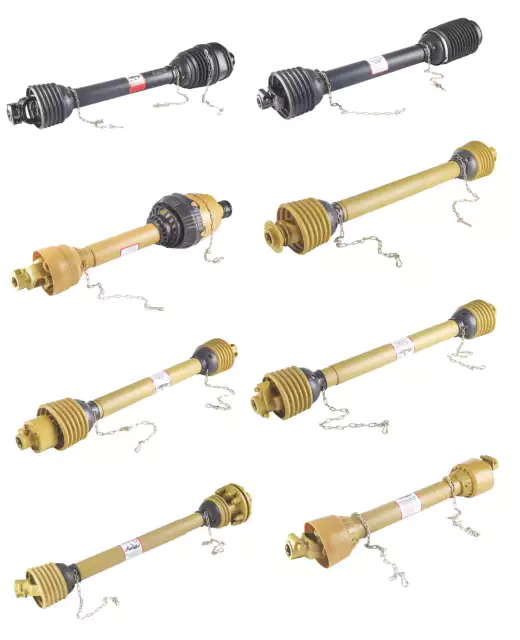
🛠️ Engineer’s Field Note: The “Monday Morning” Crunch
“I remember a call from a plant manager near Maastricht. They were burning a high percentage of Alternative Fuels (waste tires and plastics), which causes the kiln temperature to fluctuate wildly. Every time they had a process upset, the cooler drive would trip.
We opened up the existing drive shaft (a standard off-the-shelf industrial unit) and the cross bearings were blue—literally blued from heat. The standard lithium grease had vaporized. The spline was seized solid with clinker dust that had bypassed the simple rubber seal. We retrofitted them with our Thrust-Compensated Shaft featuring Viton Extreme seals and a PFPE grease that is stable up to 280°C. That was four years ago. They haven’t changed a U-joint since. It turns out, you can’t fight heat with standard parts; you have to engineer for it.”
Technical Specifications: Series C-Cooler Performance
The data below represents our “Heavy Industrial” spec, calibrated for the abrasive and thermal realities of Dutch cement production.
| Categoría de parámetro | Datos de especificación | Engineering Logic |
|---|---|---|
| Par nominal (Tn) | 300 – 700 kNm | Handles deep bed loads |
| Par máximo de choque | 1,200 kNm | For “Red River” surges |
| Factor de servicio (K) | 2.5 – 4.0 | Heavy shock / Thermal stress |
| Velocidad de rotación | 200 – 500 RPM | Low speed, high torque |
| Ángulo dinámico | 5° – 12° | Accommodates misalignment |
| Material (Yugo) | 42CrMoS4 Alloy | High heat temperature resistance |
| Dureza superficial | HRC 52 – 58 | Resists abrasive wear |
| Tipo de recubrimiento | Alu-Ceramic Powder | Reflects radiant heat |
| Vida útil del rodamiento (L10h) | > 40.000 horas | Calculated at 150°C ambient |
| Grado de equilibrio | G 16 (ISO 1940) | Low RPM stability |
| Sistema de sellado | Triple-Lip Viton® | Dust & Temp proof |
| Lubricación | PFPE Synthetic | Non-carbonizing |
| Slip Mechanism | Thrust Bearing Spline | Baja fricción bajo carga |
| Carrera telescópica | ± 150mm | Compensates for thermal growth |
| Brida estándar | DIN 350 / 435 | Matches OEM patterns |
| Tipo de conexión | Face Key / Hirth | Zero backlash |
| Diámetro del tubo | 280mm – 450mm | Torsional stiffness |
| Espesor de la pared | 12mm – 30mm | Impact resistance |
| Peso | 350kg – 1,800kg | Heavy-duty build |
| Operating Temp (Amb) | -20°C to +180°C | Zone temperature |
| Radiant Temp Limit | 550°C | With a heat shield |
| Intervalo de mantenimiento | 2,000 Hours | Auto-lube compatible |
| Critical Speed | 1.500 RPM | Safety factor >3x |
| Grado del perno | 12.9 Dacromet | High tensile & corrosion resistant |
| Dust Boot | Stainless Steel / Kevlar | Armored protection |
| Certificaciones | ISO 9001, ATEX | Safety compliance |
Solving the “Heat & Dust” Dilemma
🚫 Pain Point: Thermal Lock-Up
“When the cooler housing expands 40mm due to heat, standard splines bind. This axial force destroys the gearbox output shaft bearings.”
✅ Solución EVER-POWER
We integrate a Thrust-Bearing Compensator inside the spline assembly. This allows the shaft to telescope smoothly even when transmitting full torque, neutralizing the axial load on your gearbox.
🚫 Pain Point: Abrasive Dust Ingress
“Clinker dust is harder than steel. It acts like a grinding paste, eating through seals and destroying the cross trunnions in months.”
✅ Solución EVER-POWER
Utilizamos un Labyrinth Seal with Positive Purge. By maintaining a slight positive pressure of fresh grease from the inside out, we ensure that dust is constantly pushed away from the critical bearing surfaces.
Supporting the Dutch Cement & Materials Sector
The Netherlands plays a pivotal role in the European construction materials supply chain. From the crushing plants utilizing the marl reserves in Limburg to the massive import terminals in Rotterdam’s Europoort, the equipment here is pushed hard. We also see a strong trend towards sustainability, with Dutch plants leading the way in using Alternative Fuels (AF) to reduce carbon footprints.
However, burning AF leads to hotter, more volatile combustion zones. This means the Clinker Cooler has to work harder and handle more erratic thermal loads. Our shafts are specifically balanced (G16) to handle these vibrations without shaking the foundation. We understand local logistics too—we can stage critical spares in Rotterdam warehouses for “Just-in-Time” delivery to minimize your inventory costs.
Tailored for Legacy Retrofits
Many Dutch plants are running robust equipment installed in the 80s or 90s—Claudius Peters, FLSmidth, or IKN coolers. Finding OEM spares can be slow and expensive.
We specialize in Ingeniería inversa. We can create a drop-in replacement shaft that matches your existing gearbox flange and cooler drive connection perfectly, but with modern metallurgy and sealing technology inside.
Success Story: The Limburg Cooler Upgrade
A cement plant in the Limburg region was struggling with the reliability of its grate cooler drive. The hydraulic motor was driving a shaft that connected to the oscillating frame. The severe “start-stop” motion combined with clinker dust was causing the spline to wear out every 6 months, creating excessive backlash that hammered the hydraulic pump.
- El problema: Accelerated abrasive wear on the sliding spline due to dust ingress and lack of lubrication retention.
- La solución: Diseñamos un diseño personalizado “Armored” Shaft with a Kevlar-reinforced dust boot over the spline section. We also coated the spline teeth with Molybdenum Disulfide (MoS2) to provide dry lubrication.
- El resultado: The new shaft has been operating for 24 months without significant backlash development. The maintenance team estimates a savings of €35,000 in parts and labor, plus improved cooler efficiency.
Beyond the Cooler: Heavy-Duty Gearboxes for Material Handling
While the clinker cooler drive is a critical focal point, a cement plant is a complex web of conveyors, elevators, and feeders. At EVER-POWER, our expertise extends far beyond just drive shafts. We are also a premier manufacturer of high-performance Cajas de cambios that are widely used in both agricultural and industrial material handling sectors.
The Rugged DNA of Gearboxes
You might wonder, “Why mention agricultural gearboxes for a cement plant?” The answer lies in the engineering DNA. An agricultural gearbox—designed to drive a massive rotary cutter through a rocky field or a feed mixer handling tons of dense silage—is built for one thing: Abuse Tolerance. This makes them surprisingly perfect for the auxiliary systems in a heavy industrial plant.
We manufacture gearboxes using Hierro dúctil (QT450-10) housings. Unlike standard industrial grey iron, which is brittle and prone to cracking under shock loads, ductile iron has elasticity. This is crucial for applications like Screw Conveyors (moving raw meal or fly ash) or Bucket Elevator drives where jams and shock loads are common.
A Perfect Match for Auxiliary Drives
We often see our heavy-duty “Agri-Spec” gearboxes repurposed for:
- Screw Conveyor Drives: Our right-angle bevel gearboxes are compact, sealed against dust, and can handle the axial thrust of an auger pushing heavy clinker dust.
- Drag Chain Conveyors: Our parallel shaft reducers offer the high torque and low speed needed to move heavy drag chains without overheating.
- Rotary Valve Drives: For airlocks in the dust collection system, our worm gear reducers provide reliable, non-backdriving power.
The Matched Drivetrain Advantage
One of the biggest failures in auxiliary drives is the connection between the motor, the gearbox, and the driven machine. Often, these are sourced from three different vendors, leading to tolerance stack-up issues on the shafts. By sourcing both your PTO/Drive Shafts and your Gearboxes from EVER-POWER, you get a “Matched Drivetrain.” We ensure that the output spline of the gearbox fits perfectly with the input yoke of the shaft.
Our gearboxes feature case-hardened gears (20CrMnTi steel, HRC 58-62), dual-lip oil seals to keep the cement dust out, and high-quality tapered roller bearings. Whether you need a simple 1:1 bevel box for a diverter gate or a massive reduction unit for a feeder, we have the stock and the engineering capability to support your plant’s entire ecosystem.
Preguntas frecuentes (FAQ)
What grease should I use for a cooler drive shaft?
Do not use standard chassis grease. It will melt and run out. We recommend a high-temperature Lithium Complex or, ideally, a PFPE (Perfluoropolyether) synthetic grease. It must handle temperatures up to 250°C without carbonizing (turning to ash).
How do I know if my shaft is thermally locked?
Monitor the vibration on the gearbox output bearings. If vibration spikes only when the cooler is fully hot, your shaft is likely bottoming out or seizing in the spline due to thermal expansion. This transfers axial load to the bearings.
What is the lead time for a custom shaft to Rotterdam?
For custom manufacturing involving heat treatment and balancing, our typical lead time is 20-25 days. Shipping via sea freight to Rotterdam is cost-effective for stock orders, but we can air-freight emergency replacements to Schiphol in 5-7 days.
Can you balance shafts for high-speed fans as well?
Yes. While cooler drives are low speed, we also manufacture and balance shafts for ID Fans and Baghouse Fans. These are balanced to grade G 2.5 or G 1.0 to prevent vibration at 1500+ RPM.