Precision Driveline Engineering: High-Torque Cardan Shafts for Hydraulic Mobile Robots and Industrial Vehicles
Walking through the high-tech corridors of the Eindhoven High Tech Campus or the sprawling automated docks of the Port of Rotterdam, you realize that the future of Dutch logistics isn’t just in the code—it’s in the mechanical joints that translate hydraulic power into precise motion. For those of us who have spent nearly two decades under the chassis of 24/7 autonomous vehicles, we know that a standard drive shaft is often the silent killer of uptime. In the Netherlands, where industrial efficiency is a religion, choosing a driveline component that can handle the unique pulse of a hydraulic motor is the difference between a fleet that works and a fleet that waits for repairs.
Core Technology Quick-Read: The Hydraulic Interface
The trick with hydraulic-driven mobile robots is the “shock” of instantaneous pressure changes. Unlike a steady combustion engine, hydraulic motors can snap a poorly balanced yoke like a twig. We’ve seen it time and again in North Brabant’s logistics hubs: the vibration starts small, but within weeks, the universal joints are cooked. Our solution involves specialized dampening splines and vacuum-degassed 42CrMo4 alloy steel, specifically engineered to absorb those millisecond-long pressure spikes that occur during heavy lifting or sudden stops.

Core Technical Specifications
| Thông số kỹ thuật | Metric/Value Range | Material/Standard |
|---|---|---|
| Mômen xoắn định mức (Tn) | 1,200 – 18,500 Nm | High-Tension Alloy |
| Peak Impact Torque (Tp) | Up to 32,000 Nm | 42CrMo4 Forging |
| Maximum Swing Angle | 25° – 35° | Standard CV Geometry |
| Mức cân bằng động | G6.3 / G2.5 | ISO 1940-1 |
| Độ cứng Spline | HRC 52-58 | Tôi cứng bằng cảm ứng |
| Bảo vệ bề mặt | Zinc-Nickel / Powder | ASTM B117 (720h) |
| Tuổi thọ ổ trục (L10) | 25,000 – 45,000 hrs | Duty Cycle Dependent |
| Độ dày thành ống | 3.5 – 6.5 mm | Seamless ST52.3 |
| Phạm vi nhiệt độ hoạt động | -30°C to +95°C | Nitrile/Viton Seals |
| Bù trừ trục | 50 – 280 mm | Slide Profile |
| Đường kính bộ dụng cụ chữ thập | 22 – 68 mm | Precision Ground |
| Phương pháp hàn | Friction / Robotic CO2 | AWS D1.1 Compliant |
| Hệ số an toàn (K) | 2.5 – 4.0 | Tiêu chuẩn công nghiệp |
| Grease Nipple Type | M6/M8 Straight/45° | Thép không gỉ |
| Loại mặt bích | DIN / SAE / Răng cưa chéo | Precision Milled |
| Input Power Rating | 15 – 185 kW | Continuous Rated |
| Khả năng chịu đựng phản ứng ngược | < 0,05 mm | Zero-Play Option |
| Telescopic Glide | Rilsan® Coated | Low Friction Tech |
| Khoảng thời gian bôi trơn | 500 – 2,000 hrs | Synthetic Lithium |
| Mức độ rung động | < 1.5 mm/s | Laser Aligned |
| Ổ đỡ trung tâm | Heavy Duty Double Row | Permanent Lubed |
| Đường kính vòng bu lông | 58 – 180 mm | Có thể tùy chỉnh |
| Spline Engagement | Full-Length Contact | High-Torque Geometry |
| Kiểu ách | Nhắm mắt / Chia mắt | Forged 40Cr |
| Kết thúc trò chơi | < 0,15 mm | Precision Shimming |
| Hệ số an toàn tĩnh | 4.5 S.F. | Ultimate Load Test |
| Chứng nhận | CE / ISO 9001 | Tuân thủ tiêu chuẩn EU |
| Vòng tua tối đa | 3,500 – 5,000 | Cân bằng động |
| Trọng lượng (Tiêu chuẩn L) | 8.5 – 42.0 kg | Alloy Dependent |
| Loại niêm phong | Triple Lip Garter | Chống ô nhiễm |
[Noord-Brabant]: Autonomous Warehouse Robotics
In the sprawling logistics parks of Tilburg and Breda, we recently encountered a fleet of hydraulic-driven automated reach trucks that were experiencing drivetrain failure every 1,200 hours. The issue wasn’t the load; it was the “creep” movement. When a hydraulic valve modulates to move a robot by just 5mm, the drive shaft experiences micro-shocks that oscillate the needle rollers in the universal joint. This leads to “brinelling”—the permanent indentation of the bearing races.
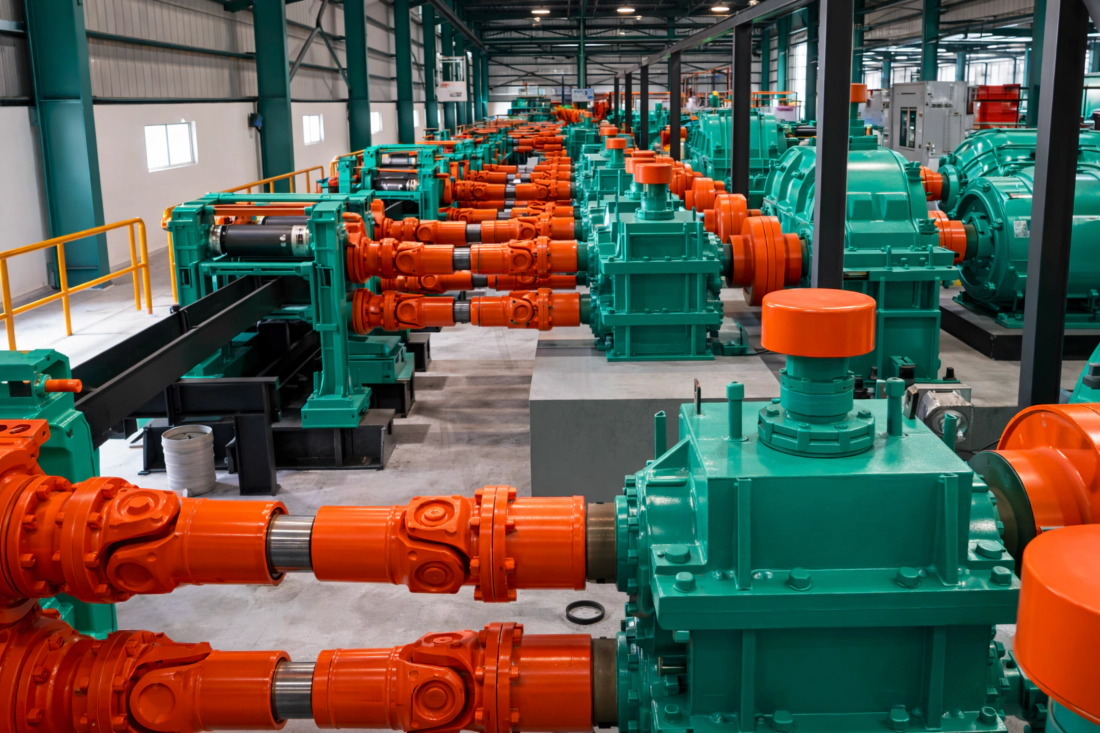
Our engineering team replaced the standard shafts with our Dòng xe tự hành AGV EVER-POWER, featuring specialized crown-ground needle rollers and a synthetic “high-tack” grease that maintains a lubricant film even under static pressure. The result? The mean time between failures (MTBF) jumped from 1,200 hours to over 8,500 hours. In the Dutch context, where labor for maintenance is a premium, this transition paid for itself in less than one fiscal quarter.
The Art of the Custom Driveline: Beyond the Catalog
One thing we’ve learned in 18 years is that Dutch OEMs never want “standard.” Whether you’re building a robotic tulip harvester in Westland or a sub-sea crawler for North Sea maintenance, the constraints are always different. Maybe you have a 350mm clearance limit, or perhaps you need a shaft that can handle 3,000Nm but weighs less than 12kg. We specialize in Tùy chỉnh theo lô nhỏ.
Most printers—excuse me, most technicians—don’t realize that the mass of the drive shaft contributes significantly to the inertia of a hydraulic system. By using thin-wall, high-tensile tubing and friction-welded yokes, we reduce the rotational mass, which allows the hydraulic motor to respond faster and use less energy. It’s the difference between a robot that “jerks” and one that “glides.”
Ever-Power Factory: Precision Manufacturing for Global Standards
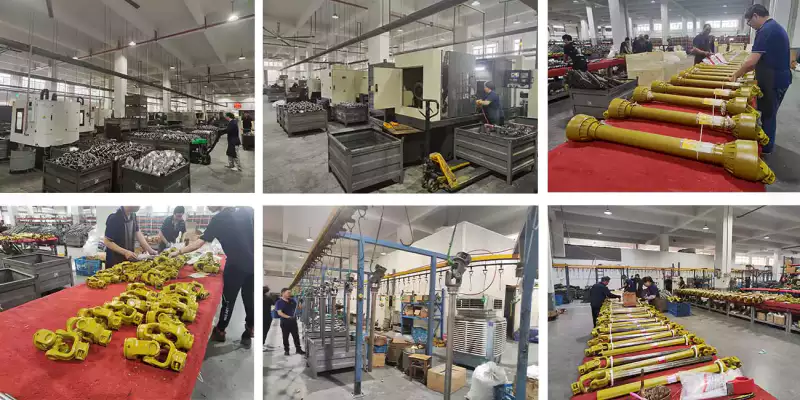
Our facility is equipped with robotic friction welding and 5-axis CNC centers that ensure every yoke is bored with a tolerance of less than 0.01mm. This level of precision is vital for the high RPMs seen in modern Dutch industrial vehicles. We don’t just “check” quality; we build it into the workflow. Each shaft is laser-aligned and dynamically balanced to G2.5 grade before it leaves our bay.
Navigating Global Brands and Compatibility
In the Netherlands, you often see equipment fitted with Comer or GKN drivelines. While these are respectable brands, we often find that their standard series aren’t optimized for the specific high-frequency modulation of modern hydraulic AGVs.
Tuyên bố miễn trừ trách nhiệm pháp lý: Any mention of brands like Comer, GKN, or Bondioli & Pavesi is provided for technical reference and cross-compatibility purposes only. EVER-POWER is an independent manufacturer, and our products are engineered as high-performance alternatives.
The Complete Power Unit: Specialized Gearboxes for Mobile Robots
A drive shaft is only one half of the story. In a hydraulic mobile robot, the connection between the hydraulic motor and the drive wheels often requires a reduction unit that can handle high torque at low speeds. At EVER-POWER, we’ve developed a range of **Planetary and Worm Gearboxes** specifically designed to pair with our cardan shafts. In the Dutch “Brainport” region, where miniaturization and power density are king, we’ve seen a massive shift toward integrated power units.
The synergy between a gearbox and a shaft is where the real engineering happens. If you have a stiff shaft paired with a gearbox that has even a micro-amount of backlash, the hydraulic system will “hunt” for its position, leading to jittery movement. Our gearboxes are built with ground gear profiles that reduce backlash to less than 3 arc-minutes. When mated to our precision-ground splined shafts, the result is a driveline that responds with surgical accuracy. This is crucial for AGVs operating in the high-density racking found in Amsterdam’s logistics outskirts.
For agricultural mobile robots—those used in the glasshouses of Westland—the gearboxes must be hermetically sealed. We use specialized Viton® dual-lip seals to prevent the ingress of humidity and fertilizers, which are common in Dutch indoor farming. Our gearboxes for these applications are often made with aluminum housings to dissipate heat faster, as hydraulic systems tend to run hot in enclosed environments.
Furthermore, our Right-Angle Bevel Gearboxes allow for complex steering geometries in 4-wheel independent steering robots. By providing the entire driveline—from the hydraulic motor adapter to the final wheel hub—we ensure that the torque curves are synchronized. This “system-wide” approach eliminates the compatibility issues that often plague Dutch engineers when sourcing components from five different suppliers. We offer over 150 standard gearbox ratios, and if your project requires a custom casing to fit a specific chassis frame, our “Old Master” engineers can prototype a solution in under three weeks.
In the heavy industry sector—think automated guided vehicles for the steelworks in IJmuiden—the gearboxes must withstand massive radial loads. We use heavy-duty tapered roller bearings and high-viscosity synthetic oils to ensure that the gears remain lubricated even when the AGV is under full load and operating at a snail’s pace. This level of durability is what has made EVER-POWER a trusted name in the Dutch heavy-logistics sector.
Common Inquiries from Dutch Industrial Operators (FAQ)
Latest Industry News from the Netherlands
Rotterdam Port Expansion: New tenders for fully automated terminal tractors are emphasizing “zero-maintenance” drivelines. Eindhoven Tech Update: A new consortium of Dutch robotics companies has announced a breakthrough in light-weight hydraulic actuators, increasing the demand for high-precision, low-inertia cardan shafts. Greenhouse Innovation: The move towards full automation in Dutch greenhouses is driving a 15% increase in the requirement for stainless-steel transmission components.