Zero Backlash, Infinite Precision: Drive Shafts for Dutch Robotic Joints
Why “standard” couplings ruin PID loops in Eindhoven’s high-tech robotics—and how we engineer the hysteresis out.
In the Netherlands, where the standard for mechatronic precision is set by the likes of ASML and Philips, a drive shaft is not just a connector; it is a critical feedback element. When a servo motor executes a 0.01-degree move, the joint *must* follow instantaneously. Standard Hooke’s joints (U-joints) introduce velocity fluctuations—the “cardioid effect”—which confuse the encoder feedback loop, causing torque ripple and “jitter” at the robot’s end effector.
Di EVER-POWER, kami jurutera Precision Robotic Drive Shafts that utilize Constant Velocity (CV) Ball Splines dan Bellow Logam technology. Our shafts are designed to be “invisible” to the controller: zero backlash, infinite torsional stiffness, and constant velocity transmission, even at high articulation angles. We use dry lubrication coatings (DLC/PTFE) to ensure they are cleanroom-ready for the medical and food-grade environments typical of Dutch industry.
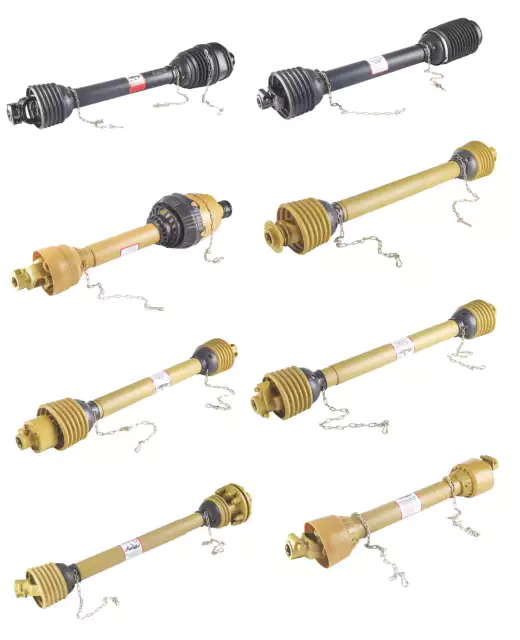
The “Brainport” Standard: Clean, Rigid, Fast
The Dutch automation landscape is unique. It is driven by High-Mix, Low-Volume precision manufacturing. In Brainport Eindhoven, we see a massive demand for collaborative robots (Cobots) that work alongside humans. These robots require drive shafts that are not only precise but also lightweight to ensure safety compliance (ISO/TS 15066).
Our shafts are engineered for these specific Dutch operational environments:
- Cleanroom Compatibility: ISO Class 5 compliant options using stainless steel (AISI 316L) and tribological coatings instead of wet grease.
- Vacuum Environments: For semiconductor handling robots, we offer outgassing-free materials.
- High-Speed Sorting: For the logistics hubs in Venlo, our low-inertia carbon fiber hybrid shafts allow for higher acceleration rates in delta robots.
Client Pain Point: The “Hysteresis Loop”
“We build inspection robots for offshore wind farms (servicing the North Sea). Our camera stabilization platform was drifting. We found that when the robot changed direction, there was a 0.5-second lag before the shaft engaged the load. This hysteresis made image stabilization impossible.”
— R&D Lead, Marine Robotics Startup, Rotterdam
EVER-POWER Solution: Pre-loaded Splines
“We deployed our Series-P Precision Shaft with Pre-loaded Ball Splines. By using oversized balls in the spline raceway, we created a slight interference fit. This eliminated 100% of the backlash. The shaft now acts as a rigid solid rod torsionally, but remains flexible axially to absorb vibration. The drift is gone.”
Technical Specifications: Series Robo-Flex (Precision Class)
These parameters are generated for high-dynamic servo applications, ensuring compatibility with harmonic drives and cycloidal gears.
| Kategori Parameter | Data Spesifikasi | Robotic Application Relevance |
|---|---|---|
| Tork Nominal (Tkn) | 2 Nm – 450 Nm | Matched to Servo Motor Frame Sizes |
| Tork Puncak (Tkmax) | 3.0 x Tkn | Handles Emergency Stop (E-Stop) loads |
| Kekakuan Kilasan | 1.2 – 85.0 kNm/rad | Critical for high-bandwidth control loops |
| Backlash (Rotational Play) | < 1 arc-minute (Standard) / 0 (Pre-loaded) | Positioning accuracy |
| Kelajuan Operasi Maksimum | Up to 12,000 RPM | For high-speed delta robot spindles |
| Misalignment Capacity (Angular) | Up to 45° (CV Joint) / 2° (Bellows) | Articulation range |
| Misalignment Capacity (Parallel) | 0.05mm – 2.0mm | Compensates assembly tolerance |
| Pampasan Panjang (Lejang) | ±2mm to ±150mm | Telescopic reach for arms |
| Momen Inersia (J) | 0.02 – 5.5 kg·cm² | Low J improves acceleration |
| Joint Technology | Double Cardan / CV Ball / Metal Bellows | Constant Velocity transmission |
| Bahan Aci | 7075-T6 Aluminum / Carbon Fiber / 17-4PH SS | Stiffness-to-weight ratio |
| Rawatan Permukaan | Electroless Nickel / Hard Anodize / DLC | Corrosion & wear resistance |
| Pelinciran | PTFE / MoS2 Solid Film / PFPE Grease | Cleanroom compatible, non-migrating |
| Suhu Operasi | -40°C hingga +150°C | Vacuum & bake-out ready |
| Antara Muka Sambungan | Clamping Hub / Expanding Mandrel / Set Screw | Zero-play friction locking |
| Jenis Bearing | Needle Roller (High Load) / Ceramic (High Speed) | Service life optimization |
| Pengimbangan Dinamik | ISO 1940 G2.5 | Vibration-free at speed |
| Service Life (L10) | > 20,000 Jam | 24/7 Automation reliability |
| Hysteresis Loss | Negligible | Repeatability insurance |
| Electrical Continuity | Insulated (Ceramic) or Conductive options | ESD protection requirements |
| Cleanroom Class | ISO Class 5 / Class 6 | Particle generation control |
| Penilaian Vakum | 10^-6 Torr (Optional) | Semiconductor manufacturing |
| Kekakuan Paksi | Low (Desired) | Protects motor bearings from load |
| Diameter Ayunan | 12mm – 80mm | Compact envelope for joint housing |
| Berat | 45g – 2.5kg | Payload optimization |
| Waranti | 18 Months | Standard industrial warranty |
Custom Engineering: Fitting the Impossible Spaces
In robotics, space is the most expensive commodity. A standard catalog shaft rarely fits inside the elbow of a 6-axis arm. This is where EVER-POWER excels. We operate a dedicated Micro-Machining Cell capable of producing telescoping shafts with diameters as small as 8mm.
We can reverse-engineer worn shafts from legacy ABB or Kuka robots, or co-design a completely new transmission element for your prototype. Our “Match-Grinding” process ensures that the male and female spline profiles are paired to within 2 microns, ensuring that the “glass-smooth” sliding action required for haptic feedback devices.
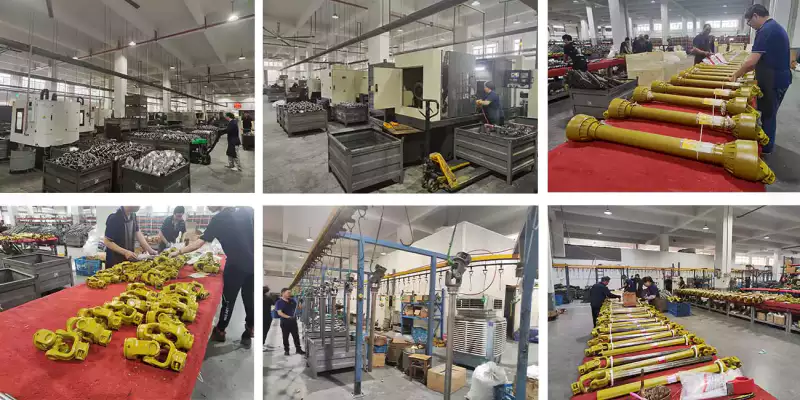
Bridging the Gap: Gearboxes for Agricultural Field Robots
Robotics in the Netherlands isn’t just about cleanrooms; it’s about the field. The rise of Autonomous Agricultural Robots (Agri-Bots) in Flevoland for weeding and seeding is revolutionizing farming. These robots might use electric drives for propulsion, but they often need mechanical power for the implements.
While our precision shafts drive the robot’s arms, we also manufacture the Compact PTO Gearboxes that power the active tools attached to these robots.
The “Agri-Bot” PTO Gearbox
These are not your grandfather’s massive tractor gearboxes. They are miniaturized, aluminum-housed power units designed for autonomous platforms.
- Pengoptimuman Nisbah: Designed to convert the high-speed output of an electric motor (3000 RPM) down to the standard 540 RPM required by conventional farm implements, allowing robots to use existing tools.
- Integrated Sensors: Options for torque and temperature sensors to feed data back to the robot’s AI, enabling “Predictive Farming.”
- Hybrid Drive: Inputs compatible with both our Precision Driveshafts (for the electric motor side) and standard PTO profiles (for the implement side).
Whether you need micron-level precision for a surgical arm or rugged torque for a weeding bot, EVER-POWER provides the complete kinetic chain.
Soalan Lazim (FAQ)
Answers from the Engineering Floor.
What is the difference between a U-joint and a CV joint for robotics?
A standard U-joint causes speed fluctuations (acceleration/deceleration) twice per revolution when angled. In robotics, this causes “torque ripple” and vibration. A CV (Constant Velocity) joint maintains exact input/output speed synchronization at all angles, which is essential for smooth robot motion and accurate path following.
How do you prevent backlash in telescoping robotic shafts?
Standard splines have gaps. We use Recirculating Ball Splines or pre-loaded profiles. By creating a controlled interference fit with precision balls, we eliminate all rotational play while still allowing the shaft to extend and retract smoothly with minimal friction.
Can I use your shafts in a vacuum chamber (semiconductor industry)?
Yes. For Dutch semiconductor clients (like ASML suppliers), we provide shafts made from specialized stainless steels with Vacuum-Rated Solid Lubricants (like Dicronite or MoS2). Standard grease would outgas and contaminate the optics; our solid lubricants do not.
Do you ship custom robotic shafts to the Netherlands quickly?
We understand that R&D projects in Eindhoven move fast. We have a “Rapid Prototype” lane in our factory specifically for small-diameter precision shafts. We can often ship custom-length assemblies in 1-2 weeks, compared to the industry standard of 8-10 weeks.