Precision Drive Shafts for Factory Automation: The Backbone of Dutch Industry
Engineered for High-Speed Conveyors, Robotics, and Smart Logistics Systems across the Netherlands.
If you have spent any time on the floor of a high-tech assembly plant in Eindhoven or a massive distribution center in Venlo, you know that the “heartbeat” of Dutch industry isn’t just the software—it’s the mechanical precision that executes the code. We’ve seen it time and again: a multi-million Euro automated cell brought to a standstill because a standard cardan shaft couldn’t handle the rapid start-stop indexing. In the world of Factory Automation (FA), “good enough” is the enemy of efficiency. When you are running 300 cycles per minute, backlash isn’t just noise; it’s positioning error. It’s a rejected product. It’s downtime.
The trick is understanding that modern automation doesn’t need the heavy, clunky shafts of the past. Today’s logistics and robotics demand low inertia. Every gram of rotating mass you save is less energy your servo motor has to consume to accelerate. That is why we have shifted our focus entirely to zero-backlash, lightweight precision drive shafts. By utilizing advanced needle-bearing universal joints and aerospace-grade aluminum (or even engineering plastics for specific loads), we eliminate the “slop” that kills accuracy. Plus, in a country like the Netherlands, where labor costs for maintenance are high, a “fit and forget” component isn’t a luxury—it’s a financial necessity.
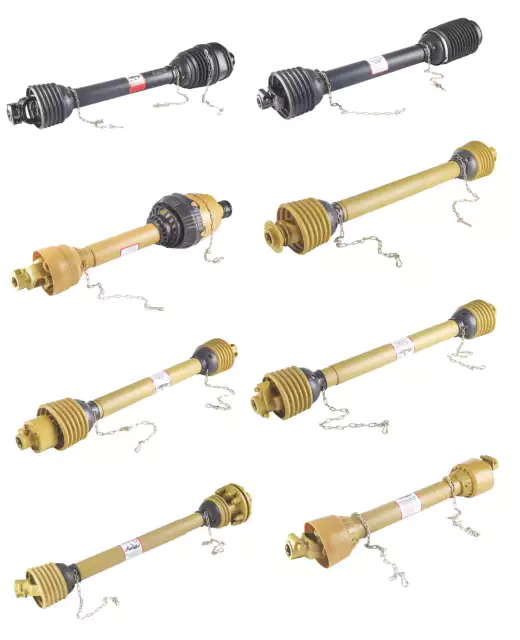
Why Dutch Automation Engineers Choose Our Shafts
Zero Backlash = Zero Error
Standard universal joints have internal clearances. In a continuous conveyor, that’s fine. In a precision indexing table, it’s a disaster. Our shafts use pre-loaded needle bearings that remove all radial play. This ensures that when your motor moves 5 degrees, your load moves exactly 5 degrees. No lag, no hysteresis.
Inertia Optimization
We leverage materials like 7075-T6 Aluminum and carbon fiber composites. A lighter shaft allows for higher critical speeds and faster acceleration rates. For high-speed pick-and-place robots, this reduction in rotational mass directly improves cycle times and reduces wear on motor bearings.
Modular Quick-Change
Downtime is expensive. Our telescoping designs feature quick-release hubs or clamp-style couplings. A maintenance technician can swap out a shaft module in under 5 minutes without needing to move the motor or the driven unit. It’s plug-and-play for the industrial floor.
Technical Specifications: Automation Series
| Parameter | Rentang Spesifikasi | Catatan Aplikasi |
|---|---|---|
| Torsi Nominal | 2 Nm to 500 Nm | Scalable from small robotics to heavy pallets. |
| Kecepatan Maksimum | Hingga 6.000 RPM | Balanced G2.5 for high-speed stability. |
| Sudut Operasi | Up to 45° (Standard) / 90° (Custom) | Depends on speed and duty cycle. |
| Opsi Material | Stainless Steel (304/316), Aluminum, Polymer | Choose based on washdown or weight needs. |
| Pelumasan | Sealed-for-Life / Solid Lube | Zero maintenance required. |
| Gerakan Teleskopik | 10mm to 400mm | Compensates for belt tensioning or misalignment. |
Customer Success Case: Smart Logistics Upgrade in Tilburg
Tantangannya: A major e-commerce fulfillment center in Tilburg was facing a bottleneck. Their automated sorting diverters were failing prematurely. The original steel drive shafts were too heavy, causing the servo motors to overheat during the peak holiday season rush. Additionally, the backlash in the old joints was causing timing errors, leading to packages being pushed into the wrong chutes.
Solusinya: We engineered a retrofit using our Series-A Aluminum Precision Shafts. We replaced the heavy steel telescoping sections with a splined aluminum profile coated in a hard-anodized layer for wear resistance. We also utilized solid-lubricated needle bearing joints to eliminate the need for monthly greasing, which was contaminating the optical sensors below.
Hasilnya: The rotational inertia was reduced by 65%. The servo motor temperatures dropped by 15°C, eliminating the thermal shutdowns. Most importantly, the sorting accuracy went from 98.5% to 99.9% due to the elimination of backlash. The ROI for this retrofit was achieved in just 4 months of operation.
Custom Engineering & Rapid Prototyping
We understand that in the R&D phase of a new machine, you need flexibility. EVER-POWER offers more than just a catalog. We provide full customization services. Need a specialized hub bore to fit a Japanese servo motor? Need a specific length that isn’t standard? We can machine it.
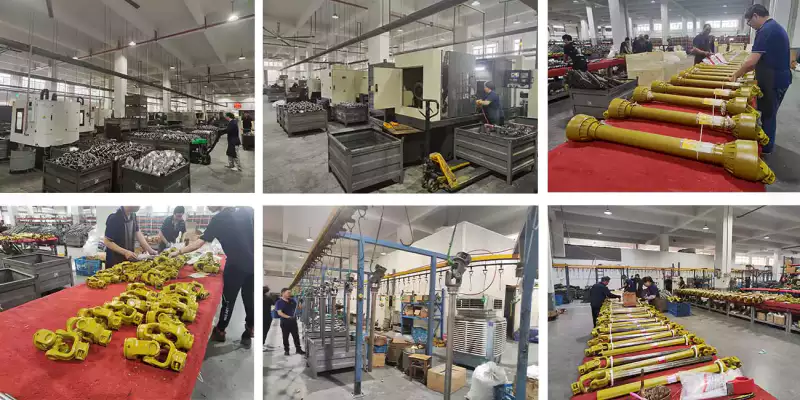
Our facility is equipped with 5-axis CNC machining centers and dynamic balancing rigs dedicated to small, precision shafts. We can produce a single prototype for your proof-of-concept or ramp up to 10,000 units for your serial production. Our “ship-to-line” service ensures that shafts arrive pre-assembled, pre-lubricated, and ready to install, saving your assembly team valuable time.
Pertanyaan yang Sering Diajukan
What is the typical cost for a custom aluminum drive shaft for a packaging machine?
While prices vary based on length and torque capacity, a standard custom precision aluminum shaft typically ranges between €150 and €450 per unit. For bulk OEM orders, we offer significant volume pricing structures.
How quickly can you ship replacement drive shafts to an industrial zone in Amsterdam?
We understand that a stopped line costs money. For standard components, we can often assemble and ship within 24 hours. For custom-machined lengths, our express service can typically get parts to Amsterdam within 3 to 5 business days.
Do you offer stainless steel versions for food-grade automation environments?
Yes, we offer fully stainless steel (AISI 304 or 316) versions with FDA-approved lubricants. These are ideal for washdown environments found in Dutch cheese processing or bakery production lines.
Which coupling type is best for connecting a servo motor to a linear actuator?
For servo applications, we almost always recommend a metal bellow or elastomer jaw coupling integrated into the shaft. These provide the necessary torsional stiffness to maintain registration while absorbing slight misalignments to protect the motor bearings.
How do I measure the correct length for a telescoping drive shaft on my conveyor?
You need to measure the distance between the two shaft ends (distance between ends, or DBE) when the machine is in its neutral position. We then engineer the shaft so that this neutral position falls right in the middle of the telescoping stroke, allowing for expansion and contraction.