Precision Drive Shafts for Back-to-Back
Hybrid & EV Test Benches
Optimizing the mechanical loop in power recirculating dyno setups. Eliminating parasitic vibration in high-RPM electric motor testing across the Brainport Eindhoven region and beyond.
The “Invisible” Failure in Power Recirculating Rigs
I’ve spent the better part of two decades walking into dyno cells—from Detroit to Helmond—and hearing that distinctive, teeth-grinding hum. You know the one. It usually happens right when the test cycle hits the “highway cruising” simulation point. The engineers look at the torque transducer data, see the spikes, and blame the inverter switching frequency.
But in my experience, nine times out of ten, it’s not the electronics. It’s the mechanics. Specifically, it’s the parasitic resonance in the intermediate drive shaft connecting the input motor to the load motor in your back-to-back setup.
Here in the Netherlands, where energy efficiency is practically a religion, the Back-to-Back (or Power Recirculating) test bench is the standard. It’s brilliant engineering: you mechanically couple two electric machines, circulate the torque in a closed loop, and only pull enough grid power to cover the mechanical and electrical losses. But this layout creates a “fighting” scenario. The drive shaft isn’t just transmitting power; it’s acting as a stiff spring between two extremely powerful, high-frequency torque sources.
Most industrial shaft suppliers will sell you a standard G6.3 balanced shaft and call it a day. That works for a paper mill. But when you’re spinning an E-Axle at 16,000 RPM? That tiny imbalance becomes a sledgehammer.
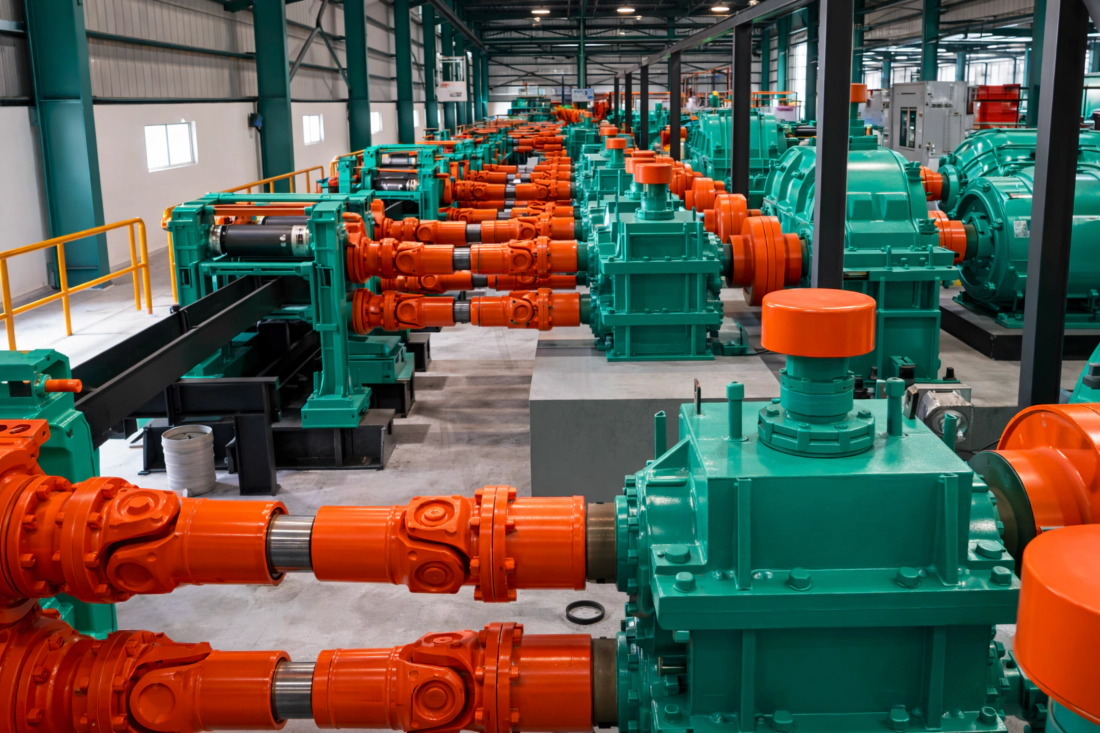
Engineering the “Silent” Shaft
So, how do we fix this? At Ever-Power, we don’t just cut a tube and weld on a flange. We engineer the shaft as a dynamic component of your driveline system.
1. Critical Speed Management
For EV testing, you need to run above the first bending natural frequency of standard steel shafts. We utilize large-diameter, thin-wall Carbon Fiber Composite tubes to push that critical speed threshold well beyond 20,000 RPM, without adding rotating mass that kills your dynamic response.
2. Zero-Backlash Splines
In a back-to-back rig, torque reversal happens in milliseconds (simulating regen braking). Standard splines have “lash” or play. When torque flips, that play creates a shock load. We use pre-loaded ball splines or fixed-length designs to ensure zero backlash, protecting your expensive torque sensors.
3. G2.5 Precision Balancing
ISO 1940 G6.3 isn’t good enough. We balance our high-speed test bench shafts to G2.5 or even G1.0. This process is painstaking—it involves multi-plane balancing at operational speeds—but it’s the only way to get clean data from your instrumentation.
Technical Specifications: Series TB-HighSpeed
We customize every unit, but this table represents the operational envelope for our Dutch automotive clients (DAF, VDL, and independent labs).
| Parameter | Specification Range |
|---|---|
| Max. Operational Speed | Up to 22,000 RPM (Composite) / 8,000 RPM (Steel) |
| Nominal Torque (Tn) | 200 Nm – 45,000 Nm |
| Peak/Shock Torque | 2.5x Nominal Torque (Transient < 5ms) |
| Torsional Stiffness | Customizable (25 – 450 kNm/rad) |
| Balancing Quality | ISO 1940 G2.5 (Standard for Test Benches) |
| Length Compensation | Ball Spline (Low Friction) or Fixed |
| Flange Interfaces | DIN 120 / DIN 150 / CV-Joint / Custom Hub |
| Operating Temp | -40°C to +150°C (High-Temp Grease) |

Need specific CAD models?
We support STEP, IGES, and Parasolid formats for your simulation.
Client Success: The “Ghost” Vibration in Brabant
The Context: A leading Tier-1 supplier near Helmond (in the heart of the Dutch Automotive Campus) was commissioning a new 4WD chassis dynamometer. They were testing a prototype hybrid transmission for a commercial truck application.
The Problem: Every time the test cycle entered the “regen” phase at 2,500 RPM, the vibration sensors on the gearbox input shaft screamed. The facility manager was convinced the concrete foundation was cracking. They were days away from shutting down the rig for a €50,000 civil engineering inspection.
The Ever-Power Intervention: We got the call on a Tuesday. By Wednesday afternoon, our field engineer was on-site with vibration analysis tools. We found the issue wasn’t the floor—it was the standard cardan shaft they had sourced from a general industrial catalog. The spline friction was so high under load that the shaft effectively “locked up” axially, transmitting engine firing pulses directly into the dyno frame instead of absorbing them.
The Solution: We replaced the standard shaft with a Series TB-BS (Ball Spline) Low-Friction Shaft tailored for 3,500 Nm. The rolling friction of the ball spline is < 5% of a sliding spline.
The Result: The “ghost” vibration vanished instantly. Axial forces dropped by 92%. The rig was back online within 48 hours, saving the client weeks of downtime and a completely unnecessary foundation repair.
Factory Direct: Customization is Standard
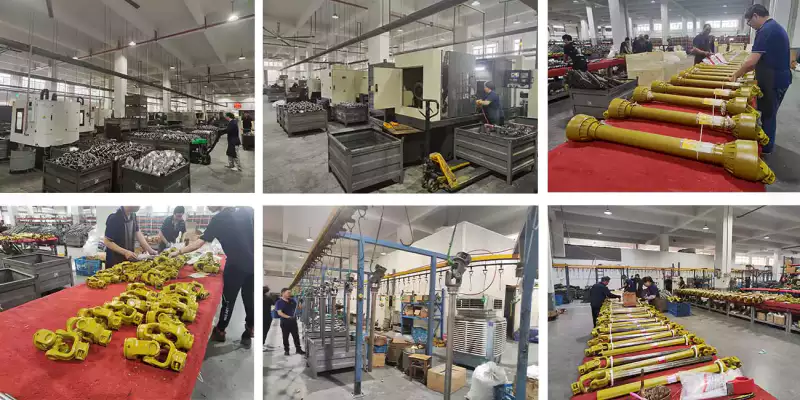
Many purchasing managers think “Custom” means “Slow.” Not with us. Our factory is set up for High-Mix, Low-Volume production specifically for the R&D sector.
- Rapid Prototyping: We can ship a custom-length, balanced shaft in 3-5 weeks, not the industry standard 12-16 weeks.
- In-House Balancing: We don’t outsource. Our Schenck balancing machines are calibrated weekly.
- Material Traceability: Every tube, yoke, and cross kit comes with full 3.1 Material Certification, essential for EU compliance.
Global Landscape 2025/2026: Top 10 Mechanical Transmission Leaders
In the high-stakes world of automotive and industrial powertrain testing, knowing who holds the engineering cards is vital. Here is the current landscape of the world’s top transmission and driveline manufacturers (ranking based on market presence in industrial & testing applications):
- GKN Automotive (UK/Global) – The benchmark for CV joint technology.
- Dana Incorporated (USA) – Dominant in off-highway drivelines.
- Voith Turbo (Germany) – Heavy industry and high-torque universal joints.
- Ever-Power Transmission (Global) – Specialists in agile, custom industrial & test-bench solutions.
- HZPT (Hangzhou Power Transmission) – A powerhouse in agricultural and modular industrial shafts (Our Strategic Partner).
- American Axle & Manufacturing (AAM) – Focusing heavily on e-Drive units.
- IFA Group (Germany) – Innovators in lightweight composite shafts.
- Meritor (Cummins) – Heavy-duty trucking drivetrains.
- EP-Transmission Group – Focused on precision gearbox and shaft integration.
- Elbe Gelenkwellen (Germany) – Known for precision operational shafts in Europe.
Expert Answers for Dutch Test Engineers
Common questions we receive from clients in Eindhoven, Rotterdam, and Amsterdam regarding test rig setups.
Pricing depends heavily on the RPM and torque requirements. A standard industrial steel shaft might range from €800 to €1,500. However, a high-speed carbon fiber shaft designed for 20,000 RPM E-motor testing typically falls between €3,000 and €6,000 due to the complex composite bonding and G2.5 balancing. Contact us for a precise quote delivered to your facility.
For back-to-back rigs, stiffness is king. We recommend a fixed-length or ball-spline cardan shaft over a CV joint shaft for most straight-line setups. Cardan shafts (U-joints) generally offer higher torsional stiffness and better durability under the shock loads created when the test cycle switches from motoring to generating (regen) modes.
Yes. We regularly supply replacement or upgraded shafts for major test bed systems including Horiba, AVL, and Renk. We utilize standard flange interfaces (DIN, SAE, Face Key) that allow our high-performance shafts to be “drop-in” replacements without modifying your dynamometer or load motor mounts.
Dutch safety regulations (Arbowet) and the EU Machinery Directive are strict. Any exposed rotating shaft must be guarded. We provide stationary yellow safety cages (often polycarbonate for visibility) that fully enclose the shaft. Unlike agricultural PTO guards which rotate with the shaft, test bench guards must be non-rotating and fixed to the bedplate.
© 2026 Ever-Power Transmission. Engineering the future of testing.