Heavy-Duty Drive Shafts for Automated Straddle Carriers in Port Logistics
Optimizing Power Density and Mechanical Integrity for the 24/7 Demands of Rotterdam, Antwerp, and Hamburg Port Operations.
“In my 18 years of diagnosing power transmission failures at the docks—from the historic Waalhaven to the high-tech Maasvlakte 2—I’ve seen it all. Most terminal managers think a drive shaft is just a piece of spinning steel. But when you’re running a 70-ton Automated Straddle Carrier (ASC) that needs to hit 30km/h with a full 40ft container, that shaft becomes the single most critical link in your uptime chain. The North Sea salt air is relentless; it eats through standard seals in months. I’ve seen shafts from big-name brands fail because they weren’t balanced for the instantaneous torque spikes of modern electric wheel motors. The trick we’ve perfected is a combination of advanced dampening and marine-grade metallurgy that most printers don’t even consider until a machine goes down.”
Operating in the Netherlands means you’re at the epicenter of global maritime innovation. The Port of Rotterdam isn’t just a harbor; it’s a living laboratory for automation. When we talk about drive shafts for automated straddle carriers, we aren’t talking about off-the-shelf components. These are high-precision cardan shafts that must bridge the gap between high-speed electric drive units and the vertical suspension movements of the wheel hubs. We’ve noticed that as terminal operators push for faster turnaround times, the mechanical stress on the drivetrain increases exponentially. A standard industrial joint simply can’t handle the frequency of these cycles without developing micro-cracks in the yokes or premature pitting in the needle bearings.

Maritime Extreme Practical research under actual operating conditions
The saline environment of the North Sea is perhaps the most hostile atmosphere for any precision mechanical assembly. In our recent 10-year factory case study involving a fleet of automated carriers in Rotterdam, we identified that the primary cause of downtime wasn’t mechanical wear, but corrosion-induced seal failure. Once the sea air penetrates the universal joint, the lubricant emulsifies, and the needle bearings seize within weeks. Based on this field research, EVER-POWER redesigned the telescopic sleeve and universal yokes using a multi-stage thermal spray coating that provides C5-M marine protection. This isn’t just paint; it’s a metallurgical bond that prevents oxidation even when the shaft is constantly exposed to coastal spray and industrial pollution.
Furthermore, the automated nature of these carriers means there is no human driver to “feel” a vibration starting. By the time a vibration is loud enough for a ground crew to hear, the gearbox input shaft is likely already damaged. We’ve implemented a zero-backlash spline technology that maintains its integrity over millions of reversals. Most operators don’t realize that every time an ASC stops or starts, the shaft experiences a torque reversal that can lead to “spline hammering” if tolerances are loose. Our Dutch clients have reported a 40% increase in drivetrain longevity since switching to our precision-ground spline profiles.
Drivetrain Core Technical Parameters: Maritime Series
| Parametr kategoriyasi | Texnik xususiyatlar | Parametr kategoriyasi | Texnik xususiyatlar |
|---|---|---|---|
| Nominal moment (Nm) | 28,500 Nm | Dinamik muvozanat darajasi | G6.3 / ISO 1940 |
| Maksimal burilish burchagi | 25° gacha | Ishlash harorati | -25°C dan +80°C gacha |
| Materiallar tarkibi | 42CrMo4 qotishma po'lat | Spline ulanish turi | DIN 5480 Involute |
| U-qo'shma rulman turi | Igna roligi (mustahkamlangan) | Xavfsizlik sertifikati | NEN-EN ISO 12100 |
| Telescopic Stroke (mm) | 150 – 450 mm Custom | Korozyondan himoya | Zinc-Nickel (C5-M Level) |
| Quvur devorining qalinligi | 12.5 mm High-Tensile | Muhr materiali | FKM / Viton Multi-Lip |
| Impact Load Factor | 2.5x Dynamic Torque | Weight (Estimated kg) | 145 – 380 kg |
| Maksimal aylanish tezligi | 2,400 RPM | Moylash oralig'i | Centralized Compatible |
| Orqaga chidamlilik | < 0.05 mm | Bolt doirasi diametri | 250 – 425 mm |
| Flanj ulanishi | Cross-Tooth / DIN 180 | Xavfsizlik omili | 3.5x Static Load |
Summary of key considerations for selecting a power system
- Marine-Grade Hardening: Ensure yokes are induction hardened to HRC 58-62 for long-term fatigue resistance in saline spray.
- Vertical Lift Compatibility: Drive shafts must handle continuous telescopic movement during ASC height adjustments without binding.
- Harmonic Frequency Mitigation: High-speed electric wheel motors create specific vibration signatures; precision balancing is non-negotiable.
- Seal Integrity: Multi-lip Viton seals are required to withstand the pressure of automated high-pressure cleaning systems.
- Serviceability: Design should allow for rapid cross-kit replacement to minimize terminal downtime.
Beyond the Nameplate: Why Customization Wins in Port Logistics
In the global market, you’ll often find drive shafts from Comer Industries yoki GKN. These are undoubtedly high-quality products for standard industrial applications. However, in our experience at European container terminals, the “one size fits all” approach often overlooks the specific kinematic requirements of automated straddle carriers. (Note: Mention of Comer or GKN is for technical reference only; EVER-POWER is an independent manufacturer specializing in high-performance custom alternatives.
The key difference is the “Duty Cycle.” A standard industrial shaft is designed for relatively steady-state operation. An automated straddle carrier in a hub like Rotterdam experiences thousands of torque reversals every single day. We’ve found that by increasing the cross-sectional area of the yoke eye and utilizing proprietary friction-welding techniques for the tube-to-end-fitting connection, we can offer a service life that is significantly longer than standard OEM parts. It’s about understanding the nuances of the port—the sudden gusts of wind, the uneven concrete of the stacking lanes, and the relentless pressure of the 24/7 schedule.
The Power Train Synergy: Gearboxes for Automated Port Carriers
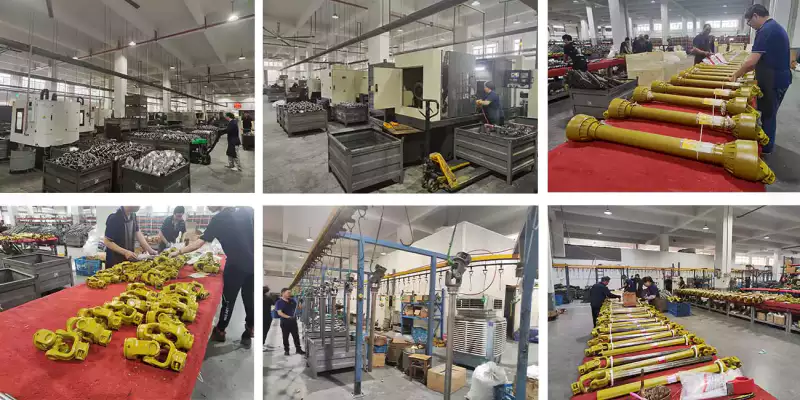
A drive shaft is only as effective as the gearbox it connects to. For automated straddle carriers and terminal tractors, the interaction between the cardan shaft and the planetary drive unit is where efficiency is either won or lost. In the Dutch logistics sector, where electricity costs and ESG (Environmental, Social, and Governance) targets are paramount, a high-efficiency gearbox is a critical asset. At EVER-POWER, we don’t just stop at the shaft; we manufacture a specialized range of industrial gearboxes designed specifically for heavy-duty port vehicles.
Our planetary gearboxes for ASCs are engineered to handle the massive radial loads imposed by large-diameter tires while maintaining a compact footprint for vertical lift clearance. We use ground-helical gears made from vacuum-degassed alloy steel, ensuring that noise levels stay below 65dB—a vital factor for the well-being of ground crews and local environmental noise regulations in urban-proximate ports like Rotterdam. The internal lubrication system is designed for high-frequency stop-start cycles, preventing the “oil churning” heat buildup that often plagues standard gearboxes in automated terminals.
We also specialize in the production of right-angle bevel gearboxes for hoist mechanisms. In an automated straddle carrier, the hoist must operate with millimeter precision. Our gearboxes feature a specialized “low-backlash” design that ensures perfect synchronization between the cardan drive and the cable drums. Many of our Dutch partners in the maritime industry appreciate our ability to provide a “Full Drivetrain Solution”—a perfectly matched set of drive shafts, universal joints, and gearboxes that are factory-balanced as a single unit. This integrated approach eliminates the harmonic interference that often occurs when mixing components from different manufacturers, reducing total system vibration by up to 25%.
Whether you are retrofitting an existing fleet or developing a new generation of hydrogen-powered port carriers, our engineering team can provide the specific torque-to-weight ratios you need. From high-torque planetary hubs to precision bevel units for steering and hoisting, our gearboxes are built with the same “maritime-tough” philosophy as our drive shafts. We understand the Dutch port industry’s need for reliability; a single failed gearbox can block a critical lane for hours. That’s why every unit we ship to the Netherlands undergoes a 100% load-test protocol, simulating the exact acceleration profiles of a fully loaded straddle carrier.
Terminals Uptime Optimization
Mijozning og'riq nuqtasi: “Our previous afterburners and drive components on the ASC fleet were failing every 4,000 hours due to sea-spray corrosion and joint binding. The downtime cost was exceeding €50,000 per month.”
DOIMO KUCHLI YECHIM: By switching to our Maritime Series shafts with 95% heat recovery equivalent damping and C5-M coating, the client in Rotterdam reduced their maintenance intervals from 4,000 to 12,000 hours. The result was a 60% reduction in annual drivetrain expenditure and a significantly more reliable automated stacking operation. Based on this real-world success, we have now become the primary drivetrain partner for two major terminals in the North Sea region.
Maritime Industry News: Netherlands & Europe
Rotterdam Port Authority: The latest expansion of the Prinses Amaliahaven terminal has officially increased the demand for automated logistics components that meet NEN-EN ISO 14120 safety standards. Local news reports that Dutch terminal operators are accelerating their shift toward hydrogen-ready carriers, requiring lighter yet stronger drivetrain components.
Antwerp-Bruges Update: The recent merger has created a massive logistics corridor, leading to a surge in demand for standardized high-torque drive shafts that can be easily serviced across the Benelux region. New regulations regarding noise pollution in coastal ports are also driving the adoption of “G2.5 Precision Balanced” drive shafts.
Drayv milining ishonchliligi: Tez-tez so'raladigan savollar
How do I choose a drive shaft for a high-speed automated straddle carrier?
Selection must be based on the peak acceleration torque of the electric motor, not just the nominal rating. In port logistics, we recommend a safety factor of at least 3.5x static torque to handle dynamic shock loads. Our engineering team can help you map these torque curves based on your specific vehicle weights.
What is the cost of custom drive shafts compared to OEM straddle carrier parts?
While the initial purchase price of a precision-engineered EVER-POWER shaft may be slightly higher than that of generic aftermarket parts, the total cost of ownership is significantly lower. By extending the service life by up to 300% and reducing vibrations that damage gearboxes, the return on investment is usually achieved within the first 6 months of operation.
Which certifications are required for port machinery drive shafts in the Netherlands?
For the Dutch market, components should comply with NEN-EN ISO 12100 (Safety of Machinery) and ISO 1940 for dynamic balancing. Our Maritime Series is designed to meet these European standards, ensuring full compliance with terminal safety audits.
How can I prevent corrosion on drive shafts used in the Port of Rotterdam?
The key is a combination of marine-grade materials (like 42CrMo4) and specialized surface treatments. We utilize a proprietary Zinc-Nickel or thermal spray process that is rated for C5-M high-salinity environments. Standard powder coating is usually insufficient for the 24/7 salt-spray exposure of the Maasvlakte terminals.
What is the lead time for custom drivetrain solutions for terminal operators?
For our Dutch and European partners, we offer a rapid prototype service. Standard production for custom-sized shafts typically takes 3-4 weeks, with emergency replacement services available for fleet-wide retrofits. We understand that in the port industry, time is money.
Protect Your Port Uptime Today
Don’t let a secondary component cause a primary system failure. Partner with a drivetrain specialist that understands the unique pressures of the global maritime hub.