Relentless Power: Drive Shafts for the Dutch Cement & Slag Industry
If you have ever stood on the walkway of a cement terminal in the Port of Rotterdam or near the blast furnaces in IJmuiden, you know that the “cement industry” here isn’t just about quarrying limestone anymore. It’s about processing. It’s about taking abrasive blast furnace slag, fly ash, and imported clinker and grinding them into the high-grade cements that build our dikes and bridges.
In this environment, a drive shaft (Cardan shaft) faces a triple threat: Micro-dust, Heat, and Shock Loads. I’ve spent nearly two decades crawling under ball mills and vertical roller mills (VRMs), and I can tell you that standard industrial shafts simply don’t last here. When you are grinding slag, the dust is so fine it behaves like a fluid, bypassing standard rubber seals and turning the grease in your U-joints into a grinding paste that eats steel for breakfast.
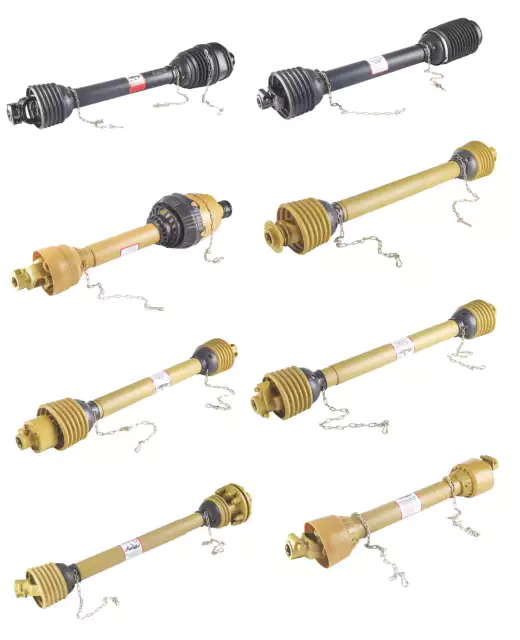
“Back in 2019, I was consulting for a cement grinding facility in North Brabant. They were losing drive shafts on their bucket elevator auxiliary drives every four months. The maintenance manager swore they were greasing them weekly. I pulled a failed spider apart. The trunnions were blue—heat discoloration. The culprit? They were using a standard lithium grease that carbonized at the ambient temperatures near the kiln heat exchanger. We switched them to our High-Temp Series shaft with Viton seals and a calcium-sulfonate complex grease. The current shafts have been running for 3 years without a hiccup.”
The Dutch Industrial Context: Efficiency & Emissions
The Netherlands pushes the envelope on environmental standards. This means your plant is likely running closed-circuit grinding systems with high-efficiency separators to minimize dust emissions. This is great for the environment, but it puts immense strain on the driveline. The dynamic loads on the drive shafts powering the separator fans and the main mill drives are fluctuating constantly as the system optimizes itself.
Furthermore, with the shift towards CEM III (Blast Furnace Cement), the material is harder and more abrasive than traditional Portland clinker. Your crushers and mills are working harder. You need a drive shaft that offers high torsional stiffness to prevent vibration resonance, which can shatter gearbox teeth in milliseconds.
Inquire Now – Upgrade Your Driveline
Technical Specifications: EP-Cement Mill Series
We don’t rely on generic catalog numbers. Below are the specific parameters for our EP-Heavy Duty (HD) Series, engineered for the low-speed, high-torque reality of cement processing equipment.
| Parameter-ID | Specifikation Beskrivning | Värde / Intervall | Enhet |
|---|---|---|---|
| CEM-01 | Nominellt vridmoment (Tn) | 45,000 – 120,000 | Nm |
| CEM-02 | Utmattningsmoment (Tdw) | 65,000 | Nm |
| CEM-03 | Shock Load Factor (K) | 2.5 – 3.0 | – |
| CEM-04 | Flange Diameter (D) | 350 / 390 / 435 | mm |
| CEM-05 | Closed Length (L_min) | 1150 – 2400 | mm |
| CEM-06 | Längdkompensation | 180 – 350 | mm |
| CEM-07 | Maximal artikulationsvinkel | 15 (Standard) / 25 (Wide) | Grader |
| CEM-08 | Rördiameter | 180 – 273 | mm |
| CEM-09 | Rörväggstjocklek | 12.5 – 20.0 | mm |
| CEM-10 | Spline-typ | Evolvent DIN 5480 | – |
| CEM-11 | Okmaterial | 42CrMo4 smidd stål | ISO 683 |
| CEM-12 | Cross-Assembly Material | 18CrNiMo7-6 | Karburiserad |
| CEM-13 | Ythårdhet | 58 – 62 | HRC |
| CEM-14 | Falldjup | 1.5 – 2.5 | mm |
| CEM-15 | Tätningssystem | Multi-lip + Metal Shield | Dammtät |
| CEM-16 | Operating Temp (Max) | +180 (with special grease) | °C |
| CEM-17 | Torsionsstyvhet | 4.85 x 10^5 | Nm/rad |
| CEM-18 | Balanserande betyg | G 6.3 (ISO 1940) | – |
| CEM-19 | Flänsanslutning | Ansiktsnyckel / Hirth-tandning | Frivillig |
| CEM-20 | Bultkvalitet | 12.9 High Tensile | Metrisk |
| CEM-21 | Målningsspecifikation | 2-Pack Epoxy High Build | RAL 7011 |
| CEM-22 | Korrosionsbeständighet | C4 Industrial | ISO 12944 |
| CEM-23 | Lagerlivslängd (L10h) | > 40,000 | Timmar |
| CEM-24 | Lubrication Points | Central or Manual | Option |
| CEM-25 | Vikt (ungefär) | 250 – 680 | kg |
| CEM-26 | Säkerhetskoppling | Shear Pin / Friction | Option |
| CEM-27 | Axial Force (Retract) | < 3500 | N |
| CEM-28 | Svängdiameter | 280 – 450 | mm |
| CEM-29 | Effektivitet | 99.1 | % |
Customization: Because “Standard” Rarely Fits
Many cement terminals in Amsterdam and Vlissingen are running older machinery from the 80s or 90s—solid German engineering like Polysius or Krupp, but finding spares is a nightmare. OEM lead times can stretch to 20 weeks. We know you can’t idle a kiln for 5 months.
Vi specialiserar oss på Omvänd ingenjörskonst. If you have a damaged shaft, we don’t just copy it; we improve it. We can machine custom flanges to match your existing gearbox output, but upgrade the universal joint to a larger series to handle the increased load from modern high-strength cement grinding. We recently retrofitted a slag dryer drive in IJmuiden, where we increased the torque capacity by 30% without changing the installation length, simply by using higher-grade alloy steels and optimizing the yoke geometry.
Success Story: The Clinker Import Terminal in Rotterdam
Utmaningen: A major import terminal was facing repeated failures on its ship unloader’s main conveyor drive. The drive shaft was exposed to sea spray (salt) and abrasive clinker dust. The standard shafts were corroding at the splines, seizing up, and then transmitting axial loads that destroyed the gearbox output bearings.
Vår lösning: Vi levererade en specialanpassad SWC-Series Marine Spec Shaft. We applied a specialized Rilsan coating to the splines to prevent seizing and corrosion. We also installed a “booted” slip assembly that completely sealed the length compensation section from the elements.
Resultatet: The new shafts have survived two full winters of North Sea gales and clinker dust without a single seizure. The maintenance team reported a 40% reduction in vibration levels, extending the life of their gearboxes significantly.
Varumärkeskompatibilitet och juridisk ansvarsfriskrivning
We are fully aware that your maintenance manual likely lists parts from manufacturers like GKN, Voith, elbe, eller Dana. These are excellent, world-class brands.
However, as an independent manufacturer, we offer flexibility that they often cannot. Need a non-standard length? Need a stronger cross kit on a standard flange? That is our specialty. We provide the “problem solver” parts that keep your plant running when the standard catalog says “no.”
From the Mill to the Field: Gearboxes
It might seem like a leap from a massive cement kiln to a tractor in a tulip field, but the engineering principles of torque transmission are remarkably similar. In fact, Ever-Power’s expertise isn’t limited to heavy industry; we are also a leading supplier of Växellådor for the Dutch farming sector.
The Netherlands is an agricultural powerhouse, and the machinery here is advanced. Whether it’s a TMR mixer for a dairy farm in Friesland or a specialized flower bulb harvester in North Holland, the gearbox is the heart of the implement. We manufacture rugged, cast-iron gearboxes designed to pair perfectly with our PTO shafts.
Why Our Ag Gearboxes Stand Out:
- Sealing Technology: Just like in cement plants, farm machinery faces dust and moisture. Our gearboxes use dual-lip seals to keep the oil in and the mud out, critical for equipment that gets pressure-washed daily.
- Konisk kugghjuls precision: We use spiral bevel gears that are case-hardened and lapped in pairs. This ensures quiet operation and high efficiency, transmitting more power from the tractor PTO to the blade or auger.
- Mångsidighet: We offer a range of ratios (1:1.46, 1:1.92, etc.) and configurations (T-box, L-box) to suit mowers, spreaders, and rotary tillers.
If you are managing a mixed fleet—perhaps industrial loaders in the yard and agricultural tractors for site maintenance—we can be your single source for power transmission. We often supply “driveline kits” that include the PTO shaft, the safety clutch, and the gearbox, all matched to ensure perfect alignment and vibration-free running. Investing in a matched set prevents the common “knocking” issues caused by spline incompatibility.
Vanliga frågor (FAQ)
How do I know if my vibration is coming from the drive shaft or the gearbox?
A classic engineer’s dilemma! Typically, drive shaft vibration occurs at 1x the rotational speed (imbalance) or 2x the speed (misalignment). If the vibration frequency matches the tooth mesh frequency of your gears, it’s the gearbox. However, a worn U-joint often creates a distinct “clunk” on startup or load reversal. We recommend a simple strobe light test to visually check the shaft while running.
Can you deliver to industrial zones like Chemelot or Moerdijk?
Yes, we have established logistics routes to all major Dutch industrial hubs. For critical breakdowns, we can arrange express air freight for smaller components or dedicated courier vans for complete shafts from our European distribution points.
What grease should I use for drive shafts in a high-heat clinker cooler area?
Standard lithium grease will liquefy and run out. We recommend a High-Temperature Lithium Complex grease, preferably with solid additives like Molybdenum Disulfide (MoS2) or Graphite. These solids provide lubrication even if the base oil evaporates under the radiant heat of the clinker.
Do you offer face key connections for high-torque vertical mill drives?
Yes, for high-torque applications (typically >50kNm), relying on bolt friction alone is risky. We machine precision “Face Keys” across the flange face to positively lock the shaft to the gearbox hub, ensuring that the shear load is taken by the key, not the bolts.
Is it worth repairing a large cardan shaft, or should I buy new?
For shafts with a tube diameter over 180mm, repair is often cost-effective. We can replace just the cross kits (spiders) and rebalance the unit. However, if the splines on the sliding section are worn, a new shaft is usually the safer and more economical long-term choice.
Industry News (Netherlands): The Dutch cement sector is undergoing a massive transformation with the “Concrete Agreement” (Betonakkoord), aiming for 100% circularity by 2030. This is driving a surge in the use of secondary raw materials, which often require more intensive crushing and grinding. Plant managers are increasingly upgrading their drive trains to handle the higher loads associated with processing demolition waste and geopolymer binders.