Chasing the “Ghost Frequency”: Precision Drive Shafts for Dutch R&D Test Benches
Why standard industrial couplings ruin your NVH data in Eindhoven’s high-tech labs—and how to achieve true zero-backlash transmission.
In my 18 years of commissioning test cells—from 500kW E-motor rigs to heavy-duty PTO dynamometers—I’ve seen more tests scrubbed due to shaft resonance than I can count. Let’s be honest: in the Netherlands, where we pride ourselves on high-precision engineering (thanks, ASML ecosystem), using a standard “off-the-shelf” cardan shaft for a test bench is like putting wooden wheels on a Formula 1 car. It just doesn’t work.
The physics are unforgiving. A test bench drive shaft needs to be a chameleon. It must be rigid enough to transmit torque without wind-up hysteresis (which messes with your control loop), yet flexible enough to protect your expensive torque transducer from parasitic bending moments. At EVER-POWER, we engineer High-Speed Precision Drive Shafts specifically for these “torture chambers.” We are talking about carbon fiber tubes to drop rotational inertia by 60%, and CV (Constant Velocity) joints that run smooth as silk even when your test setup requires significant articulation.
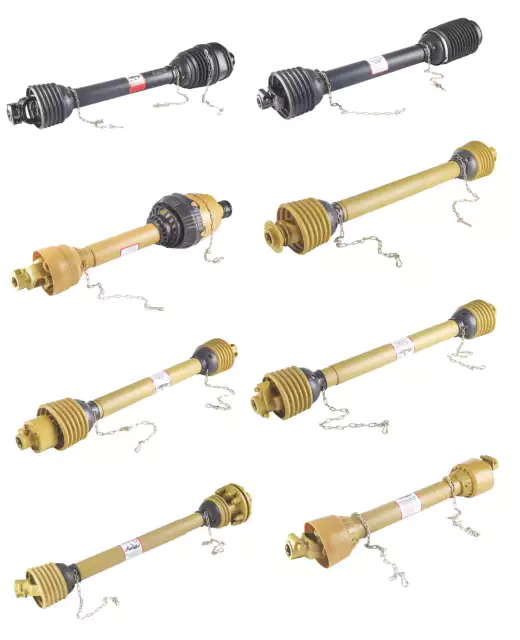
The “Brainport” Standard: Why G6.3 Isn’t Good Enough
The Netherlands is unique. We have a massive concentration of drivetrain R&D in a very small area. Whether it’s DAF Trucks testing next-gen axles or start-ups in Delft pushing hydrogen fuel cell compressors to the limit, the requirements are always the same: Speed and Silence.
Standard industrial shafts are balanced to ISO Grade G6.3. For a conveyor belt in a port, that’s fine. For a test bench running at 8,000 RPM? It’s a jackhammer. We balance our Test Bench Series to ISO Grade G2.5 as standard, with G1.0 available for ultra-high-speed aerospace applications. We use “yoke-phasing” techniques during assembly to cancel out even the minute non-uniform velocity fluctuations that occur in standard U-joints.
And let’s talk about the Agricultural Testing sector in Wageningen. When you are testing a 400HP tractor PTO under full load simulation, the shock loads are violent. We supply shafts with integrated Ограничители крутящего момента that act faster than your dyno’s emergency stop button, saving your €50,000 torque flange from snapping when a prototype gearbox seizes.
The “Hysteresis Hunter” Case Study
Client Pain Point
— Senior Test Engineer, Drivetrain Lab
EVER-POWER Technical Solution
I suspected mechanical backlash. The spline fit on their standard commercial shaft had about 0.2mm of play. In a dynamic test, that’s an eternity.
Решение: We swapped in our Zero-Backlash Series ZB-400.
- Spline Technology: Pre-loaded ball spline (linear bearing type).
- Torsional Stiffness: Increased by 40% using a larger diameter thin-wall tube.
- Исход: Torque reversal data smoothed out instantly. The controller oscillation vanished.
Technical Specifications: Series TB-Precision (Test Bench)
This is not a catalog for standard agricultural shafts. These are precision instruments designed for the measurement chain.
| Параметр / Функция | Диапазон технических характеристик | Lab Note |
|---|---|---|
| Номинальный крутящий момент (Ткн) | 200 Nm – 65,000 Nm | Continuous rating |
| Max Speed (Steel Tube) | up to 6,000 RPM | Dependent on length |
| Max Speed (Composite) | up to 12,000 RPM | Low inertia design |
| Баланс качества | G2.5 (Std) / G1.0 (Opt) | ISO 1940-1 |
| Torsional Stiffness (Ct) | 15 – 850 kNm/rad | Customizable for TVA |
| Люфт шлица | < 0.02mm (Std) / Zero (Ball) | Crucial for transient tests |
| Компенсация длины | +/- 50mm to +/- 200mm | Покрытие с низким коэффициентом трения |
| Axial Force (Plunge) | < 500 N @ Tkn | Protects dyno bearings |
| Flange Concentricity | 0.03 mm TIR | Pilot fit is critical |
| Параллельность фланцев | 0,02 мм | Face-to-face accuracy |
| Тип соединения | Cross & Bearing / CV | CV for higher angles |
| Максимальный угол поворота | 25° (Short) / 4° (High Speed) | Watch heat buildup! |
| Срок службы подшипника (L10) | > 10,000 Hours | At nominal load |
| Материал трубки | DOM Steel / Carbon / Titanium | Mass optimization |
| Критический запас скорости | > 1.3x Operating Speed | Safety factor |
| Диапазон температур | от -30°C до +120°C | Viton seals available |
| Рисование | Matte Black / None (Polished) | Low reflectivity for strobe |
| Hardware | 12.9 Grade Socket Cap | Geomet coated |
| Защитные ограждения | Not included (Bench spec) | Shaft only |
| Масса | 2.5 kg – 450 kg | Depends on size |
| Смазка | High Speed Lithium Grease | Minimal fling-off |
| Диаметр качания | 65mm – 320mm | Check clearance |
| Adapter Plates | Custom Machined | To fit any dyno flange |
| Документация | Balancing Report / Material Cert | Full traceability |
| Runout Check | 100% Final Inspection | Report provided |
| Гарантия | 1 год / 2000 часов | Lab usage terms |
Customization: The “Drop-In” Retrofit
In the world of test benches, there is no “standard.” You might be retrofitting an old Horiba dyno from the 90s, or building a custom rig with a Siemens motor and a Kistler torque sensor. The flange interfaces never match. We solve this.
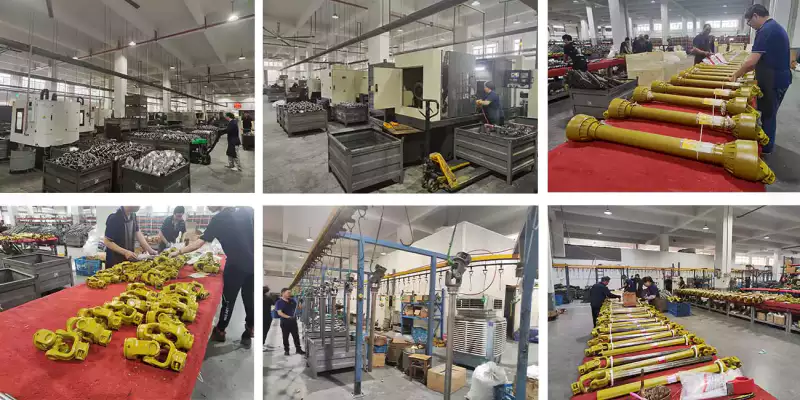
We operate a dedicated Quick-Turnaround Prototype Shop within our factory. We can machine custom adapter plates (e.g., DIN 120 to SAE 1410) and weld the shaft to your exact compressed length requirement within millimeters. For the Dutch market, where time-to-market is critical for R&D projects, we can often ship a custom-balanced assembly in under 2 weeks.
Completing the Loop: Gearboxes for Test Rigs & PTO Dynos
A precision drive shaft is only one link in the chain. In many test bench applications—especially those simulating agricultural or heavy industrial loads—the gearbox is a critical component of the test setup itself. At EVER-POWER, we don’t just connect the components; we manufacture the torque multipliers and speed increasers that define the test capabilities.
1. PTO Dynamometer Gearboxes (Speed Increasers)
For the agricultural testing centers in the Netherlands (like those validating new tractor models), PTO Dynos are essential. These rigs need to absorb the massive torque of a 500HP tractor at a relatively low 1000 RPM. However, the hydraulic brake or eddy current absorber inside the dyno often needs to spin at 3000-4000 RPM to be efficient.
We manufacture specialized Редукторы увеличения скорости specifically for this application.
- Ratio: Typically 1:3 or 1:4 step-up.
- Дизайн: Heavy-duty helical gears, case-hardened to withstand the “shock” when the tractor clutch is dumped (a common test procedure).
- Охлаждение: High oil capacity housings with options for external oil coolers, because absorbing 400kW generates a lot of heat.
When you pair our Precision PTO Shaft с нашими Dyno Gearbox, you get a matched system. The shaft protects the gearbox input with a calibrated torque limiter, and the gearbox ensures the absorber runs in its sweet spot. It’s a turnkey driveline for your test cell.
2. Industrial Planetary & Bevel Gearboxes for Fatigue Rigs
We also supply robust gearboxes for “Back-to-Back” (regenerative) test rigs used to test life-cycle fatigue. Whether you are testing wind turbine couplings or industrial conveyor drives, you need a “slave” gearbox to close the torque loop. Our industrial gearboxes are known for their:
- High Stiffness: Minimizing wind-up in the test loop.
- Low Backlash Options: Essential for accurate torque control in the loop.
- Долговечность: Designed to run 24/7 for months during accelerated life testing (ALT).
Don’t jeopardize your test results with a sloppy gearbox. Integrate an EVER-POWER transmission solution and keep your data clean.
Часто задаваемые вопросы (FAQ)
Answers from the Lab Floor.
How do I balance a drive shaft for a 10,000 RPM electric motor test bench?
Balancing is critical. For speeds above 5,000 RPM, standard G6.3 balancing is useless. You need a shaft balanced to ISO Grade G2.5 or even G1.0. We achieve this by using precision-ground tubes and fine-tuning with micro-weights on a high-speed balancing machine. Also, the fit on the pilot must be an interference or near-zero tolerance fit to maintain that balance after installation.
What is the best coupling to use between a dyno and a diesel engine?
Diesel engines have high torsional vibration (torque ripple). You generally shouldn’t use a rigid Cardan shaft directly. We recommend a Hybrid Driveline: a Cardan shaft (for misalignment) coupled with a highly elastic rubber coupling or a dual-mass flywheel adapter. This dampens the firing pulses and protects the dyno bearings. We supply these hybrid assemblies pre-balanced.
Can I get a zero-backlash drive shaft for a transmission test rig in the Netherlands?
Yes. For transmission testing, where you are doing torque reversals (drive to coast), standard splines click and clack, ruining data. We offer shafts with Ball Spline mechanisms or pre-loaded profile splines that have effectively zero backlash. We can ship these to Eindhoven or anywhere in the Benelux region rapidly.
Why does my carbon fiber shaft run hotter than my steel one?
Actually, the shaft itself shouldn’t, but the joints might. Carbon fiber doesn’t conduct heat well. In a steel shaft, heat from the U-joints dissipates along the tube. In a composite shaft, the heat stays in the metal yokes. If you are running high angles and high speeds, we need to spec special high-temp grease or air-cooling fins on the yokes to manage this thermal bottleneck.
Do you supply torque flanges integrated into the drive shaft?
We work with major sensor brands (like HBM, Kistler, Magtrol). While we don’t make the sensor, we manufacture the custom spacer spools and adapters to mount your torque flange directly into the driveline with minimal runout. We can ship the shaft ready to bolt up to your transducer.