Isolating the Combustion Pulse:
Engine Dyno Drive Shafts for ICE & Hybrid R&D
The torque ripple from a high-compression diesel or performance petrol engine can destroy a standard cardan shaft in minutes. We engineer high-damping, heat-resistant connections specifically for the harsh environment of Dutch powertrain testing.
The “Invisible” Vibrations That Kill Test Data
Walk into any engine test cell in the Automotive Campus in Helmond, and you can almost feel the air pressure change when a heavy-duty diesel engine hits peak torque. But for us drive shaft engineers, the real action isn’t the noise—it’s the Unda de cuplu.
We’ve seen it time and again: a facility manager buys a standard industrial cardan shaft, thinking “steel is steel.” They hook up a 4-cylinder prototype engine to a high-inertia AC dynamometer. Everything looks fine at idle. But as they sweep up to 1,800 RPM, the torque sensor readings go haywire, and the safety couplings shear.
Why? Because an internal combustion engine (ICE) doesn’t produce smooth torque. It punches. Each cylinder firing is a distinct event, creating a torsional pulse. If your drive shaft stiffness is too high (like standard steel), it transmits those punches directly to the dyno, or worse, the natural frequency of the shaft aligns with the firing frequency. That’s resonance. And in our experience, resonance is just a fancy word for “expensive broken metal.”
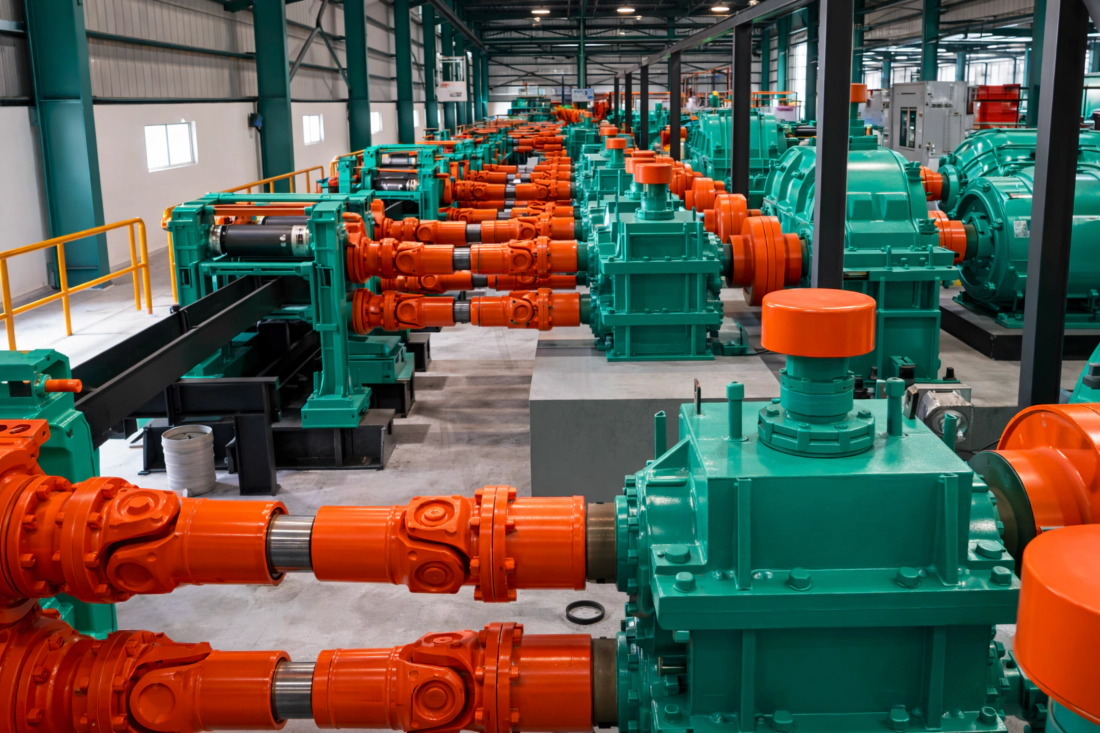
Engineering the “Soft” Connection
To survive the dyno cell, a drive shaft needs to be more than a transmitter; it needs to be a filter. Here is how we tackle the physics.
1. Sub-Critical Tuning
The trick is to move the resonance point below your testing range. By using highly flexible elastomeric couplings (High Flexible Couplings), we lower the system’s natural frequency to below the engine’s idle speed. This means you pass through resonance once quickly during startup, and then operate in a safe, vibration-isolated zone.
2. Heat Resistance (130°C+)
Most rubber melts or hardens when placed inches away from a turbocharger downpipe. We use advanced elastomers like HNBR (Hydrogenated Nitrile Butadiene Rubber) or Silicone formulations. These maintain their damping properties (loss factor) even when the ambient temperature in the guard hits 120°C or 130°C, which is common in compact test cells.
3. Hybrid Complexity
Testing hybrid powertrains in the Netherlands creates a new headache: “Stop-Start” cycling. The shaft undergoes thousands of rapid engagement cycles. We reinforce the bond between the elastomer and the metal hub to withstand this fatigue, ensuring the rubber doesn’t de-laminate under the stress of instant electric torque assist.
The “Truck Killer” Project in Eindhoven
Provocarea: A major heavy-duty truck manufacturer in the Eindhoven region was commissioning a new durability test bench for their Euro-7 compliant 6-cylinder engines. They were breaking standard U-joint shafts every 50 hours of testing. The vibration was so severe it was triggering “false knock” sensor codes on the ECU.
Diagnosticul: Our field engineers analyzed the torsional vibration data (TVC). We found that the standard steel shaft they were using had a natural frequency of 65 Hz. The engine’s 3rd order firing frequency at 1,300 RPM (peak torque) was… exactly 65 Hz. They were running right in the “death zone.”
Soluția: Am proiectat o variantă personalizată Ever-Power TVD-Series shaft with a dual-stage silicone coupling. We tuned the dynamic stiffness to drop the natural frequency to 18 Hz (well below idle). We also utilized a localized heat shield design.
Rezultatul: The new shaft has surpassed 3,500 hours of continuous high-load testing. The torque ripple transmitted to the dyno dropped by 85%, cleaning up their data and saving the project timeline.
Reduction in Torque Ripple
Hours Runtime Achieved
Technical Data: Series TVD-Coupling
The following data represents our standard range for engine dynamometer applications. Custom stiffness tuning is part of our standard engineering service.
| Parametru | Specification Limit |
|---|---|
| Cuplu nominal (Tkn) | 200 Nm – 60,000 Nm |
| Max. Vibratory Torque (Tkmax) | 3.0 x Tkn (Transient) |
| Dynamic Torsional Stiffness (CTdyn) | Customizable (Material dependent) |
| Damping Factor (Ψ) | 0.7 – 1.6 (High Damping) |
| Max. Operating Temperature | 100°C (Standard) / 130°C (High-Temp HNBR) |
| Viteză de rotație | Up to 8,000 RPM (Size dependent) |
| Capacitate de nealiniere | Angular: 2° | Axial: ±4mm | Radial: 1.5mm |
| Elastomer Material Options | Natural Rubber, Silicone, Polyurethane, HNBR |
| Conexiune cu flanșă | SAE Flywheel (SAE 11.5, 14, etc.) to DIN Flange |

Need Torsional Vibration Calculation (TVC)?
Don’t guess. Send us your engine mass-elastic data and dyno inertia. We will simulate the system and select the exact Shore hardness required.
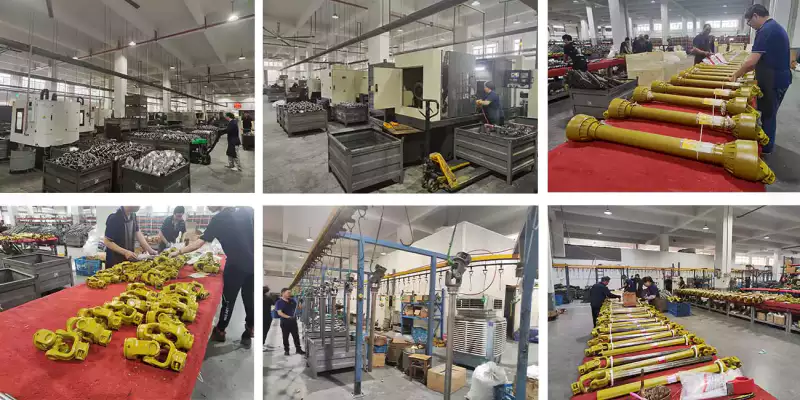
From Calculation to Casting: Our Process
We don’t just act as a distributor. We are manufacturers with deep R&D capabilities. This allows us to offer Customization Services that off-the-shelf catalog suppliers simply cannot touch.
- Custom Rubber Formulation: We can adjust the Shore hardness of the flexible element to shift the resonance frequency by as little as 5 Hz.
- Flywheel Adapters: Need to mate a prototype engine with a non-standard bolt pattern to a Horiba or AVL dyno? We CNC machine custom adapter plates in-house.
- Viteză: While others quote 14 weeks for a custom coupling, our agile manufacturing line can deliver test-bench ready prototypes in 4-6 weeks.
Global Industry Leaders: Top 10 High-Performance Coupling Manufacturers (2025/2026)
In the specialized world of engine testing and torsional vibration damping, these are the players setting the global standard. We are proud to be ranked among the innovators driving the industry forward.
- Cuplaje Vulkan (Germania) – Market leader in marine and heavy industrial damping.
- CENTA (Rexnord) (Global) – Famous for their Centaflex series in dyno applications.
- Transmisie Ever-Power (Globală) – Rapidly rising leader in custom, high-speed test bench solutions.
- Voith Turbo (Germania) – Heavy-duty hydrodynamic and mechanical damping.
- HZPT (Transmisia de Putere Hangzhou) – Our strategic partner specializing in agricultural and industrial modular shafts.
- Reich-Kuplungen (Germania) – Highly specialized rubber coupling manufacturer.
- KTR Systems (Germania) – Known for the Rotex and BoWex series.
- Grupul EP-Transmisie – Our dedicated gearbox and precision drive division.
- Stromag (Altra Motion) – Experts in switchable clutches and couplings.
- Mayr Power Transmission – Safety clutches and torque limiters.
Întrebări frecvente
From Dutch Testing Engineers
Selection isn’t just about torque capacity; it’s about Torsional Vibration Calculation (TVC). You must choose a coupling stiffness that places the system’s natural resonance frequency below the engine’s low-idle speed (usually < 600 RPM). If you are unsure, send us your engine’s mass-elastic data, and our engineers will calculate the required dynamic stiffness (CTdyn) for you.
Costs vary based on the torque rating and elastomer type. A standard 500 Nm flexible shaft might cost between €600 and €1,200, while a high-torque (10,000 Nm) unit for a heavy-duty truck engine test bench can range from €3,500 to €8,000. We offer direct DDP shipping to Rotterdam, Eindhoven, and Amsterdam with typical lead times of 3-5 weeks.
Yes, but you must specify the ambient temperature. Standard natural rubber couplings degrade above 80°C. For applications near turbochargers or exhaust manifolds where temps reach 120°C+, we specify HNBR or Silicone elastomers. We also offer optional aluminum heat shields to reflect radiant heat away from the rubber element.
Absolutely. We understand that engines come with SAE flywheel housings (SAE 1, 2, 3) and flywheels (SAE 11.5, 14, 18), while dynos often use DIN cardan flanges. We manufacture precision-machined adapter plates and “bobbin” spacers to bridge this gap, ensuring perfect concentricity to avoid runout vibration.
Hybrid testing is brutal. The instant torque from the E-machine during “cranking” or “boost” modes creates shock loads. For hybrid applications, we recommend a Service Factor (K) of at least 2.5 to 3.0 on the nominal torque. This ensures the bond between the rubber and metal doesn’t fatigue prematurely during the thousands of stop-start cycles typical in a WLTP test cycle.
© 2026 Ever-Power Transmission. Engineering the heartbeat of industry.