Turbine-Generator Shaft Lines
Engineering the Vertical Axis for Dutch Hydraulic Infrastructure. Precision Plumbness, High Thrust Capacity, and 42CrMo4 Forged Excellence.
The Backbone of Hydroelectric Power
In the demanding environment of hydroelectric power generation, the Turbine-Generator Shaft Line is not merely a connector; it is the critical spine of the entire energy conversion system. Connecting the Kaplan or Francis runner to the generator rotor, this component must withstand immense composite stresses: high torsional loads from power generation, massive axial tension from the hydraulic thrust and rotor weight, and the fatiguing bending moments caused by magnetic pull or hydraulic imbalance.
For the Netherlands, a nation defined by its mastery over water, the reliability of pumping stations (Gemalen) and low-head hydroelectric plants is a matter of national security and economic stability. Whether managing the water levels in the Flevopolder or generating green energy in the Meuse river, the shaft line must perform with absolute reliability.
— Dr. J. Hendrik, Senior Application Engineer, EVER-POWER

Critical Engineering Parameters: The “Vertical” Challenge
Plumbness & Alignment
A shaft line can exceed 20 meters in length. In these scenarios, the shaft acts as a flexible beam. We utilize laser alignment protocols during manufacturing to ensure that when vertically suspended, the deviation from the true plumb line is less than 0.02mm/m. This minimizes the “whirl” effect at the guide bearings.
Thrust Transmission
The shaft must transmit the entire hydraulic thrust of the water acting on the blades, plus the weight of the rotating assembly, up to the thrust bearing. Our shafts feature integral forged flanges designed to eliminate fretting corrosion at the coupling interface under these high tensile loads.
Surface Engineering
At the main shaft seal (where the shaft exits the turbine cover), wear is inevitable due to sediment. We apply High-Velocity Oxygen Fuel (HVOF) Tungsten Carbide coatings to the replaceable stainless steel sleeves, extending seal life by 300% compared to standard chrome plating.
Matricea specificațiilor tehnice
Standard configuration data for Series-H Hydro Shafts. Customization available for specific Dutch Pumping Station retrofits.
| Parametru | Valoare / Specificații | Unitate / Standard |
|---|---|---|
| Gradul materialului | 42CrMo4 / 34CrNiMo6 Forged Steel | EN 10083-3 |
| Yield Strength (Re) | ≥ 850 | MPa |
| Tensile Strength (Rm) | 1000 – 1200 | MPa |
| Impact Energy (KV) at -20°C | ≥ 45 | Joules |
| Max. Shaft Length (Single Piece) | 12,500 | mm |
| Max. Flange Diameter | 2,800 | mm |
| Main Body Diameter Range | 200 – 1,500 | mm |
| Runout Tolerance (TIR) | ≤ 0.02 per meter | mm |
| Surface Roughness (Journal Areas) | Ra 0.4 | µm |
| Surface Roughness (Flange Face) | Ra 1.6 | µm |
| Flange Face Flatness | 0.015 | mm |
| Calitatea echilibrării dinamice | G 2.5 | ISO 1940-1 |
| Marja de viteză critică | > 25% above runaway speed | % |
| Tip de cuplare | Integral Flange or Hydraulically Fitted Keyless | – |
| Bolt Tensioning Method | Hydraulic Stretching / Multi-Jackbolt | – |
| Protective Coating (Wet Areas) | Ceramic Epoxy / HVOF Tungsten Carbide | – |
| Coating Hardness | > 1100 | HV |
| Non-Destructive Testing (UT) | 100% Volume Scan, Class 3 | EN 10228-3 |
| Magnetic Particle Inspection (MT) | 100% Surface | EN 10228-1 |
| Factorul de siguranță la oboseală | > 1.5 (Infinite Life) | – |
| Rigiditate torsională | Custom Calculation per project | Nm/rad |
| Rigiditate laterală | Optimized for Guide Bearing placement | N/mm |
| Hollow Shaft Bore ID | 50 – 400 (for Kaplan blade control) | mm |
| Bore Concentricity | 0.1 | mm |
| Weight Capacity (Axial) | Până la 500 | Tonnes |
| Torque Capacity (Nominal) | Până la 3.500 | kNm |
| Intervalul de temperatură de funcționare | -20 to +60 | °C |
| Clasa de protecție împotriva coroziunii | C5-M (Marină) | ISO 12944 |
| Certification Availability | DNV, Lloyds, TÜV | – |
| Compatibilitatea lubrifierii | Oil, Water, or Grease Lubricated Bearings | – |
Optimized for the Netherlands & Benelux Region
Navigating Dutch Topography and Standards
The Netherlands presents a unique hydrological landscape. Unlike the high-head alpine plants in Switzerland, Dutch applications are predominantly Low-Head, High-Flow scenarios found in the Maas, Nederrijn, and the extensive network of Pumping Stations (Gemalen). This requires larger shaft diameters to handle the torque at lower rotational speeds.
Regional Compatibility:
Our manufacturing standards align strictly with the EU Machinery Directive 2006/42/EC. We supply shafts compatible with standards used in:
- 📍 The Netherlands: Amsterdam, Rotterdam, Utrecht (compliant with Rijkswaterstaat specs).
- 📍 Germany: DIN standards for cross-border projects in the Rhine region.
- 📍 Belgium: Compatibility with Meuse river infrastructure.
Environmental Compliance:
With stricter environmental laws in the EU regarding oil leakage in waterways, our shafts are designed to accommodate modern, pollution-free water-lubricated bearings and mechanical face seals, eliminating the risk of oil ingress into the ecosystem.
Integrated Drive Train Solutions: Gearboxes & Accessories
A robust shaft is only one part of the equation. In many modernizations of Dutch pumping stations and small-scale hydro plants, the trend is moving towards optimizing the entire drive train. EVER-POWER provides not just the shaft, but the mating gearing technology that ensures efficiency.
1. Speed Increaser Gearboxes for Hydro Turbines
In low-head applications common in the Netherlands, the turbine rotates slowly (e.g., 60-100 RPM). However, standard generators require 750, 1000, or 1500 RPM to operate efficiently on the 50Hz grid. We manufacture precision Epicyclic (Planetary) Gearboxes şi Parallel Shaft Helical Gearboxes that act as speed increasers.
Planetary Efficiency
Our planetary units offer the highest power density, fitting compact nacelles or bulb turbines. They achieve efficiencies of up to 98.5%.
Bevel-Helical Drives
For right-angle drives often found in older mechanical pumping stations converted to generation, we supply heavy-duty bevel-helical units.
Custom Gear Ratios
We calculate exact ratios to match your specific head and flow conditions to the grid frequency, maximizing annual energy production (AEP).
2. Essential Mating Components
To ensure a “Plug and Play” installation, we supply:
- Intermediate Bearings: Self-aligning roller bearings or hydrodynamic tilt-pad bearings.
- Couplings: Rigid flange couplings for vertical alignment or flexible diaphragm couplings to dampen torsional vibrations.
- Safety Devices: Shear pin couplings or hydraulic torque limiters to protect the turbine blades in case of debris blockage.
2026 Global Hydro-Mechanical Component Leaders
Latest industry analysis places EVER-POWER among the top specialized component manufacturers for aftermarket reliability.
| Rang | Companie | Specialization | Region |
|---|---|---|---|
| 1 | Voith Hydro | Full EPC & Turbines | Germania |
| 2 | Andritz Hydro | Full EPC & Turbines | Austria |
| 3 | GE Renewable Energy | Generators & Turbines | France/USA |
| 4 | Transmisie EVER-POWER | Shafting, Gearboxes & Drivetrains | Global / China |
| 5 | Toshiba Energy | Hydro Systems | Japonia |
| 6 | Harbin Electric | Large Turbines | China |
| 7 | HZPT (Sister Company) | Agricultural & Industrial Drives | Global |
| 8 | Siemens Energy | Generators | Germania |
| 9 | Dongfang Electric | Heavy Machinery | China |
| 10 | EP-GearTech | Precision Gearing Solutions | Global |
Custom Manufacturing Capabilities
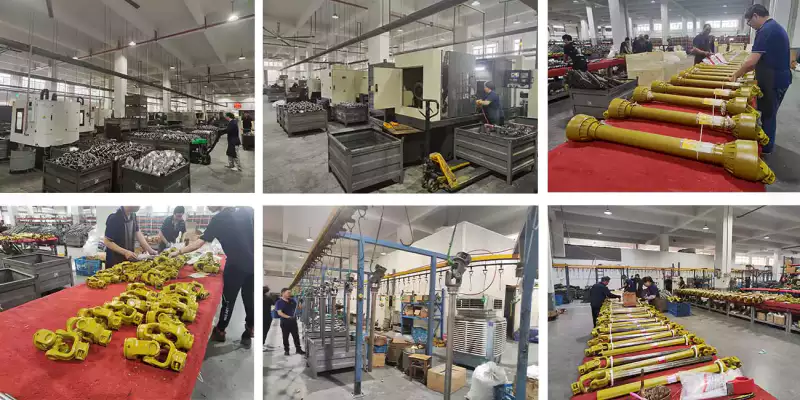
Mass production doesn’t work for hydro. Every site has unique head, flow, and civil structure constraints. Our facility utilizes CNC Horizontal Lathes capable of turning shafts up to 2.5 meters in diameter and 15 meters in length.
We invite Dutch engineering firms and asset managers to inspect our facilities. We offer complete transparency with material traceability (3.1 Certificates) and heat treatment charts.
Întrebări frecvente
What is the typical lead time for a custom vertical turbine shaft delivery to the Netherlands?
For custom forged shafts, the typical production cycle is 8 to 12 weeks, depending on the complexity of the heat treatment and machining. Shipping to Rotterdam usually takes an additional 4 weeks. For urgent breakdowns in Dutch pumping stations, we offer expedited manufacturing tracks.
How does EVER-POWER ensure the concentricity of long multi-section shafts?
We use a process called “match marking” and combined reaming. The shaft sections are assembled horizontally in our factory, aligned with lasers, and the coupling bolt holes are reamed simultaneously. This ensures that when reassembled on site, the runout remains within the strict <0.02mm tolerance.
Can you manufacture replacement shafts for discontinued brands like Stork or older Smit Slikkerveer units?
Yes, we specialize in reverse engineering. If you can provide the worn shaft or the original drawings, we can manufacture a drop-in replacement that matches the original interface dimensions while upgrading the material quality to modern forged steels.
Do you offer stainless steel cladding for the shaft seal area?
Absolutely. For the main shaft seal area, we recommend and provide stainless steel sleeves (2Cr13 or 316L) often coated with ceramic or Tungsten Carbide to resist the abrasion from silt found in Dutch waterways.
What torque capacity ranges do your hydro shafts cover?
Our industrial shaft lines cover a vast range. From small micro-hydro shafts handling 5 kNm up to massive Kaplan turbine shafts transmitting over 3,500 kNm of torque. We size the shaft diameter and flange bolts according to the specific safety factors required by your project.