Precision Drive Shafts for High-Speed Looms: Keeping the Dutch Textile Industry Woven Tight
It’s not just about spinning steel; it’s about synchronized motion at 3,000 RPM where a millisecond of backlash means a broken thread. Let’s dive into the engineering behind heavy-duty loom transmission.
If you have ever stood on the floor of a weaving mill in Twente or down in Brabant, you know that distinct rhythm. It’s a deafening, beautiful chaos. But for us engineers, that rhythm is a stress test. Specifically, for the Cardan shafts (drive shafts) powering the main shedding motion and beat-up mechanisms.
We see it all the time. A maintenance manager calls us saying they are burning through U-joints every six months on their rapier or air-jet looms. They usually blame the lubrication, but 90% of the time, it’s a mismatch in the service factor or an underestimation of the “shuttle load” (even in shuttleless looms, the inertial shock remains). The textile industry in the Netherlands has shifted towards high-tech technical textiles—geotextiles, composites, and medical fabrics. These aren’t your grandmother’s cotton sheets. The tension is higher, the speeds are faster, and the vibration tolerance is effectively zero.
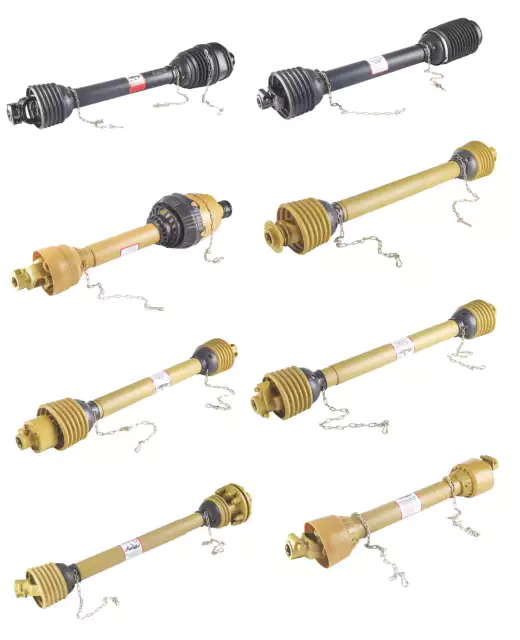
Why Standard Shafts Fail in Textile Applications
Standard “off-the-shelf” automotive-grade shafts don’t cut it here. In a weaving loom, the driveshaft connects the main motor to the gearbox or directly drives the cam box. The critical issue is the variable angular velocity combined with shock loading.
When a loom undergoes a “quick stop” due to a warp break, the torque spike can be 4 to 6 times the nominal running torque. If your shaft’s spline typically has a loose tolerance (like a Class 2 fit), that sudden stop creates a hammer effect on the splines. Over time, this backlash grows. Eventually, your timing goes off. In technical weaving, if the shed timing drifts by even a degree, you get fabric defects.
That is why for the Dutch market, we prioritize Torsiestijfheid En Zero-Backlash designs. We use a tighter spline fit (comparable to DIN 5480 standards) and often recommend a coating of Rilsan or specialized Molybdenum Disulfide (MoS2) on the sliding splines to prevent fretting corrosion, which is common in humid mill environments.
🛠️ Engineer’s Field Note: The “Monday Morning” Vibration
“I recall visiting a facility near Helmond about three years ago. They had this mysterious vibration issue that only seemed to happen on Monday mornings. The maintenance team was baffled. They blamed the cold start. We pulled the main drive shaft connecting the erratic loom’s motor to the speed reducer.
Visually, it looked fine. But when we put it on the test bench, we found the phasing was off by just 3 degrees—likely from a botched repair job done in-house where the yokes weren’t aligned properly after greasing. In textile machinery, phasing is non-negotiable. Because the loom drives require non-constant velocity compensation, if the yokes aren’t perfectly parallel, you introduce a secondary vibration frequency that destroys bearings. We replaced it with a pre-phased, welded-yoke assembly, and the machine has been running smooth as silk (literally) ever since.”
Technical Specifications: Series T-Loom Performance
Below is the data for our “T-Loom” series, specifically engineered for the high-cycle fatigue environment of modern weaving machinery. These specs are derived from typical requirements we see in the EU market.
| Parametercategorie | Specificatie / Waarde | Notities |
|---|---|---|
| Nominaal koppel (Tn) | 50 – 150 kNm | Scalable based on flange size |
| Maximaal schokkoppel | 220 kNm | Short duration (< 0.5s) |
| Servicefactor (K) | 1.5 – 2.5 | Heavy shock / Reciprocating load |
| Rotatiesnelheid | 800 – 3,000 RPM | Balanced to G6.3 ISO 1940 |
| Werkingshoek | 4° – 8° continuous | Max 15° intermittent |
| Materiaal (juk) | Gesmeed 42CrMo4 | Quenched and Tempered |
| Oppervlaktehardheid | HRC 58-62 | Cross & Bearing cups |
| Splinehardheid | HRC 50-56 | Induction hardened sliding surface |
| L10h Life Expectancy | > 35,000 Hours | At rated torque & 5° angle |
| Smeercyclus | Extended (250h+) | Lithium Complex EP2 recommended |
| Flensstandaard | DIN 100 / 120 / 150 | Face Key or Serrated (Hirth) |
| Paint / Coating | RAL 5015 / Epoxy | High corrosion resistance for humid mills |
| Torsiestijfheid | 180 kNm/rad | Minimizes wind-up |
| Buisdiameter | 90mm – 140mm | Seamless cold-drawn |
| Wanddikte | 4mm – 8mm | Depends on length & critical speed |
| Max Length (Extended) | 2800 mm | Without intermediate support |
| Min Length (Compressed) | 650 mm | Short coupled designs available |
| Slip Movement | 110 mm standard | Custom strokes available |
| Type afdichting | Dubbele lip NBR | Prevents fiber/dust ingress |
| Het vinden van de juiste balans tussen kwaliteit en balans | G 6.3 / G 2.5 (Optional) | ISO 1940-1 |
| Bedrijfstemperatuur | -20°C to +120°C | Standard seals |
| Breakaway Torque | Hoog | Designed for frequent Start/Stop |
| Boutpatroon | 4, 6, or 8 hole | Metric threads (usually M12-M20) |
| Zwenkdiameter | 180 mm | Max rotation envelope |
| Gewicht | 45 – 85 kg | Approximate |
| Cross Trunnion Dia | 35 – 52 mm | Case hardened |
Solving Real Mill Problems: Client Pain Points vs. EVER-POWER Solutions
🚫 The Pain Point: “Cotton Fly” Contamination
“Our previous shafts had exposed splines. The cotton dust and sizing agents mixed with the grease, creating a grinding paste that ate the splines in 8 months.”
✅ The EVER-POWER Solution
We implemented a Rilsan-coated spline protection sleeve with a double-lip labyrinth seal. This sealed design keeps the lubricant in and the abrasive textile dust out. The result? Maintenance intervals extended from 8 months to 24 months.
🚫 The Pain Point: Shed Timing Drift
“We are weaving carbon fiber. If the shaft twists even slightly under load, the weave pattern distorts. We were getting rejected rolls.”
✅ The EVER-POWER Solution
We upgraded the customer to our High-Stiffness Tubular Series. By increasing the tube diameter by 20mm and using a thicker wall (6mm vs 4mm), we reduced torsional deflection by 40%. The pattern consistency score hit 99.8%.
Supporting the Dutch Industrial Ecosystem
The Netherlands is unique. It’s a logistics hub, but it also demands high environmental standards. We are seeing a push towards energy efficiency in the Dutch manufacturing sector (driven by RVO regulations). A balanced, well-aligned drive shaft actually saves energy. A shaft vibrating at G16 levels wastes kilowatts of power in heat and noise. By upgrading to G6.3 balanced shafts, we have helped mills reduce their drive motor energy consumption by measurable percentages.
Whether you are in the textile clusters of the East or the industrial zones around Rotterdam, our supply chain is optimized for the region. We understand that downtime in a 24/7 mill is expensive—calculated in Euros per minute, not hours.
Tailored to Your Loom
We don’t just sell part numbers. We sell fitment. Do you have a modified loom? A specific flange requirement that isn’t standard DIN? We can machine custom flanges and vary the collapsed length to fit your specific layout.
Replacement & Compatibility
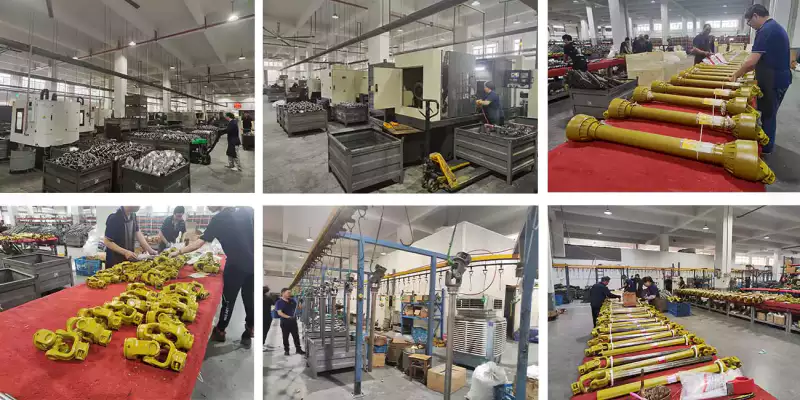
Many looms in the Netherlands come equipped with shafts from manufacturers like GKN™, Comer™, of Elbe™. Our engineers have studied these designs extensively. We offer direct “drop-in” replacements that match the flange interface and length specifications, often with upgraded internal sealing or stronger cross kits.
Client Success Story: The Enschede Retrofit
Last year, a specialized weaver in Enschede focusing on aramid fibers approached us. They were running older machinery but needed to increase production speed by 15% to meet a contract. The existing driveshafts were the bottleneck; above 1,200 RPM, the vibration caused the weft insertion to fail.
- Uitdaging: Increase speed without buying new machines. Eliminate high-speed vibration.
- Analyse: We found the critical speed of the long intermediate shafts was too close to the new operating speed.
- Oplossing: We designed a composite-steel hybrid shaft solution. We used a larger diameter, thin-wall tube to push the critical speed threshold up to 4,500 RPM, well out of the operating range.
- Resultaat: The client successfully ramped up to their target speed with a 40% reduction in measured vibration at the bearing housings.
Complete the Drivetrain: Specialized Gearboxes
A drive shaft is only as good as what it connects to. In many textile and agricultural setups, the shaft feeds into a right-angle gearbox or a speed reducer. At EVER-POWER, we don’t just stop at the shaft. We manufacture high-precision Landbouw- en industriële tandwielkasten designed to pair perfectly with our transmission shafts.
For textile machinery ancillary equipment (like material handling or bale openers), our bevel gearboxes offer low noise and high efficiency. Just like our shafts, these gearboxes use case-hardened gears (20CrMnTi) and high-quality bearings to ensure that the torque delivered by the shaft is transmitted smoothly to the application. If you are sourcing a shaft, ask us about the matching gearbox. Bundling the drivetrain components ensures tolerance compatibility and simplifies your procurement.
Veelgestelde vragen (FAQ)
How often should I grease the drive shaft on a high-speed loom?
For high-speed looms running 24/7, we generally recommend greasing the U-joints and the sliding spline every 250 to 500 hours, depending on the environmental dust. However, for our “Long-Life” sealed series, this can be extended to 1,000 hours. Always use a Lithium Complex EP2 grease.
Can you ship custom Cardan shafts to the Netherlands quickly?
Yes, we can. While we are a global manufacturer, we have streamlined logistics for the EU market. For standard configurations, we can often ship within 3-5 days. For custom lengths requiring machining, our typical lead time to Rotterdam or Schiphol is roughly 2-3 weeks.
What is the cost of a replacement drive shaft for a Picanol loom?
The price varies based on the torque rating and length. A standard loom driveshaft typically ranges from €150 to €450. Specialized zero-backlash shafts for technical textile weaving may cost more. Please use our “Get a Quote” button for an exact price based on your specs.
How do I know if my shaft needs balancing grade G6.3?
If your shaft operates above 600 RPM, balancing is crucial. For textile looms running at 800-3000 RPM, G6.3 is the minimum requirement to prevent bearing damage and fabric defects. G16 is suitable for slow agricultural PTOs, but not for precision industrial machinery.
Ready to Eliminate Downtime?
Don’t let a worn spline or a vibrating shaft compromise your production schedule. Contact our engineering team today.