Flight-Critical Precision: Drive Shafts for Dutch Aerospace & GSE
In the aerospace sector, failure is not an option. Whether it’s a test rig at NLR or a pushback tractor at Schiphol, we deliver high-precision, lightweight drive shafts engineered to aerospace tolerances.
I have spent over 18 years engineering drivetrains for mission-critical applications, from the wind tunnels of the Noordoostpolder to the maintenance hangars of KLM Engineering & Maintenance. The aerospace industry demands a unique duality: the ruggedness to handle a 400-ton A380 pushback and the finesse to test a turbine fuel pump at 25,000 RPM.
For Ground Support Equipment (GSE), the challenge is reliability under extreme tarmac conditions. A broken drive shaft on a de-icing truck during a freeze at Schiphol causes cascading delays. We engineer our GSE Series Shafts with marine-grade corrosion protection and fatigue-resistant alloys to survive the chemical assault of de-icing fluids and the mechanical shock of rapid starts.
For Aerospace Test Benches, the challenge is Kritisch snelheidsbeheer. Standard steel shafts are too heavy and flexible for high-speed avionics testing. We utilize Filament-Wound Carbon Fiber En Titanium composites. These materials offer high specific stiffness, allowing us to push the natural frequency of the shaft well above the operational range, ensuring clean data and safe testing.
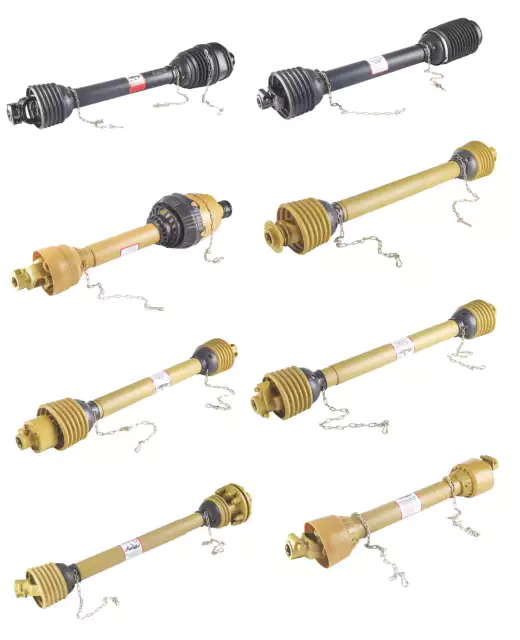
🛠️ Engineer’s Field Note: The Shaking Test Stand in Delft
“I was consulted by a research team at TU Delft working on a hydrogen fuel pump prototype for future aircraft. They were experiencing severe vibration at 18,000 RPM, which was destroying their prototype bearings. They were using a standard industrial steel coupling.
I analyzed the setup and found that the steel shaft’s mass was causing ‘whirl’—a centrifugal instability. The shaft was literally bowing out under its own weight at speed. We replaced it with a Thin-Wall Titanium Bellows Coupling. The titanium reduced the rotating mass by 45% while maintaining the torsional stiffness needed for precise speed control. The vibration amplitude dropped by 95%. In aerospace testing, mass isn’t just weight; it’s a dynamic liability.”
Technical Specifications: Series AERO-X Performance
These specifications are tailored for the high-precision and high-reliability requirements of the Dutch aerospace manufacturing and maintenance sector.
| Parametercategorie | Specificatiegegevens | Technische logica |
|---|---|---|
| Nominal Torque (Test) | 10 – 2,000 Nm | High speed, low torque (Pump/Gen) |
| Nominal Torque (GSE) | 500 – 30,000 Nm | Low speed, high torque (Towing) |
| Max Speed (Test) | Up to 40,000 RPM | Requires Composite/Titanium |
| Het vinden van de juiste balans tussen kwaliteit en balans | G 1.0 (ISO 1940) | Precision instrument grade |
| Buismateriaal | Carbon Fiber / Titanium / 15-5PH | High strength-to-weight ratio |
| Yoke Material (GSE) | Gesmeed 42CrMo4 | Impact resistance for towing |
| Yoke Material (Test) | Titanium Grade 5 (Ti-6Al-4V) | Low inertia, non-magnetic |
| Verzet | Nul (0,00°) | Essential for test accuracy |
| Torsiestijfheid | High (>100 kNm/rad) | Dynamic response |
| Misalignment Comp | Metal Bellows / Disc Pack | Zero wear, high temp |
| Vermoeidheid Leven | Infinite (>10^8 cycles) | Mission-critical reliability |
| Bedrijfstemperatuur | -55°C to +200°C | Aircraft environmental range |
| Corrosiebescherming | Cadmium / Passivated / Anodized | Skydrol & De-icing fluid resistant |
| Verbindingstype | Curvic / Flange / Spline | Aero-standard interfaces |
| Weight Reduction | Up to 70% vs Steel | Critical for flight hardware |
| Veiligheidsfactor | 1.5 (Yield) / 2.5 (Ultimate) | Aerospace standard safety |
| NDT-inspectie | MPI / Dye Pen / X-Ray | 100% inspection available |
| Traceerbaarheid | Heat Lot / Serial Number | Full documentation package |
| Kritische snelheid | > 1.3 x Max RPM | Vibration-free operation |
| Reinheid | Clean Room Compatible | For satellite assembly |
| Smering | Sealed / Dry Film | Maintenance free options |
| Oorsprong | EVER-POWER Specialized | Global aerospace supply chain |
Aerospace Challenges: Solved
🚫 Pain Point: GSE Corrosion
“The drive shafts on our de-icing trucks at Schiphol were seizing up every winter. The potassium formate de-icing fluid was corroding the splines and U-joints, causing vibration and seal failure.”
✅ EVER-POWER-oplossing
We hebben een ontwerp gemaakt “Chemical-Spec” GSE Shaft. We utilized a Zinc-Nickel plating process (C5-M rating) on the yokes and a specialized Rilsan coating on the splines. This combination is impervious to de-icing chemicals, ensuring smooth telescopic movement even in the harshest winter conditions.
🚫 Pain Point: Test Rig Resonance
“We were testing a new starter-generator. At 12,000 RPM, the test rig would shut down due to high vibration. The resonance of the steel drive shaft was masking the performance data of the generator.”
✅ EVER-POWER-oplossing
We replaced the steel shaft with a Filamentgewonden koolstofvezelschacht. By tuning the winding angle of the fibers, we customized the shaft’s stiffness and damping properties. This shifted the critical speed to 18,000 RPM, well outside the test window, allowing for clean, uninterrupted data collection.
Supporting the Dutch Aviation Valley
The Netherlands is a key node in the global aerospace network. From the Fokker Logistics Park to the maintenance hangars of Woensdrecht, the industry relies on precision and uptime. We understand that “AOG” (Aircraft On Ground) is the most expensive acronym in the business.
Wij bieden aan Rapid Manufacturing for GSE and Test Systems. If a tow tractor is down at Maastricht Aachen Airport or a test bench is stalled at NLR, we can machine custom flanges and balance shafts within days, not weeks. Our localized logistics ensure that parts get to the tarmac or the lab when you need them.
Custom Engineering for Unique Applications
Standard off-the-shelf parts rarely meet the specific needs of aerospace prototyping. You might need a shaft that fits a tight envelope inside a landing gear test rig.
We provide:
- Custom Geometry: Shafts designed to fit specific spatial constraints.
- Materiaalkeuze: Titanium, Inconel, or 15-5PH Steel for specific environmental needs.
- Integrated Sensors: Shafts prepared for strain gauge application or torque telemetry.
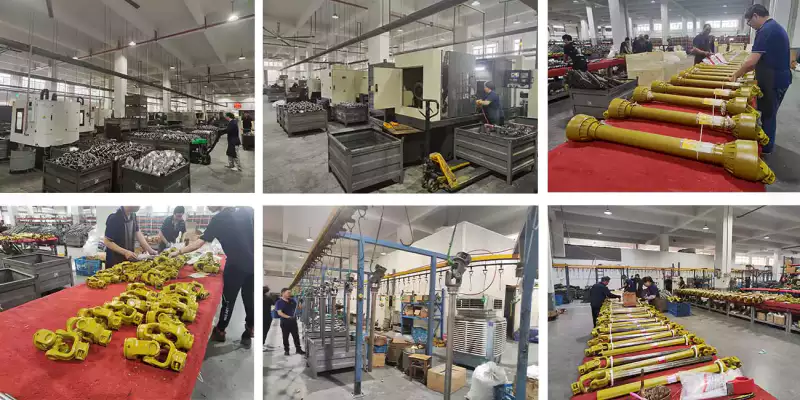
Success Story: The Woensdrecht Component Test
A maintenance, repair, and overhaul (MRO) facility in Woensdrecht needed to upgrade its hydraulic pump test stand to handle next-generation high-pressure pumps. The existing drive system had too much backlash, causing pressure spikes that failed the acceptance test criteria.
- Het probleem: Backlash in the spline connection introduced noise into the pressure signal, leading to false failures during pump certification.
- De oplossing: We hebben een ontwerp gemaakt Zero-Backlash Diaphragm Coupling Shaft. Using flexible stainless steel diaphragms instead of splines, we eliminated all play while allowing for the necessary thermal expansion of the pump.
- Het resultaat: The “noise” in the hydraulic signal disappeared. The test stand passed calibration immediately, and the facility reduced their test cycle time by 20% due to fewer re-runs.
Ground Support Power: Heavy-Duty Industrial Gearboxes
While precision shafts connect the power, gearboxes deliver the torque needed to move aircraft and equipment. At EVER-POWER, our expertise in Industriële en landbouwversnellingsbakken translates directly to the rugged requirements of Ground Support Equipment (GSE). The same durability that powers a tractor through a muddy field is what allows a tug to push a Boeing 777 in the rain.
Robustness for the Tarmac
GSE equipment—belt loaders, baggage tractors, ground power units—operates in an exposed, harsh environment. Gearboxes must withstand shock loads, weather, and often, operator abuse. We manufacture our gearboxes with Nodulair gietijzer (QT450-10) housings, which offer superior impact resistance compared to standard aluminum or grey iron.
Our gears are forged from 20CrMnTi steel, carburized, and ground to precision tolerances. This ensures high efficiency and low noise, but more importantly, it provides the surface hardness needed to resist wear during the frequent start-stop cycles typical of airport operations.
Applications in GSE
We see our gearboxes used in various ground support roles:
- Conveyor Drives: Our right-angle bevel gearboxes are ideal for driving the belts on baggage loaders. They are compact, sealed against rain, and reliable.
- Winch Drives: For hangar maintenance cranes and heavy recovery units, our high-torque worm or planetary reducers provide the holding power and safety needed.
- Pump Drives: Speed increaser gearboxes allow standard diesel engines to drive high-speed de-icing fluid pumps or hydraulic systems.
De complete aandrijflijnoplossing
By sourcing both your Aandrijfassen En Versnellingsbakken from EVER-POWER, you ensure a cohesive, reliable drivetrain. We match the tolerances of our shaft yokes to our gearbox input shafts, eliminating the fretting corrosion that often kills components prematurely. Whether you are building new GSE or refurbishing a fleet of baggage tractors, EVER-POWER provides the mechanical muscle to keep your operations moving on time.
Veelgestelde vragen (FAQ)
What is the benefit of carbon fiber over steel for test shafts?
Carbon fiber is 5 times lighter than steel for the same strength. This massive reduction in rotating mass significantly raises the shaft’s “Critical Speed,” allowing you to test at higher RPMs without the shaft vibrating or whipping.
Do you offer balancing services for existing shafts?
Yes. If you have an existing shaft that is causing vibration issues, we can inspect and re-balance it to G1.0 or G2.5 specifications in our facility, providing a cost-effective solution to restore test rig performance.
Can you provide shafts with non-magnetic properties?
Yes. For testing sensitive avionics or magnetic sensors, we can manufacture shafts entirely from Titanium (Ti-6Al-4V) or non-magnetic Stainless Steel (316L), ensuring no magnetic interference with your device under test.
How do I measure for a replacement GSE shaft?
Measure the compressed length (center-to-center of U-joints) and identify the flange pattern (bolt circle diameter, number of holes, pilot type). Photos of the end yokes are very helpful. We can usually identify the series from these details.
Precision is Non-Negotiable. Contact Us Today.