The Final Safety Link: Drive Shafts for Dutch Lifts & Cranes
If you work in the maintenance department of a terminal in the Maasvlakte, or manage facility services for high-rises in Amsterdam Zuidas, you know that distinct, metallic “clunk” sound. It’s the sound of a safety brake engaging. In that split second, the kinetic energy of a 40-ton container or a fully loaded passenger car has to go somewhere. It travels right through the drive shaft.
In de Lifting and Hoisting industry, the drive shaft is not just a transmission component; it is a safety device. Unlike a pump or a conveyor that runs continuously, a crane hoist or elevator drive lives a life of violent transients. It stops, starts, reverses, and—in emergency scenarios—must withstand shock loads that are 300% to 400% of the nominal torque. If the shaft shears, the load drops. In my 18 years of engineering analysis, I have seen that “standard” industrial shafts simply cannot handle the fatigue cycles of a Dutch container terminal operating 24/7.
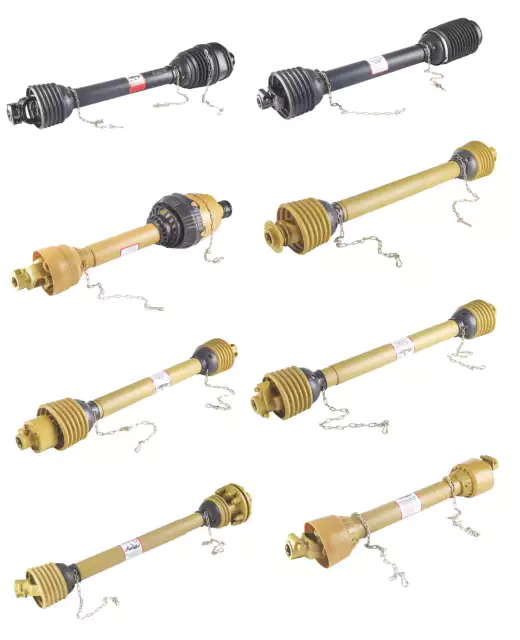
Safety Engineer’s Field Notes: The “Freefall” Simulation
“I was commissioning a refurbishment project for a Ship-to-Shore (STS) crane in Vlissingen last winter. The client was worried about the emergency stop test. The old couplings had developed hairline cracks in the keyways. We installed our EP-SafeTorque Series shafts with integrated shear-pin limiters. When we hit the E-Stop button with a 50-ton test load descending at 2 m/s, the shudder was immense. But the shaft didn’t twist. The limiter absorbed the peak shock, protecting the vintage gearbox, while the caliper brakes held the drum perfectly. That is the difference between a ‘part’ and a ‘solution’.”
The Dutch Challenge: Vertical Logistics & Wind Loads
The Netherlands is unique. We build upwards in our cities, and we move massive tonnage in our ports. This creates two distinct engineering challenges. For Construction and Port Cranes, the wind load off the North Sea adds a lateral stress component that many generic shafts ignore. A crane boom parked in a storm transmits vibration down to the drive train.
Voor Elevators and Lifts, the challenge is rigidity. Dutch passengers expect smooth rides. If a drive shaft has torsional wind-up (acting like a spring), the elevator car will bounce slightly when it stops at a floor. This “spongy” feel is unacceptable. Our shafts for this sector use High-Stiffness Tubular Sections and zero-backlash flange connections to ensure that when the motor stops, the car stops—exactly level with the floor, every time.
Inquire Now – Upgrade Your Safety
Technical Specifications: EP-Lift & Crane Series
Safety is math, not magic. Below are the generated technical parameters for our EP-Safety Series, specifically engineered for the high-torque, start-stop duty cycles of the Benelux lifting market.
| Parameter-ID | Specificatieomschrijving | Waarde / bereik | Eenheid |
|---|---|---|---|
| LC-01 | Nominaal koppel (Tn) | 2,500 – 180,000 | Nm |
| LC-02 | Breaking Torque (Static) | > 4.5 x Tn | Nm |
| LC-03 | Braking Torque Capacity | 12,000 – 85,000 | Nm |
| LC-04 | Torsiestijfheid (Ct) | 240 – 850 | kNm/rad |
| LC-05 | Veiligheidsfactor (K) | 3.5 – 5.0 | – |
| LC-06 | Maximale rotatiesnelheid | 1,800 – 3,000 | RPM |
| LC-07 | Flensdiameter | 225 – 550 | mm |
| LC-08 | Material (Yokes/Flanges) | 42CrMo4QT Forged | Staal |
| LC-09 | Kruissetmateriaal | 18CrNiMo7-6 | Gecarburiseerd |
| LC-10 | Lengtecompensatie | 120 – 450 | mm |
| LC-11 | Gesloten lengte | 650 – 2800 | mm |
| LC-12 | Werkingshoek (max.) | 15 (25 Peak) | Graden |
| LC-13 | Integratie van de remschijf | Ventilated / Solid | Option |
| LC-14 | Koppelbegrenzertype | Friction / Shear Pin | Integrated |
| LC-15 | Verzet | < 0,05 | Graden |
| LC-16 | Balancerende Grade | G 6.3 (Std) / G 2.5 | ISO 1940 |
| LC-17 | Coatingspecificatie | C4 Marine / Epoxy | RAL 1003 |
| LC-18 | Vermoeidheid Levensduur (L10) | > 50,000 (Start/Stop) | Cycles |
| LC-19 | Zoutnevelbestendigheid | > 720 | Uren |
| LC-20 | Boutkwaliteit | 12.9 Hoge treksterkte | Metrisch |
| LC-21 | Hub Connection | Face Key / Spline | DIN 5480 |
| LC-22 | Gewicht (ongeveer) | 45 – 650 | kg |
| LC-23 | Bedrijfstemperatuur | -30 tot +80 | °C |
| LC-24 | Inspection Cert | EN 10204 3.1 | Beschikbaar |
| LC-25 | Axial Force (Retract) | Low Friction Coating | N |
| LC-26 | Afdichten | Double Lip (Dust/Water) | – |
| LC-27 | Sound Dampening | Internal Filler | Option |
Engineering for “The Drop”: Torque Limiters & Safety
In crane applications, a jammed container or a snagged cable can generate infinite torque until something breaks. If the drive shaft is stronger than the gearbox, you lose a €50,000 gearbox. If the gearbox is stronger than the shaft, the shaft snaps, and the load might free-fall if the brakes are on the motor side.
Our solution is the Integrated Safety Coupling. We build a torque limiter directly into the cardan shaft yoke. If the torque exceeds a pre-set safety limit (e.g., 150% of nominal), the coupling slips or disengages. This protects the mechanical chain while leaving the emergency brakes (usually on the drum side) fully functional. For Dutch port operators, this means the difference between a 2-hour reset and a 2-week downtime event.
Success Story: The Automated Stacking Crane in Rotterdam
De uitdaging: An automated terminal in Rotterdam was experiencing premature failure of gearbox input bearings on their Automatic Stacking Cranes (ASCs). The frequent, high-speed positioning moves (up to 4 m/s) created massive inertial braking loads that were “hammering” the bearings through the stiff drive shafts.
Onze oplossing: We replaced the rigid cardan shafts with our EP-Dampened Series. These shafts feature a specialized internal composite tube structure that absorbs high-frequency shock vibration without sacrificing torsional stiffness for positioning accuracy. We also upgraded the U-joint seals to a marine-grade labyrinth design to keep out salt spray.
Het resultaat: Bearing failures dropped to zero over the 24-month observation period. The noise level of the cranes during braking operation was reduced by 4 decibels, a welcome bonus for the nearby residential zone.
Merkcompatibiliteit & juridische disclaimer
In the lifting world, you will see reputable names like GKN, Stromag, Voith, Flender, of Maina. These manufacturers have set high standards for the industry.
However, when a crane is down, “lead time” is the only spec that matters. We can often manufacture a custom-length, high-capacity shaft in a fraction of the time of the OEM, using 42CrMo4 steel that meets or exceeds the original specifications.
From the Port to the Polder: Heavy Lifting
The physics of lifting a 40-foot container are surprisingly similar to lifting a 2-ton silage bale or driving a heavy-duty vertical mixer. It’s all about torque, shock loads, and reliability. This is where Ever-Power’s expertise bridges the gap. We are also a leading manufacturer of Versnellingsbakken tailored for the intensive Dutch farming sector.
In the Netherlands, agriculture is a heavy industry. Farmers in Friesland and Groningen use high-capacity machinery that demands industrial-grade power transmission. Our agricultural gearboxes are designed to handle the same kind of “start-stop” abuse seen in cranes.
The “Ag-Lift” Connection:
We supply specialized gearboxes for:
- TMR Feed Mixers: The vertical augers in these mixers face massive resistance when starting under load—just like a loaded crane hoist. Our planetary and right-angle gearboxes are built with case-hardened gears to survive this daily torture.
- Grain Augers & Elevators: Moving tons of grain vertically requires consistent torque. Our speed reducers ensure smooth flow without back-driving.
- Forestry Cranes & Loaders: For the timber industry, we supply compact, high-strength gearboxes for hydraulic pump drives and rotator heads.
The Power Package: Just as we integrate safety into our crane shafts, we offer a “Power Package” for agriculture: a matched set of PTO shaft (with shear bolt or slip clutch) and Gearbox. This ensures that the safety device on the shaft is perfectly calibrated to the torque limit of the gearbox, preventing expensive internal damage when your implement hits an obstruction.
Veelgestelde vragen (FAQ)
What is the difference between a standard shaft and a “Crane Duty” shaft?
A “Crane Duty” shaft is engineered for finite life fatigue under fluctuating loads. While a standard shaft is rated for continuous rotation at a steady torque, a crane shaft is rated for peak torque during braking and acceleration. It often features larger cross kits (U-joints) relative to the tube size to handle these shock loads.
Do you offer shafts with brake discs attached?
Yes. We can supply the drive shaft complete with a companion flange that includes a mounted brake disc (ventilated or solid). This ensures perfect runout and balance, which is critical for smooth braking performance and avoiding caliper wear.
How do you handle the corrosive environment of Dutch ports?
We utilize a multi-layer coating system. The base is often a zinc-nickel plating, covered by a 2-pack epoxy paint system (C4 or C5-M rated). We also use Viton or specialized multi-lip seals on the bearings to prevent saltwater ingress, which is the #1 killer of port equipment.
Can you retrofit an older crane with a safety coupling?
Yes. We can design a replacement shaft that fits into the existing space but includes a torque limiter. This is a very popular upgrade for older cranes that rely solely on electrical over-current protection, providing a mechanical fail-safe.
Branchenieuws (Nederland 2026): The new updates to the NEN-EN 81-20/50 safety standards for lifts are placing stricter requirements on the braking systems of traction elevators. Maintenance companies are now focusing on the “unintended car movement” (UCM) protection, where the rigidity and reliability of the drive shaft play a crucial role in the braking loop response time.