Marine Propulsion Drive Shafts for Dutch Inland & Offshore Vessels
Navigating the Waal and the North Sea requires more than just steel. It requires Class-Approved reliability, vibration control, and zero-tolerance for failure.
Marine propulsion is unforgiving. Unlike a truck on the A2 highway, a ship cannot just pull over to the hard shoulder when a vibration starts. The drive shaft connects your prime mover (Diesel or Hybrid Electric) to the gearbox or azimuth thruster. It has to handle the hull flexing in heavy seas, the misalignment from engine soft-mounts, and the brutal torque spikes when a propeller hits submerged debris.
At EVER-POWER, we don’t sell “off-the-shelf” automotive shafts for marine applications. We engineer Class-Approved Marine Drive Shafts. We are talking about Duplex Stainless Steel flanges, Ceramic-Coated sealing surfaces, and welds that are inspected with 100% X-ray (Radiographic Testing) to satisfy DNV, ABS, or Lloyd’s Register surveyors. We build them to survive the salt, the silt, and the stress.
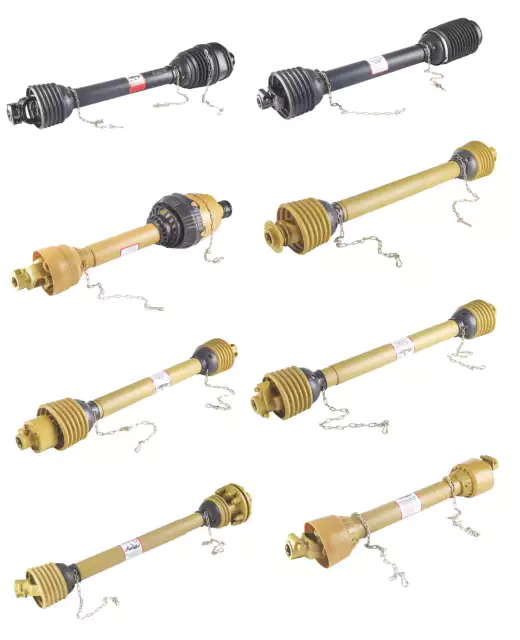
The “Europort” Standard: Corrosion & Vibration Defense
The Netherlands is the maritime center of Europe. The specific mix of “Brown Water” (Inland canals/rivers) and “Blue Water” (Offshore wind support/North Sea) creates a unique set of challenges for drive components.
Our Marine-Specific Engineering Protocols:
- Torsional Vibration Analysis (TVA): Before we cut a single tube, we can calculate the natural frequency of the shaft to ensure it doesn’t resonate with your engine’s firing frequency or your propeller’s blade pass frequency. The “singing prop” phenomenon often starts in the drive shaft.
- Sealing for Silty Water: For dredgers working in the Scheldt estuary, standard seals fail due to fine sand intrusion. We use a Double-Lip Labyrinth Seal with a grease purge channel to push contaminants out.
- Classification Society Ready: All materials come with 3.1 or 3.2 certification. We provide full traceability for DNV-GL, ABS, BV, and RINA inspections.
Client Pain Point: The “Rattling” Tugboat
“We run a harbour tug in Amsterdam. At 900 RPM, the entire wheelhouse would shake violently. We kept changing engine mounts, thinking it was alignment. We were burning through U-joints every 1,500 hours.”
— Chief Engineer, Towage Company
EVER-POWER Solution: TVA & Damping
“We performed a Torsional Vibration Analysis. The drive shaft length was creating a resonance node right at cruising RPM. We manufactured a larger diameter, thin-wall shaft to shift the critical speed up, and integrated a Geislinger-style damping coupling. Vibration dropped by 85%.”
Technical Specifications: Series MP-Marine (Propulsion Class)
These specifications are rigorous. In the marine world, there is no “margin for error.”
| Catégorie de paramètres | Données de spécification | Marine Application Relevance |
|---|---|---|
| Nominal Torque (Tkn) | 2,500 Nm – 580,000 Nm | Main propulsion & Pump drives |
| Peak Torque (Tkmax) | 3.0 x Tkn | Crash stop / Ice impact loads |
| Norme de bride | DIN / SAE / KV (Cross Serrated) | Matches marine gearboxes (Reintjes/Masson) |
| Angle de fonctionnement | Max 15° (Continuous) / 25° (Short) | Accommodates engine soft-mounting |
| vitesse de rotation | Up to 3,500 RPM | Engine to Gearbox link |
| Matériau du tube | Seamless St52.3 / 42CrMo4 | limite d'élasticité élevée |
| Weld Inspection | 100% X-Ray (RT) / UT / MPI | Mandatory for Class Approval |
| Équilibrer la qualité | ISO 1940-1 G6.3 / G2.5 | Low vibration comfort |
| Protection contre la corrosion | 3-Layer Marine Epoxy (300µm) | C5-M Marine Environment |
| Revêtement de cannelure | Rilsan® (Polyamide 11) | Prevents fretting & reduces noise |
| Type de joint | Double Lip Viton + Metal Shield | Saltwater & Sand exclusion |
| Durée de vie du roulement (L10h) | > 30,000 Hours | Long service intervals |
| Lubrification | Lithium Complex + MoS2 | résistant au lavage à l'eau |
| Matériau de l'étrier | Forged Steel (Certified) | No cast iron allowed in the main drive |
| Certificates | DNV, ABS, BV, LR, CCS | 3.2 Material Certs available |
| Compensation de longueur | +80mm to +400mm | Hull flex & Thermal growth |
| Hardware | Grade 10.9 Geomet / Stainless | Corrosion-resistant bolting |
| Température de fonctionnement | -20°C to +110°C | Engine room environment |
| Rigidité en torsion | Calculated per order | TVA compliance |
| Grounding | Copper Braid Straps | Prevents galvanic spark erosion |
| Personnalisation | Split-Bearing Eye / Wing Style | Ease of maintenance in tight bilges |
| Diamètre de rotation | 120mm – 650mm | Check bilge clearance |
| Poids | 25 kg – 1,800 kg | Construction robuste |
| Garantie | 12 Months / 4000 Hrs | Standard marine warranty |
From the Forge to the Hull: Manufacturing Excellence
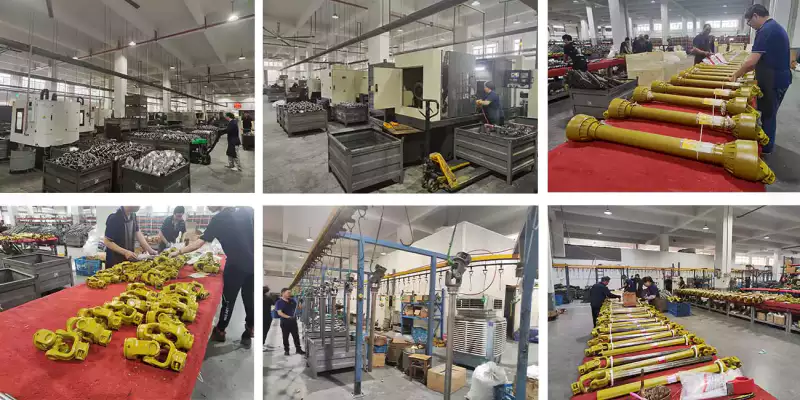
You can’t weld a marine shaft in a dark corner and hope for the best. Our manufacturing process is transparent and documented.
We start with certified forgings. Before machining, every yoke undergoes Ultrasonic Testing (UT) to check for internal voids. After welding, we perform Magnetic Particle Inspection (MPI) and X-Ray analysis on the critical weld seams. This is not just our internal standard; it is what the Class Surveyor expects to see when they sign off on your vessel’s machinery certificate.
We also specialize in Emergency Retrofits. If you are stuck in dry dock in Rotterdam with a cracked shaft, we can reverse-engineer the damaged part, machine a replacement from stock forgings, and air-freight it to Schiphol. We know that every day in dry dock costs a fortune.
The Complete Drivetrain: Marine Gearboxes & Winch Drives
A drive shaft connects the power, but the Boîte de vitesse manages it. In the marine sector, the gearbox is crucial for reduction and reversing. At EVER-POWER, we offer a comprehensive range of marine transmission solutions to complement our shafts.
1. Marine Propulsion Gearboxes (Reduction/Reversing)
For inland waterway vessels and fishing boats, we supply robust Hydraulic Marine Gearboxes.
- Function: Reducing high engine RPM to efficient propeller speeds and providing instant Forward/Neutral/Reverse control.
- Clutch Technology: Multi-disc hydraulic clutches that allow for smooth engagement, protecting the drive shaft from shock loads during maneuvering.
- PTO Options: Many of our boxes come with live PTO outputs to drive hydraulic pumps for deck machinery.
2. Deck Machinery: Winch & Capstan Drives
On the deck, corrosion is even more aggressive. We manufacture Planetary Gear Drives for anchor winches, mooring capstans, and deck cranes.
- Conception: Compact planetary stages hidden inside the winch drum to save deck space.
- Scellage: IP67 rated with specialized marine paint systems (C5-M) to withstand direct wave impact.
- Braking: Integrated fail-safe hydraulic brakes to hold the load if pressure is lost.
Whether it’s the main screw pushing the ship or the winch pulling the anchor, EVER-POWER delivers the torque you need to leave the dock.
Foire aux questions (FAQ)
Straight answers from the Engine Room.
Do your marine drive shafts come with DNV or ABS certification?
Yes, upon request. We can coordinate with DNV, ABS, Lloyd’s Register (LR), BV, or RINA surveyors to witness the testing and issue 3.2 Material Certificates and Product Certificates for the finished shaft. This is essential for insured vessels.
How often should I grease the U-joints on my main propulsion shaft?
For main propulsion, we recommend a greasing interval of 250 to 500 hours, depending on the RPM and angle. However, for inaccessible bilges, we recommend our “Extended Lube” or “Lubricated for Life” options to reduce maintenance risks.
Can you replace a Centa or Vulkan carbon fiber shaft?
Yes. We can manufacture drop-in replacements. While carbon fiber is excellent for weight saving, many operators switch back to our high-strength alloy steel shafts for better durability against accidental impact damage during maintenance.
What is the best material for a drive shaft in a saltwater environment?
For the flanges and yokes, we use high-grade forged steel protected by a marine epoxy system. For the cross kits, we use sealed units. For deck shafts exposed directly to spray, we recommend 316L Stainless Steel or extensive hot-dip galvanizing.
Why is my propeller shaft vibrating at specific RPMs?
This is likely Torsional Vibration Resonance. Every shaft has a natural frequency. If your engine RPM hits that note, it vibrates. We can solve this by changing the shaft’s stiffness (tube diameter/thickness) or adding a torsional damper coupling.