Engineering Precision: Drive Shafts for Dutch Glass & Plastic Industries
If you have spent any time on a factory floor in Brabant or around the industrial parks of Rotterdam, you know the sound of a plastic extrusion line that isn’t quite happy. That low-frequency hum that turns into a shudder? That’s usually the drive shaft begging for mercy.
In the glass manufacturing and plastic extrusion sectors, the drive shaft (or Cardan shaft) is the unsung hero—or the single point of failure. We’ve seen it a hundred times: a production manager tries to save a few Euros on a standard automotive-grade shaft for a heavy-duty single-screw extruder, only to face downtime three months later when the U-joint bearings disintegrate under the torque load.
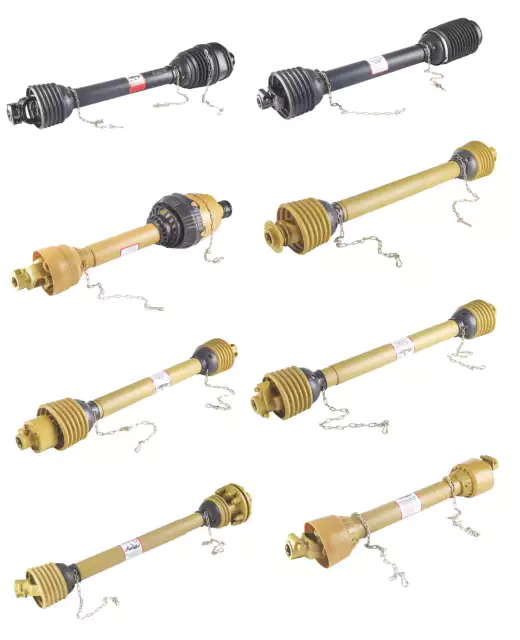
“I recall visiting a recycling facility near Utrecht last winter. They were running a heavy HDPE mix. The operator told me they blew through three shafts in a year. The issue wasn’t the running torque; it was the start-up. In the Netherlands, unheated warehouses can get damp and cold. When they hit the start button on a cold extruder screw filled with solidified plastic, the torque spike is massive—sometimes 300% of nominal. We swapped their standard splined shaft for our Series-750 with a localized hardening treatment on the yoke ears. It’s been running for 18 months now without a whimper.”
Why Glass and Plastic Lines are Different
In the Netherlands, where high-tech materials and recycling are major industries, the machinery isn’t just running; it’s sprinting. For Glass Float Lines et Annealing Lehrs, the challenge is heat and synchronization. A drive shaft here doesn’t just need to turn; it needs to turn without transmitting vibration that could cause defects in the molten glass ribbon. Even a micron of shudder translates to wasted product.
Pour Plastic Extruders, it’s all about torque density. The screw speed is relatively low, but the resistance is immense. Standard agricultural shafts (often repurposed for these jobs) simply lack the torsional stiffness. When the shaft twists like a torsion bar, it creates ‘chatter’ marks on the plastic product.
Technical Specifications: The EP-Industrial Series
We don’t believe in “one size fits all.” However, for reference, here are the specifications for our most popular heavy-duty series used in Dutch processing plants. These parameters are customizable based on your specific motor-to-gearbox alignment.
| ID du paramètre | Specification Name | Valeur / Plage | Unité |
|---|---|---|---|
| TS-01 | Couple nominal (Mn) | 12,500 – 45,000 | Nm |
| TS-02 | Fatigue Torque (Mdw) | 22,000 | Nm |
| TS-03 | Couple de freinage | 85,000 | Nm |
| TS-04 | Diamètre de la bride (A) | 225 – 350 | mm |
| TS-05 | Angle d'articulation maximal | 15 (25 Short Duration) | Diplômes |
| TS-06 | Rotational Speed (Max) | 3,200 | tr/min |
| TS-07 | Type de spline | DIN 5480 Involute | Standard |
| TS-08 | Diamètre du tube | 140 – 180 | mm |
| TS-09 | Épaisseur de paroi | 8.0 – 12.5 | mm |
| TS-10 | Material (Yokes) | Acier forgé 42CrMo4 | ISO 683-1 |
| TS-11 | Material (Tube) | St52.3 / E355 | DIN 17100 |
| TS-12 | Cross-Assembly Hardness | 60 – 64 | HRC |
| TS-13 | Durée de vie des roulements (L10) | > 15,000 | Heures |
| TS-14 | Niveau d'équilibre dynamique | G 6.3 (ISO 1940) | Standard |
| TS-15 | Length Compensation (Lc) | 120 – 400 | mm |
| TS-16 | Operating Temp (Standard) | -30 à +80 | °C |
| TS-17 | Operating Temp (High-Temp) | -20 to +220 | °C |
| TS-18 | Rigidité en torsion | 2.45 x 10^5 | Nm/rad |
| TS-19 | Paint/Coating | Epoxy Primer + PU | RAL 5010 |
| TS-20 | Intervalle de lubrification | 500 – 1000 | Heures |
| TS-21 | Type de joint | Double Lip / Viton | – |
| TS-22 | Flange Hole Count | 8 / 10 / 12 | – |
| TS-23 | Bolt Grade Required | 10,9 ou 12,9 | Metric |
| TS-24 | Retracting Force | < 2,500 | N |
| TS-25 | Efficacité | > 98.6 | % |
| TS-26 | Weight (Min Length) | 85 – 140 | kg |
The Dutch Industrial Context: Reliability is King
Operating in the Netherlands presents a unique set of variables. It’s not just about the machine; it’s about the environment. The coastal proximity means humidity and salinity are often higher than in central Europe. We have noticed that drive shafts imported with standard “black oxide” coatings often show surface rust within weeks when stored in facilities near the Hook of Holland or Zeeland.
Furthermore, Dutch safety regulations (Arbeidsomstandighedenwet) are stringent regarding rotating machinery. Every shaft we supply to the Netherlands comes with fully compliant, bright yellow safety guarding (if required) that meets NEN-EN-ISO 12100 standards. We don’t just ship a part; we ship documentation that keeps your safety officer happy.
Customization for Your Facility
Many of the older glass lines in regions like Limburg use legacy equipment. You might have a motor from the 90s coupled to a modern gearbox. Off-the-shelf shafts won’t fit. This is where we excel. We can machine the flange pilots to metric, imperial, or completely custom specifications.
Limburg Plastic Recycling Plant: A Victory Over Vibration
Le défi : A major recycler of PET bottles in the south of the Netherlands was experiencing chronic vibration in their main wash-line screw. It was so bad that it was cracking the concrete foundation mounts of the gearbox. They were using a competitor’s standard cardan shaft.
Notre diagnostic : We found that the operating angle of the shaft was slightly beyond 7 degrees due to floor settling, which induced a non-uniform velocity (the “cardan effect”) that resonated with the screw’s natural frequency.
La solution : We didn’t just sell them a stronger shaft. We supplied a Double-Cardan (Wide Angle) assembly usually reserved for agricultural PTOs but adapted for industrial torque. This geometry cancelled out the velocity fluctuations. Vibration dropped by 85% instantly.
Le résultat : Zero downtime in the last 14 months. The maintenance manager treated us to coffee and Vlaai—a fair trade, I’d say.
Brand Compatibility & Replacements
We know you likely have equipment fitted with shafts from big names like GKN, Comer Industries, ou Elbe. These are excellent manufacturers, and we respect their engineering.
However, when you need a replacement fast, or you need a shaft that handles 20% more torque than the OEM part without changing the dimensions, that is our playground. We can cross-reference almost any part number from these major catalogs and build a unit that drops right in.
The Perfect Match: Industrial Gearboxes
A drive shaft is only as good as what it’s connected to. In plastic extrusion, the gearbox (reducer) takes a beating. The thrust load from the screw pushing the plastic forward is immense.
We manufacture and supply heavy-duty ZLYJ Series Extruder Gearboxes specifically designed to pair with our high-torque shafts. These aren’t your standard reducers. They feature an integrated thrust block with spherical roller bearings to absorb that axial kickback from the screw.
If you are upgrading your drive shaft because of increased production loads, you should check your gearbox. A stronger shaft transmits more power, and if your gears are worn, the shaft will find the weak link. We often supply a “Power Pack” kit—a matched set of a ZLYJ gearbox and a precision-balanced Cardan shaft. This ensures the harmonic frequencies are tuned out of the operating range.
For the glass industry, we also offer precision Worm Gear Reducers et Réducteurs à engrenages coniques hélicoïdaux that provide the smooth, non-pulsing rotation required for transport rollers. When you source both the coupling (shaft) and the reducer from us, we guarantee the alignment and fit, saving your maintenance team the headache of finger-pointing between suppliers if something vibrates.
Foire aux questions (FAQ)
How much does a custom drive shaft cost for a plastic extruder in Amsterdam?
Costs vary based on torque rating and length, but generally, our direct-to-factory model saves you about 20-30% compared to sourcing OEM parts through local distributors. For a precise quote delivered to Amsterdam, please use our contact form with your specs.
Can I replace a GKN shaft with an Ever-Power unit directly?
Absolutely. If you provide the GKN part number or the flange dimensions (bolt circle and pilot diameter), we can manufacture a drop-in replacement that meets or exceeds the original torque specifications.
What is the lead time for shipping to Utrecht or Rotterdam?
For standard metric configurations, we can often dispatch within 3-5 business days. Custom-machined lengths usually take about 2 weeks. We have robust logistics partners ensuring fast clearance into the Port of Rotterdam.
Do you offer high-temperature shafts for glass manufacturing ovens?
Yes. For lehr ovens and annealing zones, we use special high-temp lithium complex grease and Viton seals that withstand temperatures up to 220°C without liquefying or degrading.
How do I measure my broken shaft to order a replacement?
Measure the compressed length (weld-to-weld or flange-to-flange), the flange diameter, and the bolt hole pattern. If you send us a photo of the broken unit alongside a tape measure via our inquiry form, our engineers can usually identify the series.
Why is my current drive shaft vibrating so much?
Vibration usually stems from three things: misalignment (angles not equal at both ends), worn U-joints, or the shaft being out of balance. In Dutch extrusion lines, we also see issues where the shaft is too light for the torque spikes. We can help diagnose this.
Industry News (Netherlands): Recent trends in the Brabant manufacturing sector indicate a shift towards “predictive maintenance.” Smart sensors on drive shafts are becoming common to monitor vibration levels before failure occurs. Additionally, new EU directives on plastic recycling efficiency are pushing older extrusion lines to run harder and faster, making robust driveline upgrades more critical than ever for Dutch processors.