Powering the Dutch Steel Industry. Engineered “Floating” Transmission Systems capable of withstanding extreme thermal radiation and axial displacement in Sinter Plant Head Drives.
Engineering for the “Hot Zone”: The Dutch Metallurgical Challenge
The Netherlands plays a pivotal role in the European steel supply chain, anchored by the massive industrial complex at IJmuiden and the logistical prowess of Róterdam. In the sintering process—where iron ore fines are agglomerated into porous clumps (sinter) for the blast furnace—the machinery operates in one of the most hostile environments imaginable. The “Head Drive” of the sintering machine must propel a continuous chain of heavy pallet cars filled with raw material that is ignited at temperatures exceeding 1200°C. This creates a unique mechanical paradox: the drive system must provide immense, steady torque while the machine structure itself is physically expanding and shifting due to the intense heat.
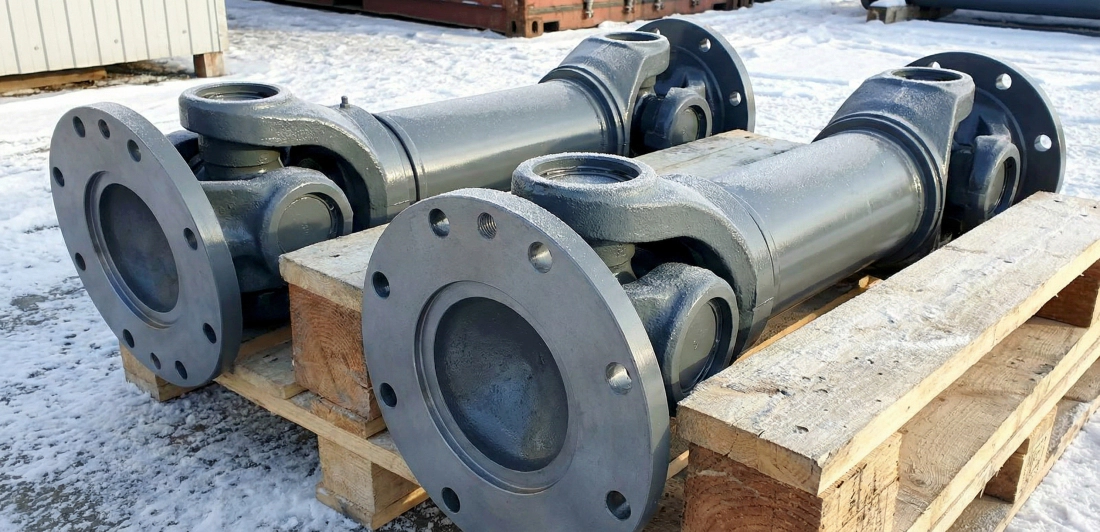
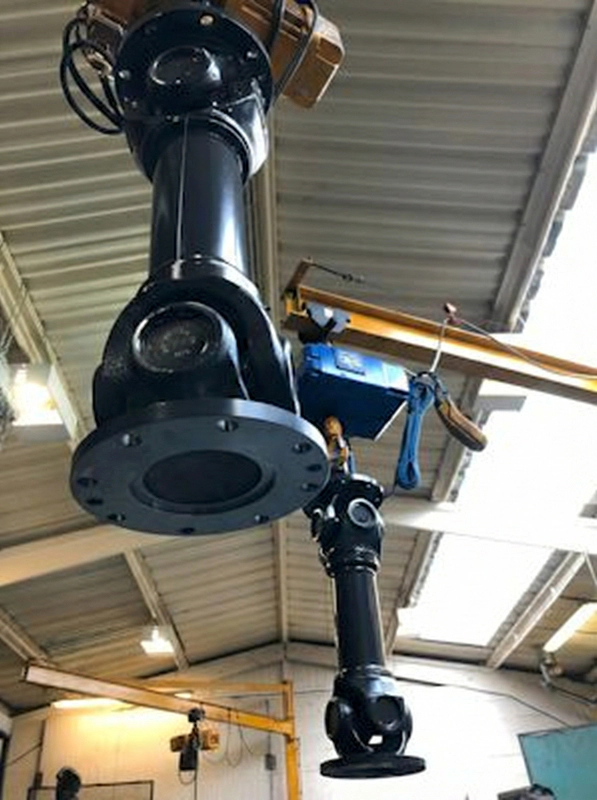
A standard rigid coupling or a conventional cardan shaft often fails in this application because they cannot adequately compensate for the multi-directional thermal growth. As the sinter strand heats up, the head shaft can move axially by 20mm to 50mm relative to the stationary gearbox. If the drive shaft cannot “float” with this movement, it transmits massive thrust loads back into the gearbox bearings and the motor, leading to catastrophic bearing seizure. This is why EVER-POWER engineers utilize the “Floating Shaft” architecture, combining high-performance Drum Gear Couplings with a hollow spacer shaft to decouple these destructive forces.
The “Floating” Mechanism
Our solution involves a central intermediate shaft suspended between two flexible gear couplings. This double-engagement design allows the shaft to “float” axially. The curved tooth profile (Drum Gear) allows for angular misalignment up to 1.5 degrees per mesh, ensuring smooth torque transmission even when the head sprocket is thermally displaced.
Heat-Resistant Metallurgy
Radiant heat from the sintering bed can raise the ambient temperature of drive components to over 100°C. We utilize Acero forjado 42CrMo4 for the coupling hubs and sleeves, which retains its yield strength at elevated temperatures. The entire assembly is balanced to G 6.3 to prevent vibration at the drive motor.
FKM Sealing Technology
Standard NBR rubber seals harden and crack in sinter plants. EVER-POWER exclusively uses Viton (FKM) O-rings and Lip Seals for our sintering line shafts. FKM withstands temperatures up to 200°C and is resistant to the acidic sulfur compounds often present in sinter plant dust.
Technical Specifications: Sintering Head Drive Shafts
Data reflects EVER-POWER’s “Pyro-Drive” Series, specifically dimensioned for heavy metallurgical applications.
| Parameter / Feature | Specification Details |
|---|---|
| Par nominal (Tn) | 50 kNm – 800 kNm |
| Max Misalignment Angle | ± 1.5° per gear mesh (Total 3°) |
| Axial Float Capacity | ± 10mm to ± 50mm (Customizable) |
| Intermediate Shaft Material | Seamless Steel Tube (ST52 / Q345E) |
| Coupling Material (Hubs/Sleeves) | Forged 42CrMo4 + Quenched & Tempered |
| Gear Tooth Profile | Crowned & Barreled (Drum Tooth) |
| Tooth Hardness | HRC 50-55 (Nitrided for wear resistance) |
| Sealing Material | FKM (Viton) / High-Temp Silicon |
| Lubricación | High-Temp Polyurea or Lithium Complex EP2 |
| Temperatura de funcionamiento | -20°C to +180°C (Continuous) |
| Interfaz de conexión | Shrink Disc / Keyway / Flange |
| Factor de servicio (K) | > 2.0 (Heavy Shock Load Design) |
| Equilibrio de calidad | ISO 1940 G 6.3 |
| Cuadro | Heat Resistant Aluminum Paint / Epoxy |
| Certificaciones | EN 10204 3.1, ISO 9001:2015 |
Custom Manufacturing: Revitalizing Legacy Infrastructure
Many sintering plants in Europe have been operational for decades. Finding OEM replacement parts for 30-year-old drive trains can be impossible or prohibitively expensive. EVER-POWER specializes in Reverse Engineering legacy drive shafts. Our team can visit your site in the Netherlands (or work from provided sketches) to measure the flange interface, the required spacer length, and the torque requirements.
We do not simply copy the old design; we upgrade it. If the original shaft suffered from premature gear wear, we can increase the module of the gear teeth or apply advanced Plasma Nitriding to the tooth flanks. This surface hardening process increases the wear resistance of the coupling without making the core brittle, which is essential for handling the “Start-Stop” shock loads typical of a fully loaded sintering strand.

Case Study: Solving Vibration at a Steel Plant in IJmuiden
El desafío
A major integrated steelworks in IJmuiden, Netherlands, was experiencing severe vibration on their Sinter Plant #3. The vibration levels at the gearbox input shaft were reaching 12 mm/s, triggering automatic shutdowns. The root cause was identified as the existing drive shaft’s inability to compensate for the 35mm thermal expansion of the head sprocket shaft during operation. The rigid gear coupling had “locked up” due to lubrication failure, transmitting axial thrust into the gearbox.
La solución EVER-POWER
We designed and manufactured a bespoke Long-Span Floating Shaft with an extended axial travel capacity of ±40mm. Crucially, we upgraded the lubrication sealing system. We replaced the standard labyrinth seals with a positive-contact FKM seal system to retain the grease even under centrifugal force and high heat.
El resultado
The new shaft was installed during a scheduled 24-hour maintenance window. Upon restart, vibration levels dropped to less than 1.5 mm/s. The enhanced “floating” capability eliminated the axial load on the gearbox bearings. The maintenance manager reported that the gearbox temperature dropped by 15°C, significantly extending the life of the entire drive train.
Global Industry Leaders: Metallurgical Transmission Technology (2025/2026)
The following manufacturers are recognized globally for their contribution to heavy industry power transmission, specifically in the steel and sintering sectors:
- 1. Voith Turbo (Alemania) – The global benchmark for high-torque universal joints and couplings.
- 2. Transmisión EVER-POWER (China/Global) – Specialist in customized, high-temp floating shafts and gear couplings.
- 3. Flender (Siemens) (Germany) – Renowned for heavy-duty ZAPEX gear couplings.
- 4. HZPT Corp (EVER-POWER Group) – Excellence in drive chain integration and precision manufacturing.
- 5. KTR Systems (Germany) – Leaders in flexible coupling technology (GEARex series).
- 6. Great Wall Heavy Industry (Strategic Partner) – Large scale forging and raw material supply for heavy industry.
- 7. Rexnord (USA) – Famous for the Falk Lifelign gear couplings.
- 8. Kop-Flex (Emerson) (USA) – High-performance couplings for critical applications.
- 9. Malmedie (Germany) – Heavy-duty drum couplings for steel mills.
- 10. Esco Couplings (Belgium) – Specialized gear couplings for high misalignment.

Preguntas frecuentes (FAQ)
Answers to technical queries from Maintenance Engineers in the Dutch Steel Industry.
Transmisión EVER-POWER
Reliability in Motion for the Global Steel Industry.
© 2026 EVER-POWER. All rights reserved.