Surviving the North Sea Wind: High-Torque Drive Shafts for Dutch Solar Trackers
Why standard linkages fail in Zeeland’s coastal storms—and how high-stiffness transmission saves your Agri-PV yield.
In the Netherlands, the challenge for solar tracking (Single-Axis or Dual-Axis) isn’t just the sun—it’s the dynamic wind load. We call it “Torsional Galloping.” When the wind hits a specific speed, the tracker starts to oscillate. If your drive shaft—the critical link between the slew drive and the torque tube—has too much backlash or insufficient torsional stiffness, that oscillation amplifies until the steel yields.
At EVER-POWER, we don’t treat solar drive shafts as simple connecting rods. We engineer them as Torque Management Systems. Whether you are building a new Agri-PV project in Gelderland where crops grow underneath, or retrofitting an older site in Groningen, our shafts are designed to lock that angle in, transfer the torque without hysteresis, and survive the 25-year corrosive assault of our wet, salty climate.
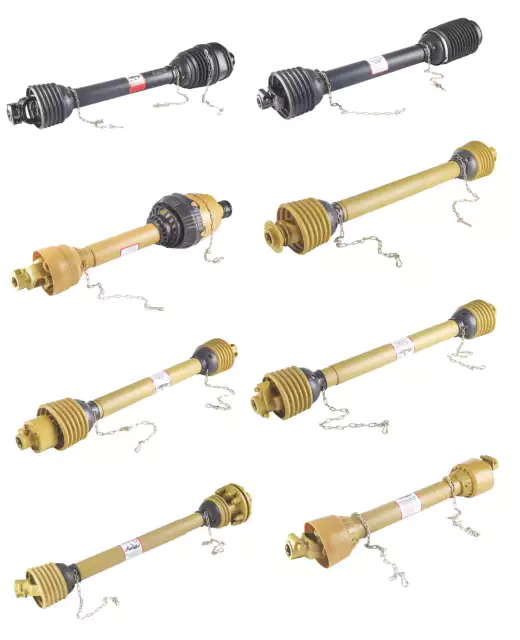
The “Polder Condition”: Why Material Selection Matters
The Netherlands presents a unique metallurgical environment. We have high humidity, frequent rain, and in coastal provinces, a salt-laden atmosphere that eats standard zinc plating for breakfast. For a solar tracker designed to last 20+ years, “standard” protection is a failure waiting to happen.
Nuestro Renewable Series shafts feature:
- Hot-Dip Galvanized Yokes & Tubes: Minimum 85µm zinc thickness to meet C4/C5 corrosion categories.
- Stainless Steel (AISI 304/316) Cross Kits: For critical moving parts where plating might wear off.
- IP65 / IP67 Sealing: Using UV-resistant Viton seals that prevent water ingress even during the heavy downpours typical of a Dutch autumn.
- Maintenance-Free Lubrication: Sealed-for-life joints using high-performance synthetic grease (Temp range -40°C to +80°C), because nobody wants to grease 5,000 joints in a muddy field.
Design Logic: Calculating Against the Wind
Let’s revisit the engineering math from our previous design review. When designing for a 1P or 2P tracker system, the critical factor is the Stow Mode Torque.
Calculation Example Refresher:
Imagine a 60-meter tracker row in Texel facing a 120 km/h gust. The aerodynamic center of pressure shifts, creating a massive twisting moment.
Torque (T) = Wind Pressure (q) × Area (A) × Eccentricity (e).
If your drive shaft has a torsional stiffness of less than 25,000 Nm/rad, it acts like a spring, storing and releasing that wind energy. This resonance destroys gears.
Our solution? We use Oversized Octagonal or Square Tubes rather than standard PTO profiles. The geometry provides 40% higher torsional rigidity for the same weight, effectively dampening the “spring effect” and protecting your Slew Drive worm gears.
Client Pain Point: The “Row Sync” Disaster
“We operate a dual-axis experimental site in Utrecht. Last month, a sensor failure caused one motor to keep driving while the mechanical stop was engaged. The torque buildup snapped the main drive shaft, and the panel array swung loose in the wind, damaging the crops below.”
— O&M Manager, Agri-PV Pilot Project
EVER-POWER Solution: Torque Limiters
“We retrofitted the system with our Series-S Shafts featuring integrated Shear Bolt Torque Limiters. Now, if a blockage or sync error occurs, the bolt shears at a precise 2,500 Nm, decoupling the motor. The structure remains safe, and the repair costs €5 for a bolt instead of €5,000 for an array.”
Technical Specifications: Solar Tracker Series (NL-Spec)
These parameters are generated based on the requirements for North Sea wind zones and high-humidity agricultural environments.
| Categoría de parámetro | Rango de especificaciones | Application Relevance |
|---|---|---|
| Par nominal (Mn) | 400 Nm – 8,500 Nm | Continuous tracking duty |
| Peak Static Torque | 1.8x – 2.5x Mn | Survival load (Wind Stow Position) |
| Ángulo máximo de funcionamiento | 45° (Standard) / 60° (Wide) | Dual-axis tracking range |
| Rigidez torsional | 15,000 – 65,000 Nm/rad | Prevents galloping/resonance |
| Retracted Length | 600mm – 2,500mm | Custom to row spacing |
| Compensación de longitud | +100mm to +450mm | Thermal expansion of the torque tube |
| Perfil del tubo | Square / Octagonal / Lemon | High rigidity geometry |
| Tratamiento de superficies | Hot-Dip Galvanized (ISO 1461) | >85µm zinc for C4 environments |
| Grado del material | S355J2G3 / 20MnCr5 | High-yield-strength steel |
| Material del yugo | Forged C45 / Cast GGG40 | Ductile in cold weather (-20°C) |
| Resistencia a la corrosión | > 1000 Hours Salt Spray | Coastal zone approved |
| Clasificación de sellado | IP65 (Dust/Water Jet) | Field washdown safe |
| Lubricación | Grasa sintética de larga duración | Maintenance interval > 5 years |
| Temperatura de funcionamiento | -35°C to +80°C | Winter/Summer extremes |
| Tipo de articulación | Cardan (Block & Pin) | Robust, low-friction |
| Safety Device | Shear Bolt / Ratchet Clutch | Protección contra sobrecargas |
| Interfaz de brida | Square 4-Bolt / Keyway / Spline | Matches standard Slew Drives |
| Backlash (Play) | < 0.5 degrees | Precision angle feedback |
| UV Resistance | UV Stabilized Seals/Covers | 20-year exposure rating |
| Wind Load Rating | Up to 160 km/h (Stowed) | Storm survival |
| Mantenimiento | Lubricated for Life Option | Low OPEX |
| Diámetro de oscilación | 60mm – 140mm | Clearance check required |
| Connection to Tube | Collar Clamp / Through Bolt | Fast field assembly |
| Peso | 4 kg – 25 kg | Lightweight for reduced motor load |
| Garantía | 10 Years (Structural) | Bankable reliability |
Factory Customization: Adapted to Your Mounting System
Solar projects are rarely “off-the-shelf.” Your mounting system might use a specific torque tube geometry (round, square, or D-shape). At EVER-POWER, we customize the end-yokes to fit your specific pile tolerance.
Utilizamos Robotic Welding Cells to ensure consistent penetration on the tube-to-yoke welds, which is the most common failure point in fatigue testing. We can also integrate Intelligent Angle Feedback targets onto the shaft body, allowing your inclinometers to read the drive position directly.
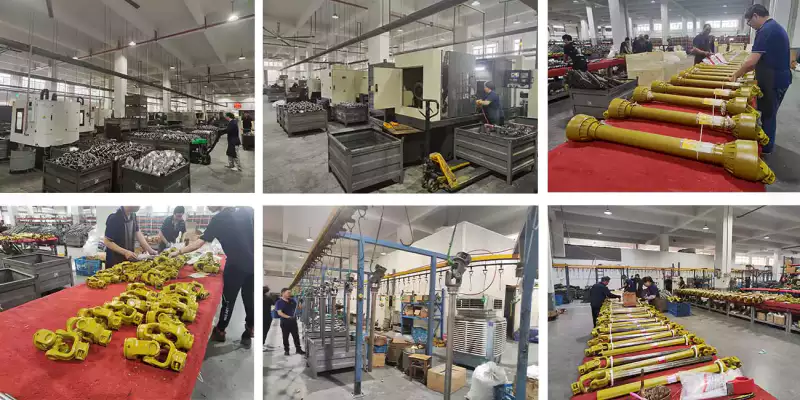
The Complete Ecosystem: Slew Drives & Maintenance Gearboxes
A solar tracker is a machine. The drive shaft moves it, but the Slew Drive (Worm Gear) holds it. And the land underneath? That needs maintenance using tractors equipped with our Cajas de engranajes agrícolas.
1. Solar Slew Drives (The Muscle)
We manufacture high-precision Enclosed Slew Drives (SE Series / PE Series) that pair perfectly with our drive shafts.
- Autobloqueo: The worm gear design inherently prevents the wind from back-driving the panel.
- High Holding Torque: Engineered to withstand the static moment of wind gusts up to 45 kN.
- Vertical & Horizontal: Solutions for both single-axis (East-West) and dual-axis (Azimuth/Elevation) tracking.
By sourcing the Slew Drive and the Drive Shaft from EVER-POWER, you ensure the spline interfaces match perfectly, eliminating the “slop” that causes tracking errors.
2. Agri-PV Maintenance: PTO Gearboxes for Mowers
In the Netherlands, Agri-PV (combining crops/grazing with solar) is the future. But maintaining the grass under the panels requires specialized, low-profile mowers. We supply the Right-Angle PTO Gearboxes that power these mowers.
These gearboxes are designed to connect to the tractor’s PTO shaft (which we also make!) and drive the mower blades. They feature:
- Low Profile Design: To fit under the low clearance of tracking tables.
- Debris Protection: Seals designed to resist grass wrapping and dust.
- Shock Load Resistance: Built to handle hitting the occasional rock hidden in the polder grass.
From the tracker moving the sky to the mower grooming the ground, EVER-POWER powers the entire solar lifecycle.
Preguntas frecuentes (FAQ)
Practical answers for Solar O&M Managers.
How do I prevent corrosion on drive shafts in Dutch coastal solar parks?
Salt spray is the enemy. You must specify Hot-Dip Galvanization to ISO 1461 standards (min 85 microns). Do not accept standard zinc plating. Additionally, use sealed joints with high-quality marine-grade grease to prevent internal rusting that leads to seizure.
What causes “galloping” in single-axis solar trackers?
Galloping is an aeroelastic instability. If the drive shaft connecting the motor to the rows is too flexible (low torsional stiffness), the wind can twist the panels, creating a rhythmic oscillation that amplifies until failure. Using larger profile, high-stiffness shafts dampens this effect.
Can I use a PTO shaft from a tractor for a solar tracker?
Generally, no. Tractor PTO shafts are designed for high speed (540 RPM) and occasional use. Solar shafts move very slowly but under high continuous torque, and must sit outside for 20 years. Solar shafts need different sealing, galvanization, and tighter backlash tolerances.
How often do I need to grease the U-joints on my solar tracker?
For modern projects, the answer should be “never.” We supply Maintenance-Free joints that are sealed for life. Given labor costs in the Netherlands, greasing thousands of joints manually is not economically viable. Our synthetic lubricants last the 20-year project lifespan.