The Invisible Backbone of
Dutch Wind Power
Connecting the gearbox to the generator at 100 meters above sea level is no place for component failure. We engineer maintenance-free, electrically insulated composite drive shafts designed to survive the torque spikes and salt spray of the North Sea.
Why “Standard” Steel Shafts Don’t Cut It Offshore
Look, we’ve been climbing nacelles from Friesland to Zeeland for nearly two decades. If there is one thing that keeps a wind farm asset manager up at night, it isn’t the wind—it’s the High-Speed Shaft (HSS) coupling.
Most people don’t realize that the connection between the gearbox output and the generator input acts as a mechanical fuse. In the erratic wind conditions we see off the Dutch coast—where gusts can ramp torque from 20% to 100% in seconds—a standard steel cardan shaft acts like a rigid bar. It transmits every shock load directly into the generator bearings. Result? Brinelling, overheating, and a crane barge bill that would make your accountant weep.
The trick isn’t just making the shaft stronger. It’s making it smarter. That is why we pivoted heavily towards Glass Fibre Reinforced Polymer (GFRP) spacer tubes. These aren’t just lighter; they are electrically non-conductive and torsionally compliant. They absorb the transient spikes and stop stray currents dead in their tracks.
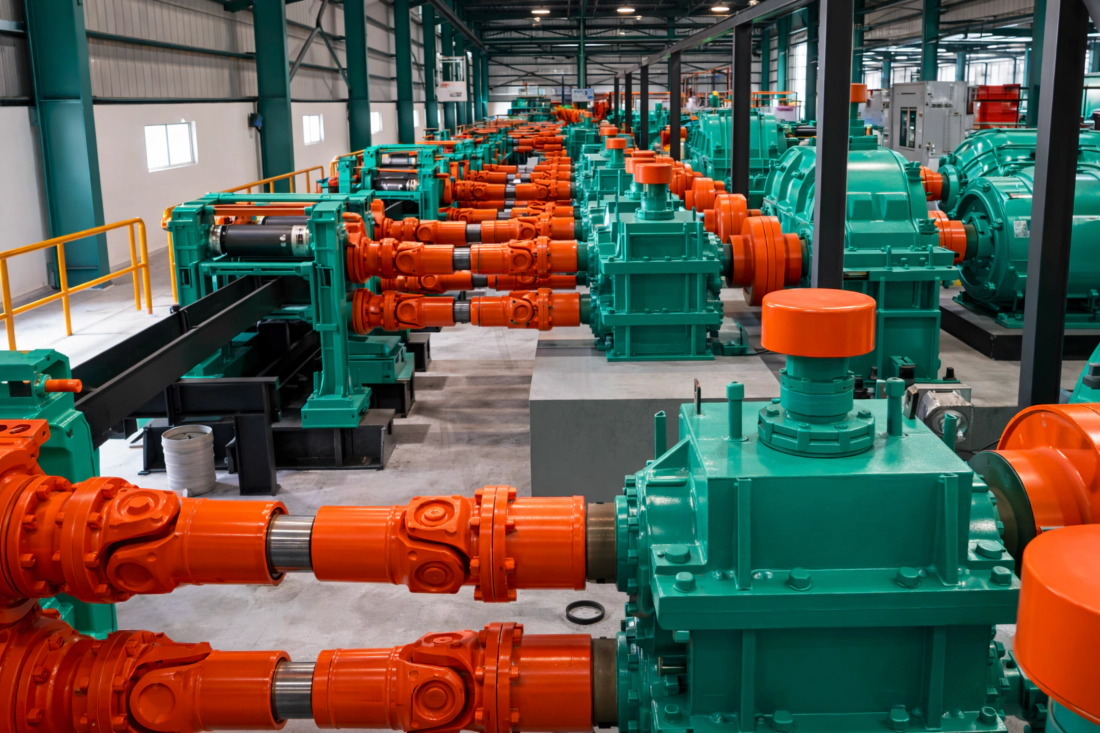
Engineering the “Zero-Maintenance” Link
1. Electrical Insulation (The Silent Killer)
In modern DFIG (Doubly Fed Induction Generators), high-frequency switching creates stray voltages on the rotor shaft. If you use a steel drive shaft, that current seeks a path to ground through the gearbox bearings. We’ve seen perfectly good gearboxes destroyed by electrical arcing (fluting) in months. Our Composite Spacer Tubes provide insulation up to several kV, completely isolating the gearbox from these parasitic currents.
2. Weight & Critical Speed
A steel shaft for a 3MW turbine can weigh over 150 kg. At 1,800 RPM, any imbalance becomes a destructive force. By switching to carbon/glass composite, we drop the weight by 60%. This raises the Velocidad crítica (natural frequency) of the shaft well above the operating range, eliminating the resonance issues that plague longer steel shafts in larger nacelles.
3. The “Salt Mist” Factor
Whether you are in the Maasvlakte or offshore at Egmond aan Zee, salt is the enemy. Our flanges are coated with a specialized Zinc-Nickel plating (C5-M rated), and the composite tube is inherently immune to rust. We use sealed-for-life universal joints, meaning your technicians don’t have to carry a grease gun up 100 meters every six months.
Dutch Operational Context: Onshore vs. Offshore
Onshore (Flevoland / Groningen)
Onshore turbines often face “turbulent” wind due to nearby structures or terrain. This creates constant micro-adjustments in torque. Here, we prioritize Amortiguación torsional. Our integrated slip clutches (Torque Limiters) are set to slip at 1.8x nominal torque to protect the gearbox during sudden gusts.
Offshore (North Sea)
Access is the main cost driver. If a shaft fails offshore, you need a calm weather window and a specialized vessel. Reliability is paramount. For these applications, we supply our Series-W “Titan” shafts with redundant sealing systems and Titanium-stabilized stainless steel hardware to ensure a 20-year design life without intervention.
Technical Data: Series-W Wind Power Shafts
| Parámetro | Rango de especificaciones |
|---|---|
| Par nominal (Tkn) | 2.500 Nm – 45.000 Nm |
| Peak Torque capacity | 2.5 x Tkn (Transient) |
| Max. Rotational Speed | Hasta 3.500 RPM |
| Ángulo de operación | Continuous 3° / Max 15° (Misalignment compensation) |
| Insulation Resistance | > 10 MΩ @ 1000V DC (Composite Tube) |
| Material del tubo | Filament Wound GFRP / Carbon Fiber Hybrid |
| Service Temperature | -40°C to +80°C (Standard) |
| Vida de fatiga | Designed for > 20 Years (Infinite Life calculation) |
| Protección contra sobrecarga | Optional Integrated Slip Clutch / Shear Pin |
| Equilibrio de calidad | G6.3 Standard / G2.5 Precision (ISO 1940) |

Retrofit Ready
We hold CAD data for legacy Vestas V80/V90, Gamesa G8x, and GE 1.5/2.X series. No modifications required.
Project: The “Singing” Turbines of Ijsselmeer
El desafío: A wind farm operator in the Ijsselmeer region was facing a peculiar issue with their 20-year-old 1.5MW turbines. The original steel drive shafts had developed a resonance frequency that matched the 3rd harmonic of the generator at partial load (8-9 m/s wind speed). This caused audible humming (“singing”) and rapidly degraded the gearbox output bearings.
El análisis: We deployed vibration analysis equipment inside the nacelle. The data showed that the steel shaft’s mass was causing a “whirling” effect. The resonance was amplifying the natural gear mesh frequency.
La solución Ever-Power: We engineered a retrofit using our Aero-Link Composite Shaft. By reducing the shaft mass from 120kg to 45kg and increasing the torsional damping via the composite matrix, we shifted the natural frequency out of the operating range.
El resultado: The vibration levels dropped by 85%. The “singing” stopped immediately. The operator estimates they have extended the remaining life of the gearboxes by at least 5 years, saving approximately €1.2M in potential replacement costs across the farm.
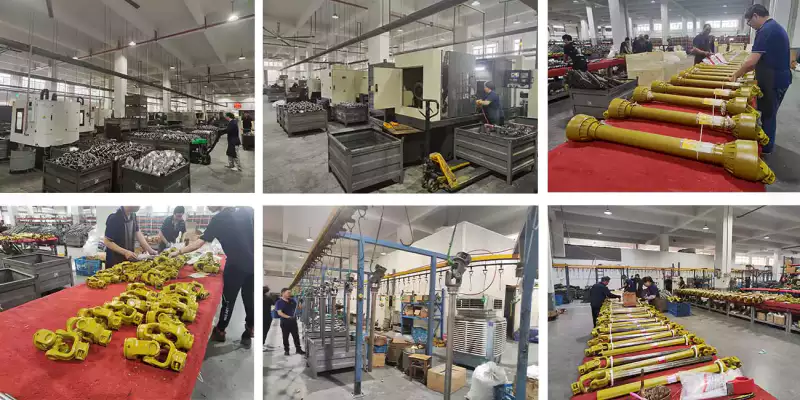
Factory Direct: High-Mix, Low-Volume Specialists
We know that in the wind industry, “standard” is a myth. Every turbine model, every retro-fit, has slightly different length requirements or flange patterns. Unlike mass manufacturers who demand MOQs of 50 units, we thrive on Single Unit Customization.
- Prototipado rápido: We can produce a custom-length composite shaft with bonded metal end-fittings in 4 weeks.
- Equilibrio interno: Every wind shaft is dynamically balanced on our Schenck machines to ISO G2.5 precision.
- Trazabilidad: Full material certification (3.1) and bonding ultrasound inspection reports provided with every unit.
Global Leaders: Wind Turbine Drivetrain Components (2025/2026)
The wind supply chain is a small world. Here are the top players globally who define the standards for mechanical power transmission in renewable energy:
- Flender (Siemens) (Alemania) – The giant in wind gearboxes and couplings.
- KTR Systems (Alemania) – Renowned for their RADEX and ROTEX wind couplings.
- Transmisión de potencia continua (global) – The agile alternative for aftermarket and custom composite solutions.
- Voith Turbo (Alemania) – Heavy-duty hydro-couplings and shafts.
- HZPT (Transmisión de energía de Hangzhou) – Our strategic partner for modular industrial components.
- Rexnord (Centaflex) (USA/Global) – Dominant in flexible link couplings.
- Zero-Max (USA) – Composite disc couplings for wind.
- Grupo de Transmisión EP – Focused on high-precision integrated drive systems.
- Geislinger (Austria) – High-damping couplings for giant offshore turbines.
- Jaure (Regal Rexnord) (Spain) – Specific wind power coupling solutions.
Expert Answers for Dutch Wind Operators
Composite shafts are far superior for offshore maintenance. Firstly, they are typically 60% lighter, making them easier to handle inside the cramped nacelle without heavy lifting gear. Secondly, they do not corrode, eliminating the need for painting or rust treatment. Finally, they isolate electrical currents, protecting the gearbox from expensive bearing damage.
Yes. We specialize in “Reverse Engineering.” Many older turbines (like the Neg Micon NM48 or early Vestas V52) have obsolete parts. If you send us the dimensions or the old unit, we can manufacture a modern composite or steel replacement that fits the existing bolt pattern perfectly, often with improved performance characteristics.
Price depends on the specific design (steel vs. composite) and torque rating. A standard steel cardan shaft for a 2MW turbine might range from €3,500 to €5,500. A high-performance, insulated composite shaft typically costs between €5,000 and €8,000. We provide transparent quoting with DDP shipping to any location in the Netherlands.
Yes, upon request. For onshore turbines in turbulent areas, we highly recommend integrating a torque limiter (slip clutch). This device will slip at a preset torque value (usually 180% of nominal load) to disconnect the generator from the gearbox during a grid fault or extreme wind gust, saving the gearbox teeth from shearing.
Don’t let a €5,000 shaft destroy a €200,000 gearbox.
© 2026 Ever-Power Transmission. Empowering the winds of the future.