Taming the “Whine”: Precision Drive Shafts for Dutch Powertrain Test Benches
When your E-motor hits 18,000 RPM, standard couplings become shrapnel. Here is how we engineer zero-backlash transmission for the Brainport R&D ecosystem.
Most industrial couplings are designed to transmit torque, period. But in a dyno setup, the shaft must do three contradictory things simultaneously: it must be torsionally rigid to prevent wind-up hysteresis, flexible enough to accommodate the inevitable misalignment between the motor and the absorber, and balanced so perfectly that it doesn’t confuse your accelerometers with parasitic vibration. Standard cardan shafts simply check out at 5,000 RPM. They start to whip.
At EVER-POWER, we approach dyno shafts (Dynamometer Drivelines) as precision instruments, not just hardware. We utilize High-Speed Constant Velocity (CV) Joints y Titanium or Carbon Fiber composite tubes to push the critical speed threshold well beyond your test limits. Whether you are validating a new CVT for a DAF truck or stress-testing a hydrogen fuel cell compressor in Delft, our shafts ensure that the vibration you measure is coming from the specimen, not the test rig.
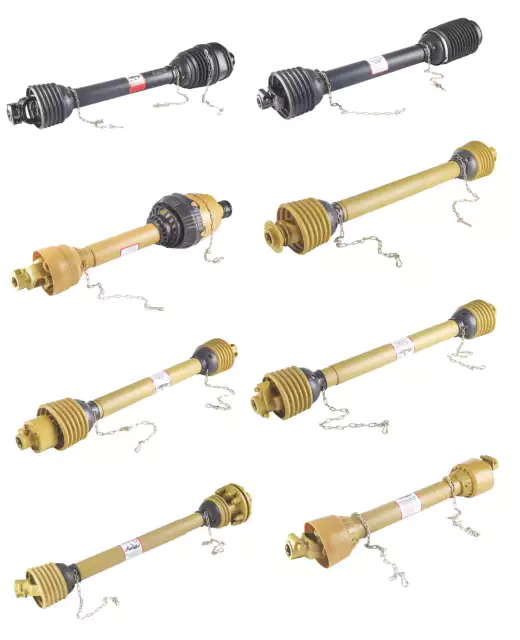
The “Brainport” Standard: Zero Error Tolerance
The Netherlands has evolved into the Silicon Valley of mobility. With the intense cluster of high-tech companies around Eindhoven y Veldhoven, the demand for precision testing has skyrocketed. We aren’t just testing reliability anymore; we are testing efficiency to the fraction of a percent.
In legacy setups using standard U-joints, we often see “velocity fluctuation” (the cardioid effect) introducing torque ripples into the measurement data. This is unacceptable when you are trying to map the efficiency map of a synchronous reluctance motor. For our Dutch clients, we almost exclusively recommend Disc Couplings (Membrane Couplings) o Rzeppa-style CV joints. These designs offer true homokinetic (constant velocity) transmission, meaning the input speed exactly matches the output speed at every degree of rotation, regardless of the angle.
Furthermore, the shift towards light-weighting in the Dutch automotive sector means test rigs must simulate lower rotational inertia. A heavy steel shaft acts as a flywheel, masking the transient response of the motor. Our Carbon Fiber Dyno Shafts reduce rotational inertia by up to 70%, allowing your control loop to react faster and your simulation to be more realistic.
The “Phantom Resonance” Case Study
Client Pain Point
— Lead Test Engineer, Tier 1 Supplier
EVER-POWER Technical Solution
I suspected lateral critical speed resonance. The client was using a solid steel shaft that was simply too long for that RPM. It was starting to ‘skip rope’.
La solución: Hemos diseñado un Tubular Titanium Drive Shaft (Series Ti-HighSpeed).
- Stiffness: High specific modulus pushed the first natural frequency to 19,000 RPM.
- Balancing: Micro-balanced to ISO Grade G1.0.
- Resultado: The “noise” vanished instantly. It was mechanical resonance, not electrical.
Technical Specifications: Series Dyno-X (High Speed)
We don’t guess with these numbers. Every shaft comes with a dynamic balancing certificate and a calculated critical speed report.
| Categoría de parámetro | Especificación / Gama | Relevancia de ingeniería |
|---|---|---|
| Velocidad máxima continua | 12,000 – 22,000 RPM | Dependent on the length/diameter ratio |
| Par nominal (Tkn) | 200 Nm – 15,000 Nm | Sized for motor continuous rating |
| Par máximo (Tkmax) | 1.5 x Tkn | Handles start-up/braking spikes |
| Calidad de equilibrio dinámico | ISO 1940-1 G2.5 (Std) / G1.0 (Opt) | Crucial for bearing life |
| Tipo de articulación | High-Speed CV (Rzeppa) | Constant velocity, low heat |
| Alternative Joint | Disc Pack (Stainless Membrane) | No lubrication, infinite life |
| Rigidez torsional | 35 – 450 kNm/rad | Customizable for TVA tuning |
| Rotational Inertia (J) | 0.002 – 0.5 kg·m² | Low J improves control response |
| Cero reacción | Yes (Pre-loaded Spline/Disc) | Essential for torque reversal tests |
| Plunge Capacity (Travel) | +/- 15mm to +/- 80mm | Accommodates thermal expansion |
| Plunge Resistance | < 50 N (Ball Spline) | Protects dyno bearings from axial load |
| Material del tubo | Carbon Fiber / Titanium / DOM | Tuned for critical speed |
| Bonding Method | Aerospace Epoxy / Interference Fit | Tested to 150°C |
| Temperatura de funcionamiento | -30°C to +130°C | High-temp CV grease used |
| Flange Concentricity | < 0.02mm TIR | Pilot fit is critical |
| Paralelismo de bridas | < 0.015mm | Ensures perfect mating |
| Bolt Material | Grade 12.9 or Titanium | Low mass, high clamp load |
| Adapter Plates | Custom Machined (7075 Alum/Steel) | Adapts to any dyno flange |
| Ángulo máximo de funcionamiento | 6 degrees (CV) / 1 degree (Disc) | Keep low for heat management |
| Lubricación | Sealed for Life or Re-greaseable | Depends on duty cycle |
| Factor de seguridad | > 1.5 (Yield) / > 2.0 (Fatigue) | Robust design |
| Peso | 1.5 kg – 65 kg | Optimized for handling |
| Paint/Finish | Matte Black / Polished Metal | Anti-reflective for strobe |
| Margen de velocidad crítica | > 25% above Max Operating RPM | Safety buffer |
| Documentación | Balancing Report / Material Cert | Full traceability |
| Limitador de par | Optional Integrated Clutch | Protects the test specimen |
| Garantía | 1 Year / 2000 Testing Hours | Standard terms |
Customization: The “Drop-In” Retrofit Service
In the world of testing, there is no “standard.” You might be upgrading an old AVL bench, or building a completely new rig with a Siemens motor and a Kistler torque flange. The bolt patterns never match. The lengths are always unique.
Nos especializamos en rapid prototyping and retrofitting. We don’t just sell you a shaft; we engineer the entire connection. We machine custom adapter plates (Hubs) from high-strength 7075-T6 aluminum to keep weight down, allowing you to mate a DIN 100 flange to an SAE 1350 output. We calculate the Torsional Vibration Analysis (TVA) to ensure our shaft’s stiffness doesn’t overlap with your motor’s ripple frequency.
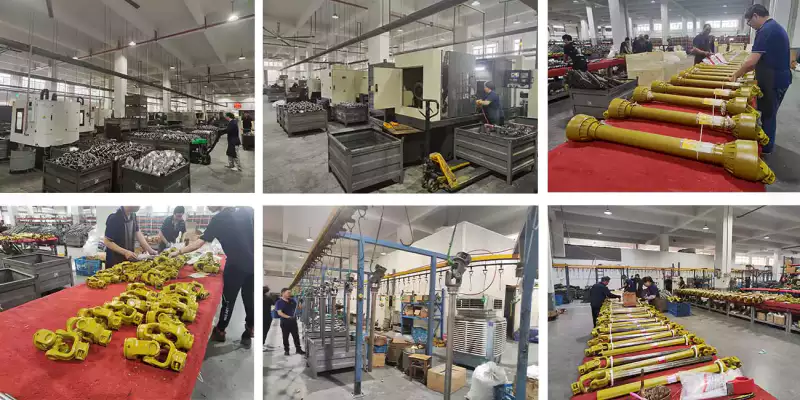
Completing the Test Cell: Gearboxes for PTO Dynamometers
While the drive shaft connects the dots, the gearbox often defines the test. Especially in the Agricultural Testing sector—think of the research being done at Wageningen University or by tractor manufacturers in the Benelux—PTO dynamometers are essential tools. These rigs must absorb the massive torque of a modern tractor at 1,000 RPM, but the hydraulic or eddy-current absorbers inside the dyno often need to spin at 3,000-4,000 RPM to generate sufficient braking force.
The Speed Increaser Gearbox
We manufacture specialized PTO Speed Increaser Gearboxes specifically for dynamometer applications. These are not standard agricultural boxes; they are “Test Grade.”
Thermal Management is Key: In a testing scenario, you might run a tractor at full load for 4 hours to test cooling capacity. A standard gearbox would cook its oil. Our Dyno Gearboxes feature:
- High-Capacity Oil Sumps: With ports ready for external oil coolers and circulation pumps.
- Hardened & Ground Gears: Precision ground to DIN 5 quality to minimize noise (so you hear the tractor, not the dyno gearbox).
- Integrated Torque Limiting: A built-in safety clutch that disengages if the test specimen seizes, saving your expensive dyno internals.
Back-to-Back (Regenerative) Rig Gearboxes
For fatigue testing of industrial components, we also supply robust gearboxes for “locked-in torque” loops. These gearboxes are designed with extremely high stiffness and low backlash to maintain precise torque control in the loop. Whether you are testing a wind turbine coupling or a conveyor drive, we can supply the gearbox that closes the loop.
By sourcing both your Precision Test Shaft and your Dyno Gearbox from EVER-POWER, you get a matched system. We ensure the torsional stiffness of the shaft complements the inertia of the gearbox, avoiding those dreaded resonance points that ruin test data.
Preguntas frecuentes (FAQ)
Answers from the Lab Floor.
How do I balance a drive shaft for a 20,000 RPM electric motor test bench?
Balancing is an art at these speeds. Standard ISO G6.3 is useless here. We balance our high-speed dyno shafts to ISO Grade G2.5 or even G1.0 using a multi-plane balancing process on a dedicated high-speed machine. We also mark the components (flanges, bolts) so you can reassemble it perfectly after maintenance.
Which coupling is better for dynos: CV joints or Disc packs?
It depends on your setup. CV joints are better if you have significant articulation (misalignment) or need to move the dyno while running. Disc packs (membrane couplings) are better for extremely high speeds and rigid setups because they have zero moving parts, zero play, and generate no heat, but they tolerate very little misalignment.
Can you retrofit a drive shaft for an old Horiba or AVL test bench in the Netherlands?
Yes. We have the specs for many legacy rigs. If not, we just need the flange dimensions (bolt circle, pilot) and the distance between flange faces. We can manufacture a “drop-in” replacement shaft with custom adapters, often with better performance (lighter, stiffer) than the original OEM part.
What causes torque spikes when my test rig reverses direction?
That is almost certainly backlash in your current shaft splines. When torque crosses zero, the slack is taken up, causing a shock load. Our test bench shafts use Pre-loaded Ball Splines or interference-fit profiles to ensure zero backlash, giving you a smooth transition across the zero-torque point.
Do you provide torsional vibration analysis (TVA) data for your shafts?
Yes. For every precision shaft, we can provide the Torsional Stiffness (Ct) and Mass Moment of Inertia (J) values. This allows your simulation team to plug the shaft into their AVL Excite™ or Simpack™ models to predict critical speeds and system resonance before you even bolt it on.