Safety at Height: Precision Drive Shafts for Dutch Lifts & Cranes
In the lifting industry, gravity is the only constant you can’t negotiate with. We engineer zero-backlash, high-rigidity drive shafts designed to meet NEN-EN 81 safety standards. Reliable torque transmission for the ports of Rotterdam, logistics hubs in Venlo, and high-rise projects in Amsterdam.
I’ve spent nearly two decades analyzing drivetrain failures, from the container gantries in the Europoort to the high-speed passenger lifts in the Zuidas business district. Lifting applications are fundamentally different from general industry. It’s not just about torque; it’s about Control and Safety. A conveyor belt stopping unexpectedly is a nuisance. A crane hoist stopping unexpectedly—or worse, failing to hold—is a catastrophe.
In the Netherlands, where logistics and vertical urbanization are key economic drivers, the demands on hoisting equipment are intense. We see frequent “Start-Stop” cycles (Jerk load) that fatigue standard steel faster than you’d expect. In automated warehouses (AS/RS), positioning accuracy is paramount. A drive shaft with sloppy backlash means the stacker crane misses the bin by 2mm, causing a system fault.
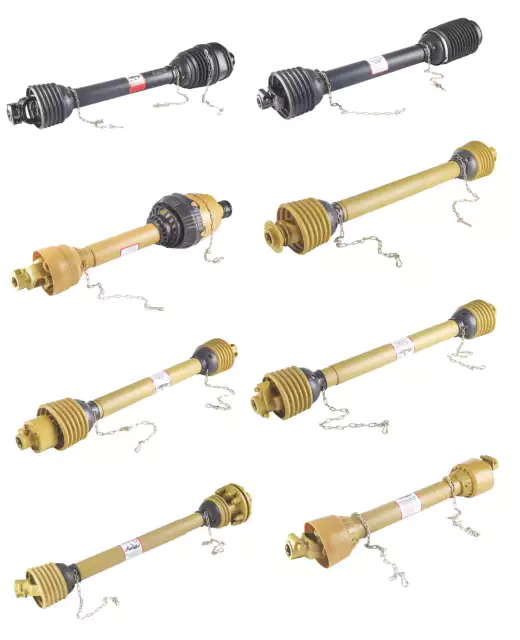
We build our “Lift-Safe” Series with a different philosophy. We prioritize Torsional Rigidity to ensure precise positioning, and we integrate Torque Limiters (Safety Couplings) to protect the gearbox and motor in case of a jam. We use certified materials and traceability because when the Liftinstituut comes for inspection, you need paperwork, not just promises.
🛠️ Engineer’s Field Note: The Shaking Stackers in Tilburg
“I was consulting for a major fulfillment center in Tilburg last year. Their automated stacker cranes were suffering from ‘positioning hunt.’ The motor would drive to the target, but the load would overshoot slightly, then correct back. This oscillation was adding 3 seconds to every pick cycle.
The culprit? Torsional wind-up in the long main drive shafts. They were using standard agricultural-grade tubing. It acted like a torsion spring. We swapped them out for our High-Stiffness Tubular Shafts with zero-backlash disc couplings. The rigid connection meant that 1 degree of motor turn equaled exactly 1 degree of wheel turn. The oscillation vanished, and their throughput increased by 12%. In lifting and positioning, stiffness isn’t just about strength; it’s about control.”
Technical Specifications: Series V-Lift (Vertical & Hoist)
These specifications are derived from the strict requirements of the European lifting directive and local Dutch safety standards.
| Parameter Category | Specification Data | Engineering Logic |
|---|---|---|
| Nominal Torque (Tn) | 500 – 15,000 Nm | Sized for hoist drums & traction sheaves |
| Peak Torque (Braking) | 3.0 x Tn | Must handle emergency brake hold |
| Service Factor (K) | 2.0 – 3.5 | Frequent Start/Stop (Duty S3/S4) |
| Safety Factor (Yield) | > 5.0 | Critical lifting safety margin |
| Torsional Stiffness | High (>200 kNm/rad) | Minimize oscillation/bounce |
| Backlash | Zero (0.00°) | Required for precise floor leveling |
| Rotational Speed | 0 – 1,500 RPM | Matches standard lift motors |
| Tube Material | Seamless E355 / 42CrMo4 | High yield strength |
| Yoke Material | Forged Steel | Resist fatigue cracking |
| Coupling Type | Disc / Gear / Cardan | Application dependent |
| Torque Limiter | Friction / Ball-Detent | Overload protection (Anti-Snag) |
| Misalignment (Angular) | 1° – 5° | Compensates for frame flex |
| Misalignment (Axial) | ± 5mm | Thermal & load deformation |
| Balancing Quality | G 6.3 (ISO 1940) | Smooth, quiet passenger ride |
| Corrosion Protection | C3 – C5M (Marine) | Port vs Indoor Warehouse |
| Operating Temp | -30°C to +80°C | Cold storage to the engine room |
| Length Compensation | Splined Telescoping | Low-friction glide coat |
| Spline Coating | Rilsan / Moly | Prevents “Stick-Slip” noise |
| Connection Type | Flange / Shrink Disc | Positive locking (No keys recommended) |
| Brake Disc Integration | Optional | Direct mount for caliper brakes |
| Fatigue Life | Infinite (>2×10^6 cycles) | High cycle reliability |
| Certifications | Material 3.1 / NEN-EN 81 | Traceability guaranteed |
| Maintenance | Sealed for Life Option | For inaccessible hoistways |
| Noise Level | Low Acoustic Signature | For residential elevators |
| Weight | Optimized | Reduces counterweight needs |
| Country of Origin | EVER-POWER Mfg | Global Engineering |
Lifting Industry Challenges: Solved
🚫 Pain Point: The “Jerky” Start
“Tenants in our high-rise renovation project are complaining about vibrations and a ‘clunk’ when the elevator starts moving. It feels unsafe.”
✅ EVER-POWER Solution
This is often caused by backlash in worn spline connections. We provide Zero-Backlash Flange Yokes with interference-fit bolts or serrated faces. Combined with our precision-balanced tubes, this eliminates the ‘clunk’ and ensures a smooth, silent ride that feels premium and safe.
🚫 Pain Point: Overload Damage
“Our gantry crane grabbed a container that was still locked to the truck chassis. The torque spike sheared the gearbox input shaft, causing 3 days of downtime.”
✅ EVER-POWER Solution
We integrate a Shear-Pin or Friction Torque Limiter directly into the drive shaft yoke. In an overload event (like a snagged load), the limiter slips or breaks instantly, disconnecting the inertia. You replace a €10 pin instead of a €15,000 gearbox.
Serving the Netherlands: A Logistics & Maritime Hub
The Netherlands is the gateway to Europe. With the intense activity in the Port of Rotterdam and the sophisticated distribution centers in the Venlo-Eindhoven corridor, the equipment here works harder than anywhere else. We understand that Dutch facility managers value reliability and compliance above all else.
We are familiar with the local regulatory landscape, including the specific demands of the Liftinstituut and the Arbo-wet (Health and Safety Act). Whether you are retrofitting a 30-year-old Paternoster lift or designing a new ship-to-shore crane, our engineering team speaks your language. We offer rapid logistics from our manufacturing base to your site, ensuring that a breakdown doesn’t become a bottleneck.
Custom Retrofits for Legacy Cranes
Many harbor cranes in the Netherlands are 20+ years old. The original OEM parts may be obsolete or prohibitively expensive.
We specialize in Drop-In Replacements:
- Custom Lengths: We measure and manufacture to the millimeter.
- Flange Adaptation: Mating modern metric shafts to old imperial gearboxes.
- Brake Discs: We can weld or bolt brake discs directly to the shaft flange.
Success Story: The Rotterdam Bulk Terminal Retrofit
A major dry bulk terminal in the Port of Rotterdam was facing reliability issues with its grab unloaders. The heavy shock loads from the grab bucket hitting the cargo hold were causing fatigue cracks in the welded yokes of the main hoist drive shafts.
- The Problem: Premature fatigue failure due to high shock loads and inadequate weld penetration in the OEM shafts.
- The Fix: We engineered a “Solid-Block” Yoke Design. Instead of welded ears, we used a single forged piece of 42CrMo4 steel for the yoke/flange assembly. We also increased the cross-trunnion diameter by 15% to lower the bearing surface pressure.
- The Result: The upgraded shafts have been in operation for over 3 years (approx. 12,000 operating hours) with zero structural failures. The customer has standardized this heavy-duty spec for all their grab cranes.
From Cranes to Winches: The Versatility of Heavy-Duty Gearboxes
It is often surprising to our industrial clients how much DNA their massive port cranes share with agricultural machinery. Both require the transmission of high torque at relatively low speeds, often in harsh, dirty environments. At EVER-POWER, our expertise in manufacturing Gearboxes provides a robust, cost-effective solution for auxiliary lifting and pulling applications found throughout the logistics and construction sectors.
The Power of Planetary and Worm Drives
While the main hoist of a crane might use a massive custom gearbox, the auxiliary systems—like the trolley travel drive, the cable reel winder, or the maintenance winch—often require compact, durable reduction units. This is where our range of gearboxes shines.
Worm Gear Reducers: We manufacture high-quality worm gearboxes that are naturally self-locking (depending on the ratio). This feature is incredibly valuable in hoisting and winch applications as it provides a secondary mechanical brake effect, preventing the load from back-driving the motor when power is lost. They are compact, quiet, and ideal for positioning duties.
Planetary Gearboxes: Originally designed for driving the augers in feed mixers, our planetary drives offer incredible torque density. They can handle the high radial loads of a winch drum directly mounted to the output shaft. Their compact cylindrical shape allows them to be tucked inside cable drums or conveyor rollers.
Rugged Construction for Dutch Weather
Just as a crane in Rotterdam sits in the rain and salt spray, a tractor in a Dutch field operates in mud and water. Our gearboxes are built with Ductile Iron housings and sealed with dual-lip seals (often protected by additional dust shields). We use case-hardened gears (20CrMnTi) to ensure long life even under shock loading.
For industrial clients, using a mass-produced, heavy-duty “Agricultural” gearbox for a conveyor belt or a gate opener is often 30-40% cheaper than a bespoke industrial unit, without sacrificing reliability. By sourcing both your safety-critical drive shafts and your auxiliary gearboxes from EVER-POWER, you simplify your supply chain and ensure mechanical compatibility across your facility. We provide the complete drivetrain solution—shafts to transmit the power, and gearboxes to deliver the torque.
Frequently Asked Questions (FAQ)
How often should I inspect the drive shaft on a passenger lift?
While modern shafts are sealed, NEN-EN 81 recommends regular visual inspections. We suggest checking for bolt tightness, seal integrity, and any signs of rust “bleeding” from the U-joints (indicating bearing failure) every 6 months or during routine lift maintenance.
What is the difference between a standard shaft and a crane-duty shaft?
Safety Factor. A standard industrial shaft might have a yield safety factor of 1.5 or 2.0. A crane-duty shaft must meet a safety factor of 5.0 or higher to ensure that even if the load snags or the brake slams on, the shaft will never shear and drop the load.
Can you retrofit a shaft for an old Demag crane?
Yes. We have an extensive database of legacy flange patterns. If you send us the compressed length, flange diameter, and bolt pattern (or a photo/drawing), we can manufacture a modern replacement that bolts right in.
Do you provide locking devices for the shaft connection?
Yes. For high-vibration environments, we recommend and supply locking assemblies (shrink discs) or Nord-Lock washers with our flange bolts to prevent loosening over time, which is a critical safety requirement.