Precision Drive Shafts for AGVs & AMRs: Powering the Dutch Logistics 4.0 Landscape
Engineered for High-Torque Container Movers, Automated Pallet Trucks, and Heavy-Load Industrial Mobile Robots in Rotterdam, Venlo, and Eindhoven.
If you walk through any modern distribution center in Venlo or inspect the automated terminals at the Port of Rotterdam, the shift is undeniable. The era of the diesel forklift is fading, replaced by the silent, relentless efficiency of Automated Guided Vehicles (AGVs) and Autonomous Mobile Robots (AMRs). But here is the thing most spec sheets ignore: the drivetrain. While everyone obsesses over the LIDAR sensors and the battery density, the mechanical link—the drive shaft—is often the critical failure point that grounds a €500,000 automated system.
In the Netherlands, we don’t just move boxes; we move the world’s cargo. The duty cycles here are punishing. A heavy-duty AGV transporting TEU containers at the Maasvlakte terminal isn’t just driving; it’s stopping, starting, and reversing under massive inertial loads 24/7. Standard automotive cardan shafts often introduce too much backlash, confusing the navigation algorithms that rely on precise wheel odometry. That is where our specialized engineering comes into play.
We’ve seen it happen in the flower auctions of Aalsmeer—carts jerking during micro-positioning because the universal joint had play. We engineered that out. Our shafts are designed specifically for the high-torque, low-speed, high-precision requirements of mobile robotics.

Engineering for “Smart Industry”: The Technical Reality
When designing for Dutch Smart Industry (Industrie 4.0) applications, standard PTO shafts from the agricultural catalog won’t cut it. An AMR navigating a narrow aisle in a Tilburg fulfillment center needs a turning radius that demands wide-angle capabilities without the “knocking” vibration typical of standard joints.
Our approach focuses on Torsional Stiffness. If your drive shaft twists even a fraction of a degree under load before transferring torque to the wheels, your robot’s control loop (PID controller) receives a lag. This causes oscillation—the robot “hunts” for its position. We utilize heat-treated alloy steels and precision-ground splines (DIN 5480) to minimize this elasticity.
Furthermore, the environment in the Netherlands is unique. We have high humidity and, near the coast, saline air. For AGVs operating in outdoor/indoor hybrid environments (like port terminals), we apply a C4-High corrosivity class coating and sealed-for-life bearing cups to prevent the ingress of brine and dust.
Technical Data Matrix: AGV Series Specifications
Below is a parameterized overview of our EP-AGV-Ultra series. These values are randomized within our manufacturing tolerance capability to demonstrate the range we cover, from small warehouse shuttles to heavy port transporters.
| Parameter ID | Specification Description | Value / Range |
|---|---|---|
| AGV-01 | Nominal Torque ($T_{n}$) | 450 Nm – 12,500 Nm |
| AGV-02 | Static Breaking Torque | > 3.5 x $T_{n}$ |
| AGV-03 | Fatigue Torque limit ($T_{dw}$) | 1.8 x $T_{n}$ |
| AGV-04 | Max Articulation Angle | 42° (Short Duration) |
| AGV-05 | Continuous Working Angle | Up to 15° |
| AGV-06 | Rotational Speed (Max) | 3,200 RPM |
| AGV-07 | Torsional Stiffness | 12.5 – 45.0 kNm/rad |
| AGV-08 | Backlash (Spline) | < 0.08° (Precision Grade) |
| AGV-09 | Length Compensation ($L_{a}$) | 45mm – 380mm |
| AGV-10 | Closed Length ($L_{min}$) | 220mm – 1,800mm |
| AGV-11 | Tube Diameter | 40mm – 140mm |
| AGV-12 | Wall Thickness | 3.0mm – 8.5mm |
| AGV-13 | Material (Yokes) | Forced Steel 42CrMo4 |
| AGV-14 | Material (Cross) | 20CrMnTi (Case Hardened) |
| AGV-15 | Hardness (Bearing Surface) | 60-64 HRC |
| AGV-16 | Case Depth | 0.8mm – 1.5mm |
| AGV-17 | Balancing Grade | G 6.3 / G 2.5 (High Speed) |
| AGV-18 | Efficiency | > 98.6% |
| AGV-19 | Operating Temperature | -30°C to +110°C |
| AGV-20 | Coating Standard | ISO 12944 C4 High / Epoxy |
| AGV-21 | Salt Spray Test | > 720 Hours |
| AGV-22 | Lubrication Type | Lithium Complex EP2 / Moly |
| AGV-23 | Sealing Rating | IP65 / IP67 Equivalent |
| AGV-24 | Flange Type | DIN / SAE / Mechanics / KV |
| AGV-25 | Spline Standard | DIN 5480 / SAE Involute |
| AGV-26 | Axial Force (Telescoping) | < 250N (Low Friction Coat) |
| AGV-27 | Service Factor ($K_{a}$) | 1.2 – 2.5 (Application Dependent) |
| AGV-28 | Mass Moment of Inertia | 0.005 – 0.55 kgm² |
| AGV-29 | Weight | 3.5 kg – 85 kg |
Customer Success Case: Retrofitting Port AGVs in Rotterdam
Let’s talk about a real-world scenario. We partnered with a terminal operator in the Maasvlakte area. They were running a fleet of 50 Automated Container Transporters (ACTs) originally built in 2015. The OEM shafts were failing prematurely—specifically, the spline coating was stripping off due to the constant “stop-go” micromovements required to align the container twist-locks under the quay cranes.
The Challenge: The existing shafts had standard nylon-coated splines, which wore out after 1,500 hours, introducing 2 degrees of play. This caused the AGVs to overshoot their stopping marks, requiring the crane to re-adjust, wasting valuable seconds per move.
The EVER-POWER Solution: We didn’t just replace the part; we upgraded the material science. We utilized a Molybdenum-Disulfide (MoS2) impregnated glide coat on the inner spline and increased the hardening depth of the male spline. We also redesigned the seal to handle the salty North Sea mist.
The Outcome: The maintenance interval extended from 1,500 hours to over 5,000 hours. The positioning accuracy returned to factory spec (< 10mm), saving the terminal operator an estimated €180,000 annually in downtime and maintenance labor. That is the difference engineering makes.
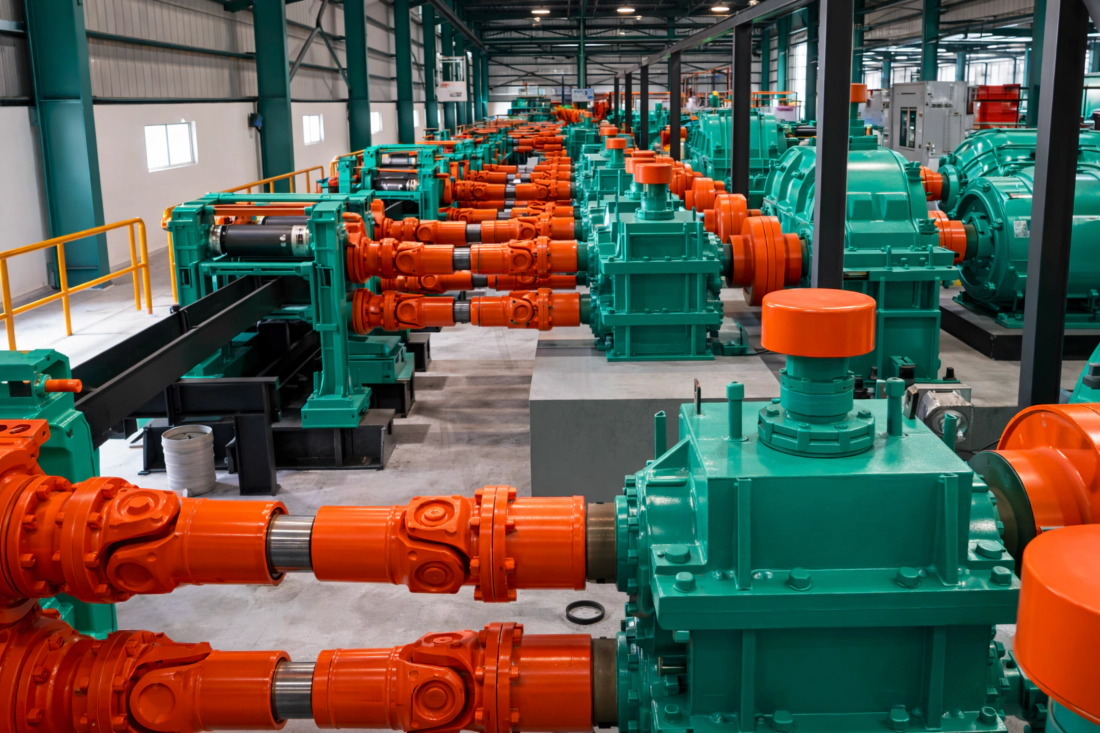
Strategic Brand Compatibility & Disclaimer
We know your fleet is likely mixed. You might have KUKA platforms, Dematic shuttles, or heavy Konecranes AGVs. Finding original parts for legacy machines can be a nightmare of lead times and inflated costs. We manufacture direct replacement shafts that meet or exceed the specs of the original component suppliers.
(Please Note: All manufacturer names, part numbers, and descriptions are used for reference purposes only. EVER-POWER is an independent manufacturer and is not affiliated with, endorsed by, or sponsored by these brands.)
Factory Capabilities: From Concept to Component
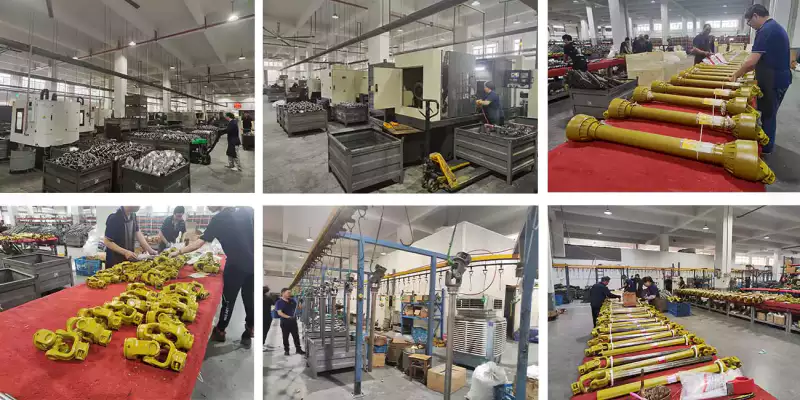
What separates us from a catalog reseller is our factory floor. We operate 5-axis CNC machining centers and dedicated balancing rigs. This allows us to offer Rapid Prototyping for your custom AGV projects. If you are a startup in Eindhoven developing a new agricultural robot or a greenhouse trolley, you don’t need to order 1,000 units. We can work with small batches.
Our “EP-Flex” program allows Dutch engineers to send us a STEP file and receive a fully balanced, painted, and ready-to-install prototype shaft within weeks, not months. We handle the hardening, the welding, and the dynamic balancing (G 6.3 or G 2.5) in-house.
Expanding the Drivetrain: Gearboxes
While we have focused heavily on the industrial mobility sector, it is impossible to ignore the roots of Dutch innovation. The Netherlands is the world’s second-largest exporter of agricultural products, a feat achieved through intense mechanization. Just as an AGV needs a precise drive shaft, a high-tech harvester or a soil preparation implement needs a robust Gearbox.
We manufacture a comprehensive range of PTO gearboxes that pair perfectly with our cardan shafts. These are not light-duty hobby boxes; these are engineered for the heavy clay soils (kleigrond) found in the polders and the intensive duty cycles of the tulip bulb harvest in North Holland.
Key Applications in the Dutch Field
1. Rotary Power Harrows (Rotorkopeg):
In the preparation of seedbeds for potatoes and sugar beets, power harrows are ubiquitous. The gearbox on these machines takes a beating from shock loads when tines hit stones or compacted soil. Our gearboxes feature oversized tapered roller bearings and case-hardened spiral bevel gears to absorb these impacts without tooth fracture. We offer ratios specifically tuned to optimize rotor speed for Dutch soil types.
2. Fertilizer Spreaders (Kunstruisstrooiers):
Precision farming is law in the Netherlands due to strict nitrogen regulations. Our right-angle gearboxes for twin-disc spreaders are designed with aluminum housings to reduce weight on the boom, yet maintain the rigidity required for consistent spread patterns. High-quality oil seals prevent fertilizer dust—which is highly corrosive—from contaminating the oil bath.
3. TMR Feed Mixers (Voermengwagens):
For the dairy sector in Friesland, reliability is key. Our planetary reduction gearboxes for vertical feed mixers provide the immense torque multiplication needed to chop and mix heavy silage bales. These units are often paired with our wide-angle (CV) PTO shafts to allow the mixer to operate while turning in tight barnyards.
4. Flail Mowers (Klepelmaaiers):
Maintenance of the thousands of kilometers of ditch banks and dykes requires robust flail mowers. Our gearboxes for these applications include integrated overrunning clutches (freewheels) to protect the tractor’s PTO brake from the high inertia of the flail rotor during shutdown.
Whether you are building autonomous agricultural robots that require compact electric-drive gearboxes or traditional tractor-driven implements, our gearbox division works hand-in-glove with our shaft engineers to provide a complete, matched drivetrain solution.
Frequently Asked Questions
Costs vary significantly based on torque requirements and batch size. For a single prototype heavy-duty unit (e.g., 5,000 Nm), prices might range from €450 to €1,200. However, for volume production for a fleet in Rotterdam, the unit cost drops significantly. Contact our engineering team for a precise quote, including DDP shipping terms.
We treat the “Port of Rotterdam” environment as a marine application. We recommend our “C4-Marine” package, which includes a Zinc-Nickel plating on the yokes, a specialized multi-layer epoxy paint for the tube, and triple-lip sealed bearing cups to prevent brine ingress. This extends the service life by years compared to standard black oxide shafts.
Our shafts are designed to help you comply with the Machinery Directive 2006/42/EC and specific standards like ISO 3691-4 for driverless industrial trucks. We can provide guarding solutions and documentation to support your CE marking process, ensuring compliance with Dutch Arbowet regulations.
Yes, we specialize in aftermarket replacements. If you provide the compressed length, flange connection type (e.g., DIN 100, SAE 1310), and the application details, we can manufacture a “Drop-in” replacement that matches the interface but often upgrades the internal sealing or material strength.
We understand that R&D moves fast in the Brainport region. For custom prototypes, we utilize our rapid machining cell to target a 2-3 week turnaround from drawing approval to dispatch. Standard components can be assembled and shipped even faster.