High Torque 1000 RPM PTO Shaft for Equipment

Power your heaviest implements with our High Torque 1000 RPM PTO Shaft. Engineered for the demanding Dutch agriculture sector, this shaft handles extreme loads for balers and mulchers. Custom sizing available. Contact Ever Power for a quote today.
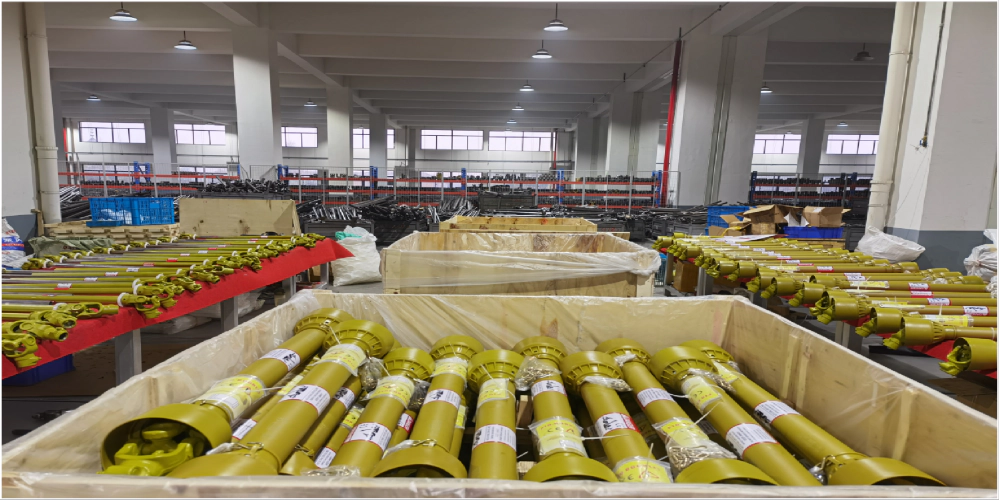
Let’s be honest for a second here. If you are running a standard 540 PTO shaft on a high-horsepower setup, you are basically playing Russian Roulette with your driveline. I’ve spent the better part of 18 years standing in muddy fields across Europe, looking at twisted metal tubes that looked more like pretzels than precision engineering components. When you step up to the High Torque 1000 RPM PTO Shaft for Equipment, the game changes entirely. We aren’t just talking about spinning faster; we are talking about the kinetic energy doubling and the vibration harmonics shifting into a range that will disintegrate a cheap cross kit in under an hour. In my experience, most folks don't realize that 1000 RPM is unforgiving. It finds the weak link—whether that’s a loose yoke or a poorly greased bearing—and it exposes it violently.
At Ever Power, we realized a long time ago that the Dutch market is different. You guys push your machinery hard. Whether it’s the heavy clay soil in the north or the intensive forage harvesting schedules in the south, a standard off-the-shelf shaft often doesn't cut it. Our High Torque 1000 RPM PTO Shaft for Equipment is built with a specific philosophy: over-engineering. We use a cold-drawn tubing profile that offers tighter tolerances than the standard welded tubes you see on budget imports. Why does that matter? At 1000 RPM, even a millimeter of play in the telescoping section creates a "whip" effect. That whip destroys gearbox seals and tractor output bearings. We’ve managed to virtually eliminate that by keeping our sliding tolerances incredibly strict.

Take a close look at that exploded view above. The secret sauce isn't just the steel; it's the heat treatment. The cross journals (the spider bit in the middle of the U-joint) undergo a carburizing process that hardens the surface to Rockwell C 60-62, while keeping the core ductile. This means if you hit a hidden stump with your mulcher, the joint absorbs the shock rather than shattering like glass. It’s a small detail, but when you are three days behind schedule and the rain is coming, it’s the detail that saves your week.
The Symbiosis: PTO Shafts and Heavy-Duty Gearboxes
I often tell the young engineers in our shop: "A shaft without a good gearbox is just a spinning stick." The relationship between your High Torque 1000 RPM PTO Shaft for Equipment and the agricultural gearbox is like a marriage—if they aren't compatible, things get heated and eventually break down. We supply a range of gearboxes that are specifically tuned to accept the input loads from our high-torque shafts.

Here is the technical rub: vibration transfer. When a PTO shaft is running at a slight angle, it creates non-constant velocity (it speeds up and slows down twice per revolution). If your gearbox input shaft isn't designed with robust tapered roller bearings to handle that oscillating load, the seal will fail, oil will leak, and your gears will grind to a halt. Our gearboxes feature oversized input shafts and case-hardened gears to dampen the harmonics delivered by the PTO. It’s about system integration. If you are building a custom implement or refurbishing an old reliable machine, checking the gearbox compatibility is step one. You can reach out to us on our contact page if you need to match-make a shaft and gearbox.
Case Study: The "Green Beast" of Friesland
We had a customer last year, a large contracting firm based near Leeuwarden in the Netherlands. They were running a triple-mower setup (butterfly mowers) on a massive Fendt 900 Vario. The center mower was driven by a competitor's standard 1000 RPM shaft. The problem? Every time they hit a dense patch of wet ryegrass (and you know how heavy Dutch grass can get in May), the friction clutch would slip, overheat, and eventually glaze over. Once a clutch glazes, it’s useless—it slips at 50% torque.
They were changing clutch discs every week. It was madness. We went out to the site and analyzed the failure. The issue wasn't just the clutch; it was the torsional rigidity of the shaft tube. The tube was twisting slightly under peak load, acting like a spring. This "spring" energy was releasing violently, spiking the torque through the clutch and burning it out.
We swapped them over to our High Torque 1000 RPM PTO Shaft for Equipment (Series 8 equivalent) with a star-profile tube and a cam-type cut-out clutch instead of a friction clutch. The star profile is incredibly rigid torsionally. The result? They finished the entire season without a single downtime event on that mower. The contractor told me over a coffee later that the fuel efficiency actually improved slightly because the power transfer was more direct. Stories like that are why we stay in this business.
The Engineering Inside: Specs & Materials
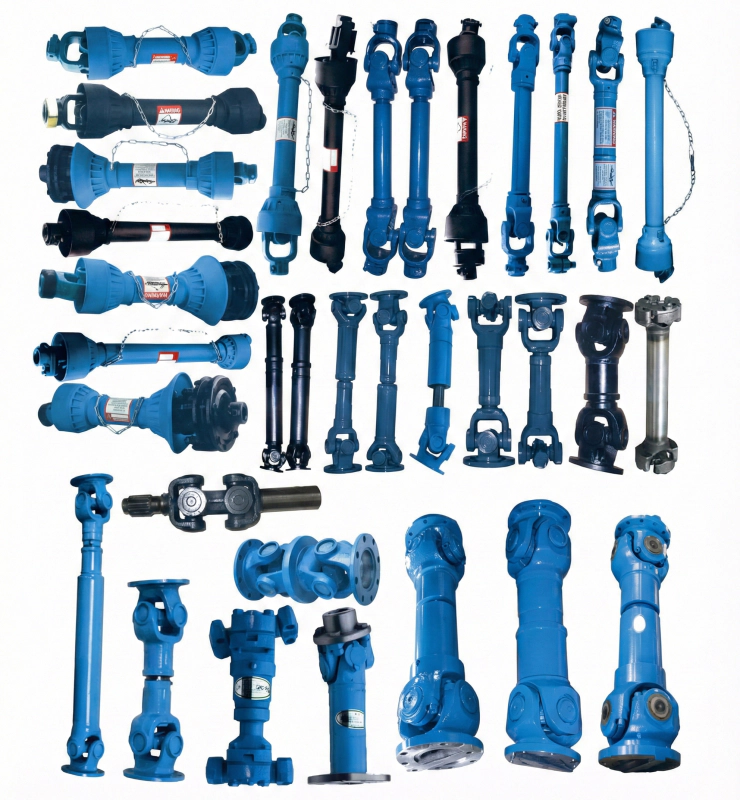
You can’t cheat physics (I’ve tried, it doesn't work). To handle high torque at high speeds, you need material density and precision. A High Torque 1000 RPM PTO Shaft for Equipment isn't just about being "thicker." It’s about the alloy. We use 20CrMnTi for our critical stress components. This is a Chinese standard, roughly equivalent to the high-grade carburizing steels used in automotive gearboxes. It creates a surface that resists wear from the needle bearings while maintaining a core that can twist without snapping.
| Technical Parameter | Specification Details | Why It Matters |
|---|---|---|
| Rotational Speed | Rated continuous 1000 RPM (Burst 1250 RPM) | Ensures stability and reduced vibration at operating speed. |
| Torque Capacity | Up to 3500 Nm (Dynamic Load) | Handles the "kick" from baler plungers or mulcher drums. |
| Tube Profile | Star Profile or Lemon Profile (Cold Drawn) | Provides maximum surface area contact for torque transmission. |
| Spline Type | 1-3/8" Z21 (21 Splines) or 1-3/4" Z20 | Standardized fit for high-HP tractors (Z21 is the 1000 RPM standard). |
| Lubrication Interval | 8 Hours (Severe Duty) / 40 Hours (Standard) | High speed generates heat; fresh grease is your cheapest insurance. |
Brand Comparison: The Elephant in the Room
Look, we know the big names. Walterscheid, Bondioli & Pavesi, Weasler. They make fantastic products. I’m not here to badmouth them. But in our experience, a lot of what you pay for with those yellow and black shafts is the marketing budget and the distributor markup chain. We position our High Torque 1000 RPM PTO Shaft for Equipment as the "Contractor's Choice"—industrial strength without the premium label tax.
| Brand Category | Durability Score | Price Index | Engineer's Notes |
|---|---|---|---|
| Premium OEM (Global Brands) | 10/10 | $$$$$ | Excellent, but overkill for many applications unless money is no object. |
| Ever Power High Torque Series | 9.5/10 | $$$ | Same material specs (20CrMnTi), same tolerances, significantly lower cost. |
| Budget Imports | 4/10 | $ | Dangerous at 1000 RPM. Often use cast yokes instead of forged. Avoid. |
Key Application Scenarios in the Netherlands
The Dutch landscape is unique. You aren't farming vast, flat wheat fields like in Kansas; you’re dealing with intensive, high-yield plots. The equipment reflects that. Our shafts are most commonly found on:
- Forestry Mulchers & Tillers: This is the ultimate torture test. The shock loads when hitting roots are massive.
- Large Square Balers (Big Balers): The plunger stroke creates a rhythmic "heartbeat" of torque that fatigues standard shafts quickly.
- Slurry Tankers (Vacuum Pumps): These run for hours at a time. The heat buildup in the U-joints is the enemy here.
- Feed Mixers (Vertical): Starting a mixer full of wet silage requires massive breakaway torque.

Selection Guide: Advice from the Workshop Floor
Choosing a shaft isn't just about clicking "Add to Cart." There’s a bit of an art to it. The biggest mistake we see? Length. (It’s always the length, isn't it?).
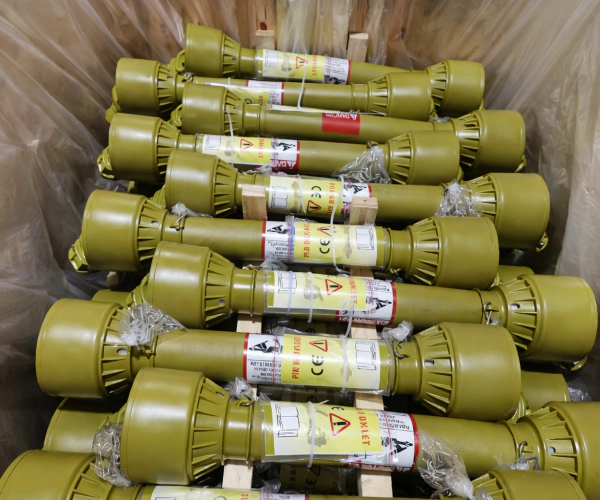
1. The "Bottom Out" Danger: If your High Torque 1000 RPM PTO Shaft for Equipment is too long, when you raise the 3-point hitch, the shaft compresses. If it hits the end of its travel, it becomes a solid steel bar. Something will break. Usually, it pushes the tractor PTO shaft right into the transmission housing. Ouch.
2. The Overlap Rule: On the flip side, if it’s too short, the tubes can separate while spinning. We recommend ensuring at least 1/3 of the tube length is overlapping at the most extended position. Any less, and the tube can buckle under torque.
3. The Safety Guard: Don't be that guy who chains the safety guard up so it spins with the shaft. It’s there for a reason. In the Netherlands, safety inspectors are getting stricter about this. Our guards are UV-resistant polyethylene and designed to stand still while the shaft spins inside.
Check out our About Us page to see how we test these guards.
Dutch Industry Compatibility
We’ve made sure our splines match the heavy hitters found in Dutch barns. Whether you are running a John Deere 6R or 7R Series, a New Holland T7, or the contractor-favorite Fendt 700 Vario, our 21-spline (1-3/8") and 20-spline (1-3/4") yokes are machined to ISO standards. We don't do "close enough." It fits, or it doesn't leave the factory.
Frequently Asked Questions (FAQ)
How do I know if I need a 20-spline or 21-spline PTO shaft?
It usually comes down to your tractor's horsepower and output shaft size. The 21-spline shaft (1-3/8 inch) is the standard for 1000 RPM on tractors up to about 150HP. Once you get into the big boys, like over 160HP, you often switch to the larger 20-spline (1-3/4 inch). Best bet? Count the grooves on your tractor stub!
Can I use this High Torque PTO shaft on a 540 RPM implement?
Technically, yes, it will physically fit if the splines match (though 540 is usually 6-spline). However, it's overkill. It's like using a sledgehammer to crack a nut. But never, ever do the reverse—don't use a standard shaft on a 1000 RPM tool. That's a recipe for disaster.
What is the price of a custom length PTO shaft delivered to the Netherlands?
The cost varies based on the exact length and the torque rating you need (Series 6 vs Series 8). Since we manufacture and ship directly, our prices are very competitive compared to local Dutch dealers. Drop us a request for a quote, and we can give you a landed price including shipping.
How often should I grease a PTO shaft running at 1000 RPM?
More often than you think! For 1000 RPM operation, we recommend greasing the cross kits every 8 hours of use. The heat builds up much faster than at 540 RPM, and once that grease liquefies and runs out, your bearings are toast. Don't forget the telescoping tubes too—grease them every 20 hours.
Do you supply the wide angle PTO shafts for tight turns?
Yes, we certainly do. Wide Angle (CV) joints are essential if you are turning sharply with the PTO engaged, like with a trailed mower or baler. They allow for smooth power transfer even at 80-degree angles. Mention that you need "CV" when you contact us.
Ready to stop replacing shafts and start working?
Additional information
| edited | by hyw |
|---|
Related products
-
Adjustable PTO Shaft for Compact Tractors
-
Tractor PTO Shaft with Safety Guard
-
Universal 6-Spline 1 3/8” PTO Shaft
-
Durable 540 RPM PTO Shaft for Agricultural Use
-

Star Tube Tractor PTO Shaft
-

Pto Shaft For Tractor
-

Lemon Tube Drive Shaft For Tractor
-

Tractor Parts Drive Shaft Manufacturer Yoke Agricultural Cardan Universal